 Bug FAQ
Hubbard's Angel Insect
Usazoros hubbardi · Order: Zoraptera · Family: Zorotypidae

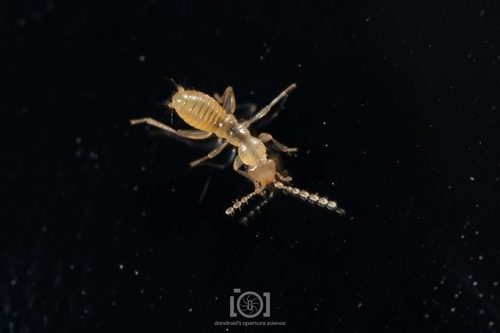
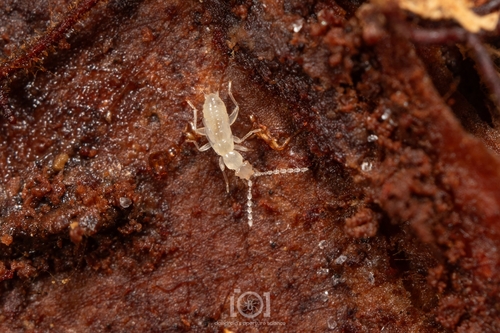
Adults are about 3 mm long and have nine antennal segments, while nymphs have eight. They live under loose bark of decaying logs and in sawdust piles, especially in the eastern United States. They feed on fungal spores, hyphae, dead mites and other tiny invertebrates.
Source: Wikipedia
How to recognize it
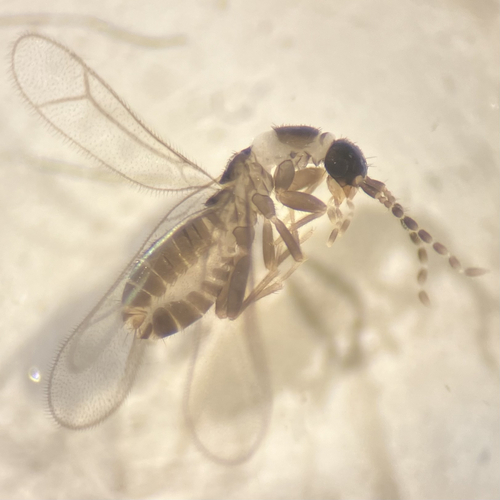
When they have wings, the forewings are larger paddle-shaped membranes and the hind wings are smaller. The underside of the hind femurs bears distinctive stiff spines.
Source: Wikipedia
Size
Adults measure roughly 3 mm (0.12 in) in length.
Source: Wikipedia
Is it a pest in the house?
They are found living in piles of sawdust.
Source: Wikipedia
Where it lives
Their natural habitat is under loose bark of decomposing logs. In recent times they have spread northward and now occupy sawdust piles in the eastern United States.
Source: Wikipedia
What it eats
They consume fungal spores, hyphae, and scavenge dead mites, nematodes and other small invertebrates.
Source: Wikipedia
Life cycle
Only wingless females occur, reproducing asexually by parthenogenesis.
Source: Wikipedia
Where it comes from
They are native to the southwestern and southern parts of North America.
Source: Wikipedia
Lookalikes
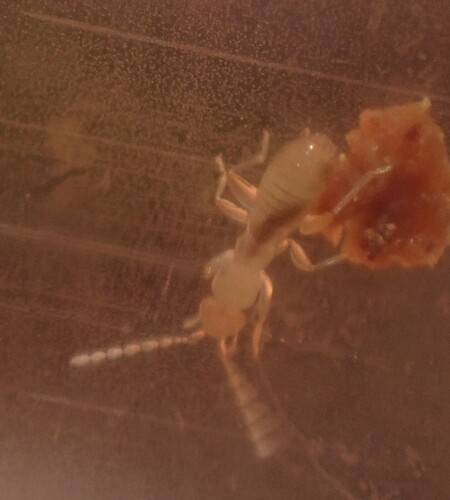
Their small pale appearance can be mistaken for termites.
Source: Wikipedia
Where it is found in the US
Recorded in 19 of 51 states and DC. Most records: Florida, North Carolina, Texas, Maryland, Georgia, Illinois, Indiana, Virginia.
Darker = more records. Counts are museum and citizen-science records, not population size.
Source: GBIF
Months it is reported in the US
Source: GBIF
More photos
Sources
- Wikipedia: https://en.wikipedia.org/wiki/Usazoros
Look it up elsewhere: GBIF · iNaturalist · BugGuide · ITIS · Wikipedia
Text written 2026-10-23 from the sources above and checked sentence by sentence against them. Data fetched 2026-10-23.