 Bug FAQ
House Pseudoscorpion
Chelifer cancroides · Order: Pseudoscorpiones · Family: Cheliferidae
Also called: pseudoscorpion, House False-scorpion, book scorpions, false scorpions
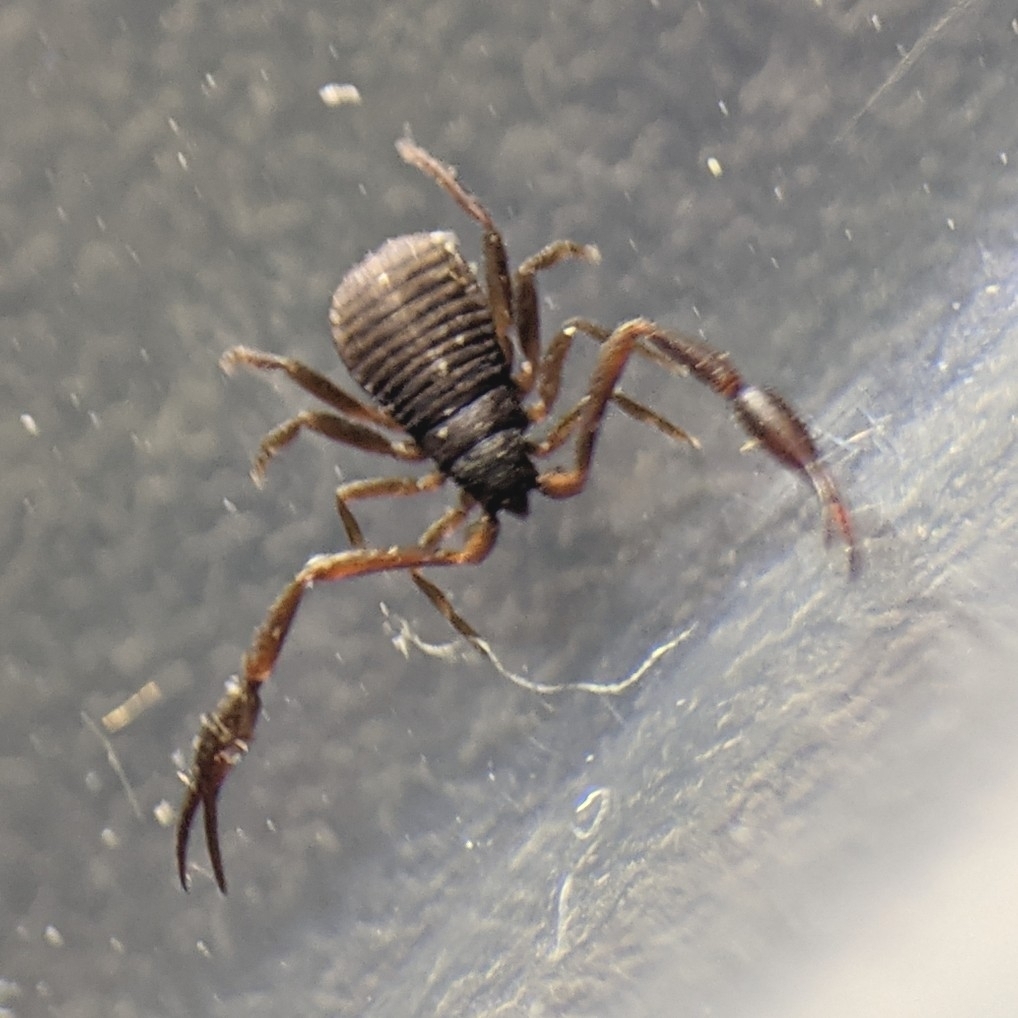
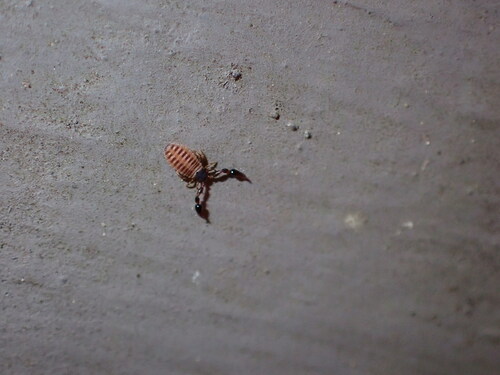
The house pseudoscorpion has a teardrop-shaped, mahogany body and a single pair of eyes on its cephalothorax. Its front pincers can extend to about 8 mm and it lives in a wide range of places from tree bark to human buildings. It feeds on tiny arthropods such as booklice, fruit flies and mites.
Source: Wikipedia
How to recognize it
The body is shaped like a teardrop and colored a rich mahogany. It has one pair of eyes on the cephalothorax.
Source: Wikipedia
Does it bite or sting?
It uses venomous pedipalps to subdue prey, and the venom contains peptides toxic to bacteria, fungi, other arthropods and mammalian cells.
Source: Wikipedia
Where it lives
You can find it under tree bark, in caves, bird nests, bee hives, and even riding on bats, flies and other insects.
Source: Wikipedia
Life cycle
Adults usually live three or four years.
Source: Wikipedia
Lookalikes
This species can be separated from other Cheliferidae by several distinctive features.
Source: Wikipedia
Where it is found in the US
Recorded in 43 of 51 states and DC. Most records: Vermont, Massachusetts, New York, Minnesota, Ohio, Michigan, Maine, Wisconsin.
Darker = more records. Counts are museum and citizen-science records, not population size.
Source: GBIF
Status: introduced in North America; introduced in United States. Source: iNaturalist
Months it is reported in the US
Source: GBIF
More photos
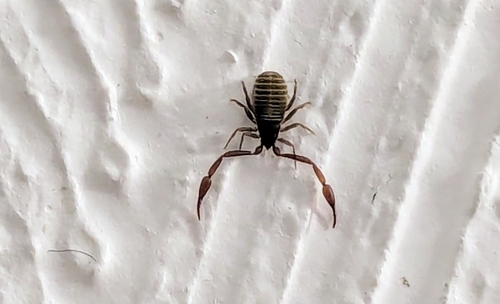
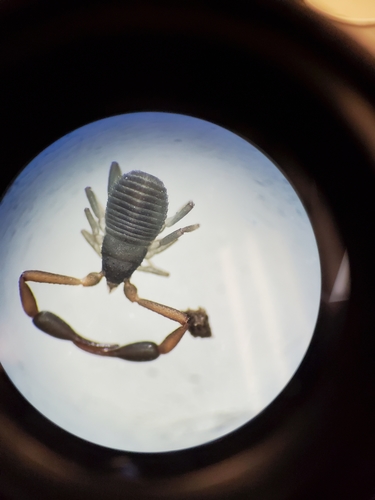
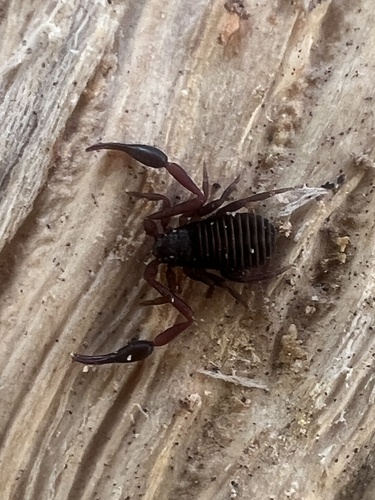
Questions people ask
How big is the house pseudoscorpion?
Its front pincers can reach about 8 mm when fully extended.
Source: Wikipedia
Where might I find them in my home?
They often live in houses, stables, barns and chicken coops, as well as in bee hives.
Source: Wikipedia
What do they eat?
They prey on tiny arthropods such as booklice, fruit flies and mites.
Source: Wikipedia
Sources
- Wikipedia: https://en.wikipedia.org/wiki/Chelifer_cancroides
Look it up elsewhere: GBIF · iNaturalist · BugGuide · ITIS · Wikipedia
Text written 2026-10-23 from the sources above and checked sentence by sentence against them. Data fetched 2026-10-22.