 Bug FAQ
Horned Passalus Beetle
Odontotaenius disjunctus · Order: Coleoptera · Family: Passalidae
Also called: Bess Beetle, Jerusalem Beetle, Patent leather beetle
Source: Wikipedia
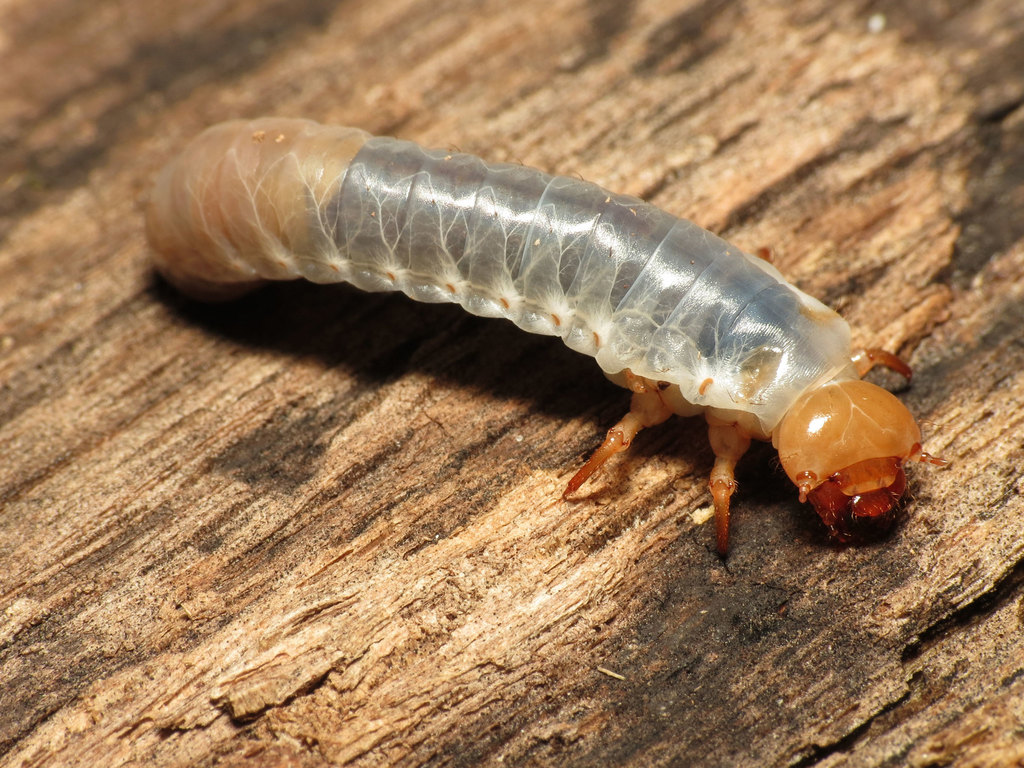
Horned passalus beetles are large, shiny black beetles with a small horn between the eyes and grooved wing covers; they can grow over 3 cm and weigh 1 to 2 g. They live inside decaying logs of deciduous trees such as oak and elm, feed on dead wood and associated fungi, and adults can live up to a year. Females lay 20 to 35 eggs mainly in summer, and the larvae develop in about three months when food is abundant.
Source: Wikipedia
How to recognize it
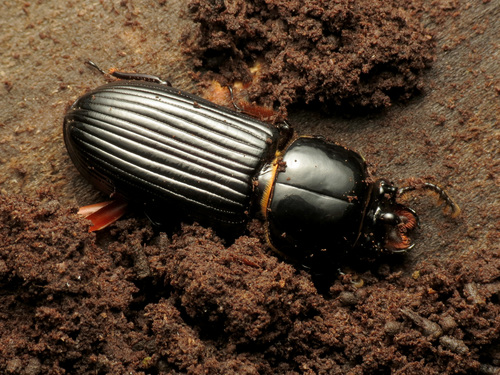
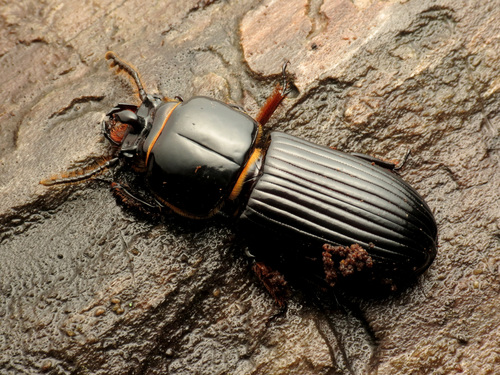
They have a small horn between the eyes, clubbed antennae, and many long grooves on their elytra.
Source: Wikipedia
Size
They can exceed 3 cm in length and weigh 1 to 2 g, capable of pulling fifty times their own weight.
Source: Wikipedia
Is it a pest in the house?
They help decompose dead wood and are harmless to humans.
Source: Wikipedia
Does it bite or sting?
They are harmless to humans.
Source: Wikipedia
What it eats
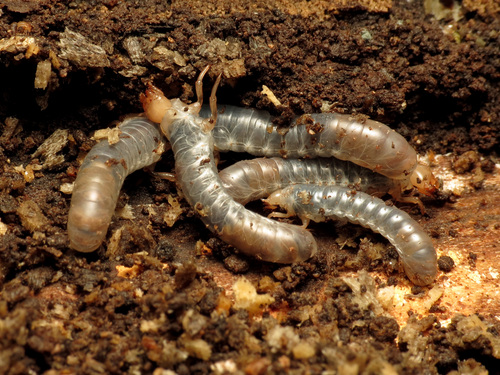
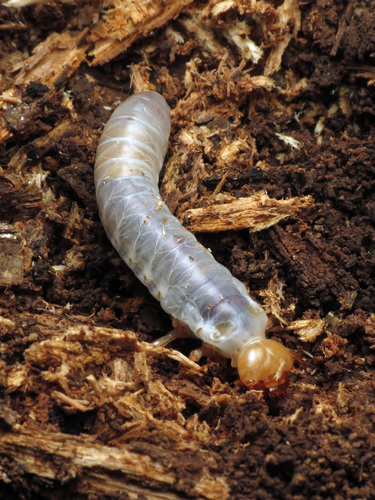
Adults eat dead, decaying wood of deciduous trees like oak and elm; larvae consume wood, fungi, and parental secretions.
Source: Wikipedia
Life cycle
Larvae can mature in as little as three months when food is plentiful, and adults may live up to one year.
Source: Wikipedia
When you see it
Females lay most eggs in summer, producing 20 to 35 eggs from early spring to late summer.
Source: Wikipedia
Where it comes from
They are distributed in warmer parts of both hemispheres and widely across temperate North American forests.
Source: Wikipedia
Lookalikes
Males and females look alike with little to no sexual dimorphism.
Source: Wikipedia
Where it is found in the US
Recorded in 34 of 51 states and DC. Most records: Virginia, Maryland, Texas, North Carolina, Florida, Tennessee, Alabama, Georgia.
Darker = more records. Counts are museum and citizen-science records, not population size.
Source: GBIF
Status: native in North America; native in Canada; native in United States. Source: iNaturalist
Months it is reported in the US
Source: GBIF
More photos
Questions people ask
What do horned passalus beetles look like?
They are shiny black, over 3 cm long, with a small horn between the eyes, clubbed antennae, and grooved elytra.
Source: Wikipedia
Where can I find horned passalus beetles?
They live inside decaying logs or stumps of dead wood, especially in oak and elm trees.
Source: Wikipedia
Do they damage my house or furniture?
No, they are beneficial decomposers and do not harm homes.
Source: Wikipedia
Sources
- Wikipedia: https://en.wikipedia.org/wiki/Odontotaenius_disjunctus
Look it up elsewhere: GBIF · iNaturalist · BugGuide · ITIS · Wikipedia
Text written 2026-10-23 from the sources above and checked sentence by sentence against them. Data fetched 2026-10-22.