 Bug FAQ
Hooded Dryomyza
Dryomyza anilis · Order: Diptera · Family: Dryomyzidae
Also called: Marsh fly, Orange Fungus Fly
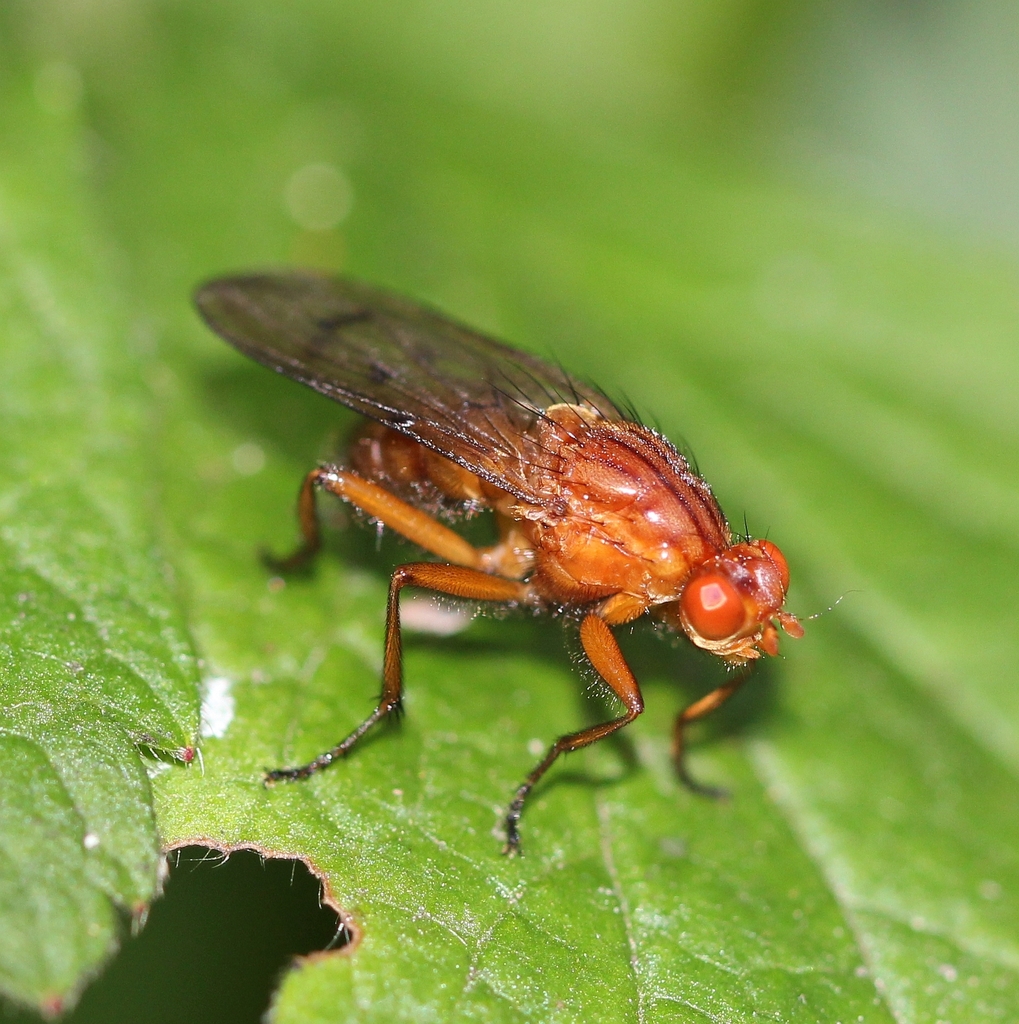
They live in moist, shady places such as low vegetation, animal excrement, carrion, and foul-smelling fungi, and are most common from May through September. The species is Holarctic, occurring across Canada, many northern U.S. states, and throughout Europe and Asia from the United Kingdom to Japan.
Source: Wikipedia
Size
They range from 7 to 14 mm in length, typically measuring about 12 mm.
Source: Wikipedia
Where it lives
Specific sites include human excrement, fox and pheasant carrion, and foul-smelling stinkhorn fungi.
Source: Wikipedia
What it eats
Adults can feed on a variety of sources, including other insects, vertebrate material, and rotting fungi.
Source: Wikipedia
Life cycle
In laboratory conditions the adult lifespan ranges from about 28 to 178 days.
Source: Wikipedia
When you see it
They are most abundant in the wild from May through September.
Source: Wikipedia
Where it comes from
In North America they occur in Canada and many northern U.S. states. They are also widespread across the Palearctic, from the United Kingdom to Japan.
Source: Wikipedia
Lookalikes
They can be distinguished from other Dryomyzidae by their nearly bare arista, covered lunule on the wing margin, and developed prostigmatic and prescutellar bristles.
Source: Wikipedia
Where it is found in the US
Recorded in 16 of 51 states and DC. Most records: Alaska, Indiana, Minnesota, New York, Vermont, Maine, Pennsylvania, Massachusetts.
Darker = more records. Counts are museum and citizen-science records, not population size.
Source: GBIF
Status: native in North America; native in Canada. Source: iNaturalist
Months it is reported in the US
Source: GBIF
More photos
Questions people ask
What does the hooded Dryomyza look like?
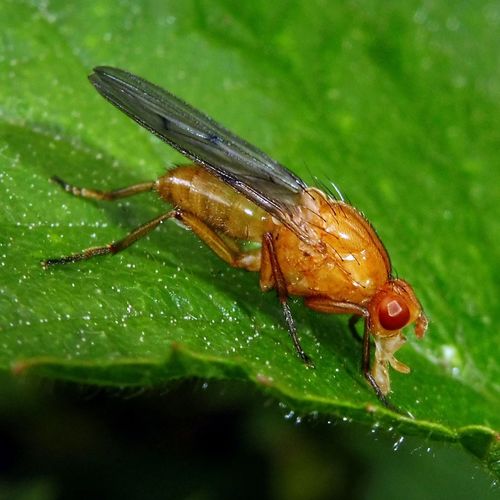
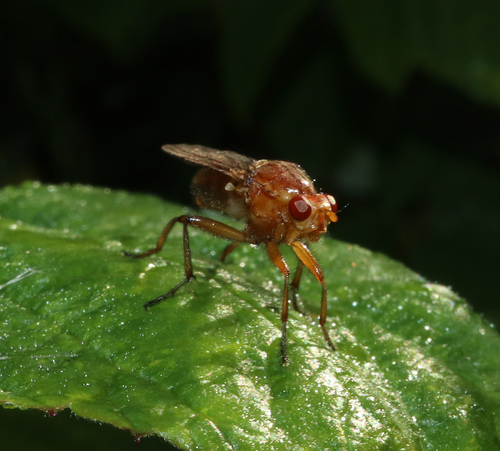
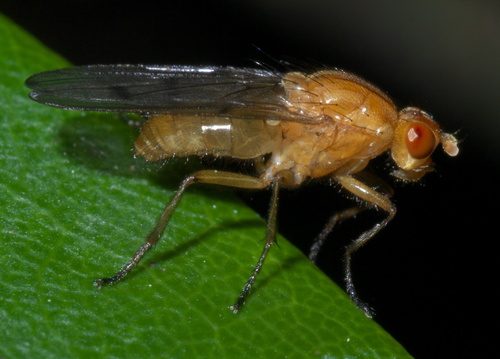
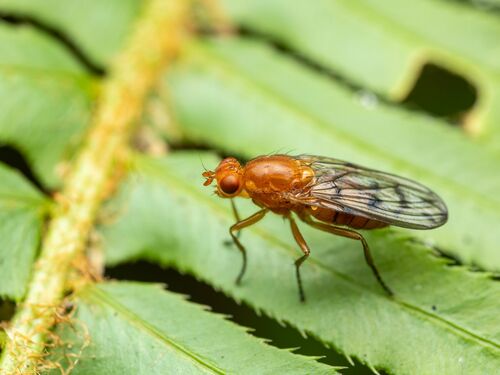
It is a light-brown and orange fly about 12 mm long with large red eyes, a nearly bare arista, a crescent-shaped lunule on the wing edge, and prominent prostigmatic and prescutellar bristles.
Source: Wikipedia
When are hooded Dryomyza flies most common?
They are most prevalent from May to September.
Source: Wikipedia
Where can I find hooded Dryomyza?
They live in moist, shady spots with low vegetation and excrement, such as human waste, carrion, and stinkhorn fungi, and are found across Canada, northern U.S. states, and from the UK to Japan.
Source: Wikipedia
Sources
- Wikipedia: https://en.wikipedia.org/wiki/Dryomyza_anilis
Look it up elsewhere: GBIF · iNaturalist · BugGuide · ITIS · Wikipedia
Text written 2026-10-27 from the sources above and checked sentence by sentence against them. Data fetched 2026-10-27.