 Bug FAQ
Honeysuckle Moth
Ypsolopha dentella · Order: Lepidoptera · Family: Ypsolophidae
Also called: European Honeysuckle Moth, European Honeysuckle Leafroller
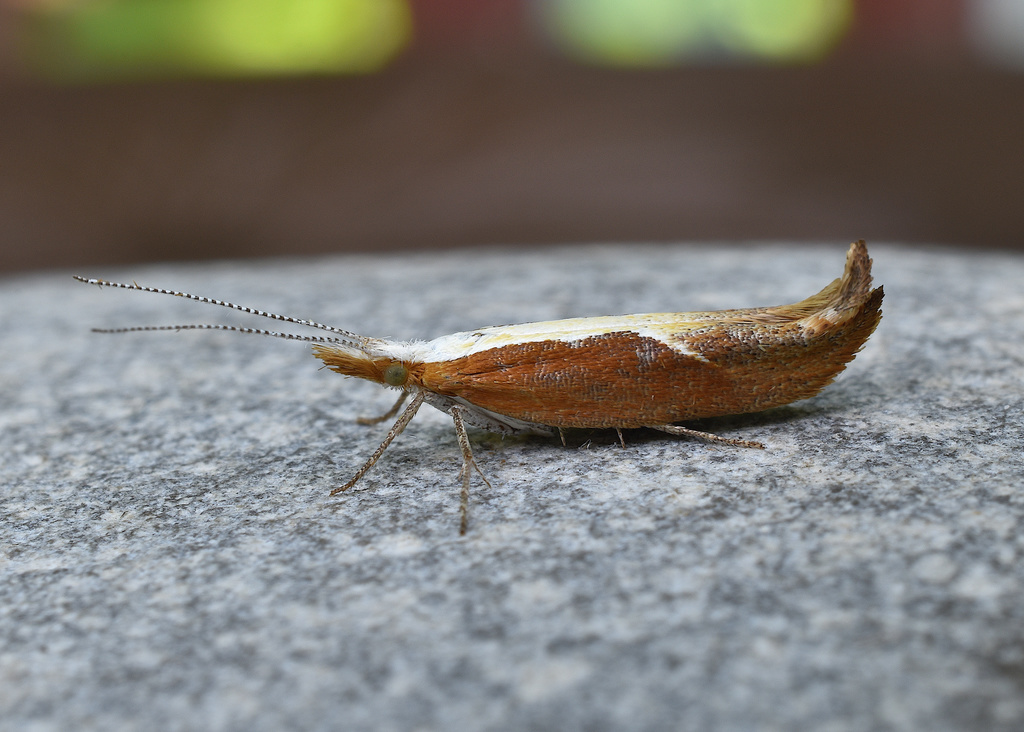
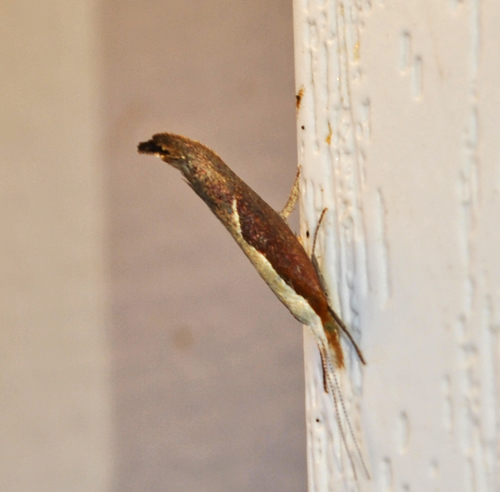
The honeysuckle moth has a wingspan of about 18 to 23 mm and distinctive deep brown and ochreous wing markings. It lives across Europe, parts of Asia and the eastern United States and southern Canada, and the adults fly from June to September.
Source: Wikipedia
How to recognize it
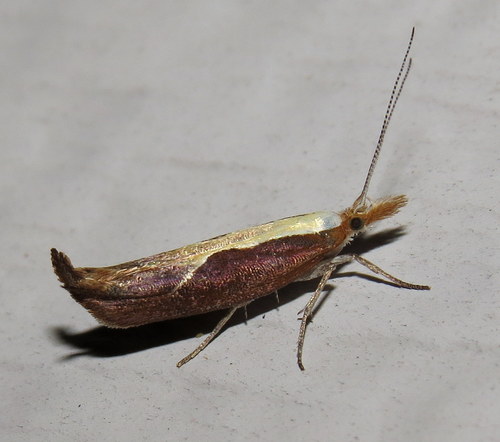
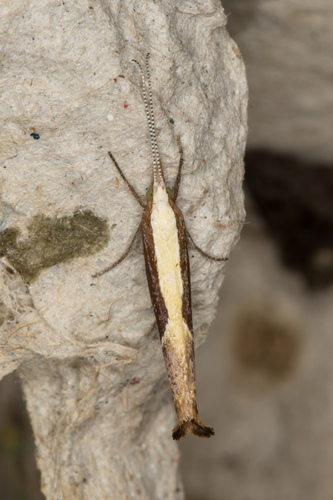
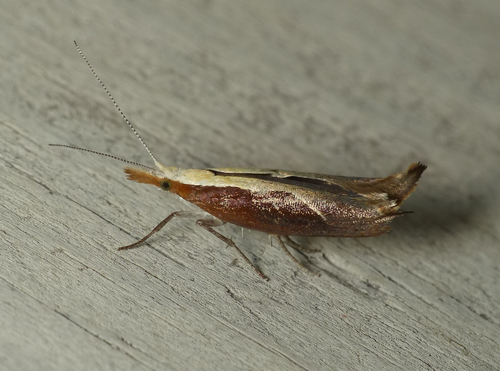
The head and thorax are white with deep brown patagia. Forewings are deep ochreous-brown with a strong falcate tip, a light yellow dorsal streak edged by a fine white line, and hindwings are rather dark grey.
Source: Wikipedia
Size
Wingspan ranges from 18 to 23 mm.
Source: Wikipedia
Where it lives
Also present in the eastern United States and southern Canada.
Source: Wikipedia
What it eats
Larvae feed on honeysuckle, white snowberry (Symphoricarpos albus) and Weigela.
Source: Wikipedia
Life cycle
Adults are on the wing from June through September, depending on location.
Source: Wikipedia
When you see it
Flight period spans June to September, varying with region.
Source: Wikipedia
Where it comes from
Its native range includes Europe, Anatolia, north-eastern China, Russia and mid-east Asia.
Source: Wikipedia
Where it is found in the US
Recorded in 19 of 51 states and DC. Most records: New York, Michigan, Massachusetts, Vermont, Wisconsin, Maine, Minnesota, Pennsylvania.
Darker = more records. Counts are museum and citizen-science records, not population size.
Source: GBIF
Status: introduced in United States. Source: iNaturalist
Months it is reported in the US
Source: GBIF
More photos
Questions people ask
When are honeysuckle moths active?
Adults fly from June to September, with exact timing depending on where they live.
Source: Wikipedia
Sources
- Wikipedia: https://en.wikipedia.org/wiki/Ypsolopha_dentella
Look it up elsewhere: GBIF · iNaturalist · BugGuide · Wikipedia
Text written 2026-10-24 from the sources above and checked sentence by sentence against them. Data fetched 2026-10-24.