 Bug FAQ
Hesperobaenus abbreviatus
Hesperobaenus abbreviatus · Order: Coleoptera · Family: Monotomidae
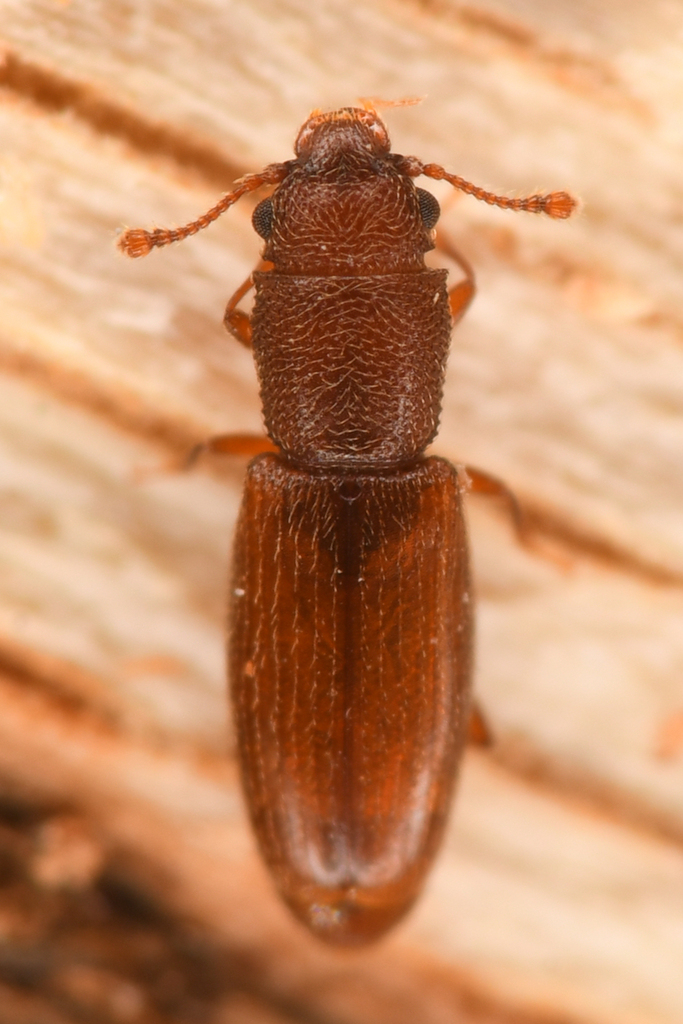
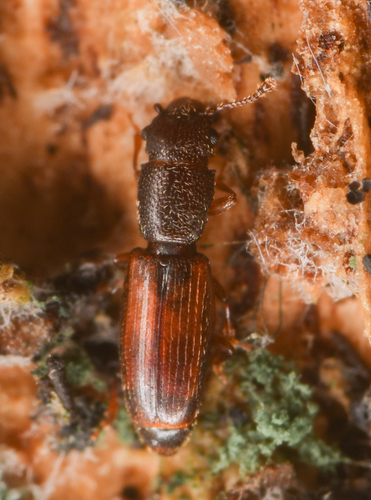
Adults are tiny, measuring about 2.0 to 2.8 mm long. It lives under the bark of dead trees such as alder, oak, pine and hackberry, and its native range spans from southern British Columbia to southern California and eastward to Idaho, Colorado and New Mexico in North America.
Source: Wikipedia
Size
Adults are tiny, measuring about 2.0 to 2.8 mm long.
Source: Wikipedia
What it eats
Hesperobaenus abbreviatus feeds on roots as a member of the Monotomidae family.
Source: Wikipedia
Where it comes from
It is native to North America, ranging from southern British Columbia to southern California and eastward to Idaho, Colorado and New Mexico.
Source: Wikipedia
Where it is found in the US
Recorded in 7 of 51 states and DC. Most records: California, Idaho, Utah, Arizona, Oregon, Nevada, Washington.
Darker = more records. Counts are museum and citizen-science records, not population size.
Source: GBIF
Status: native in North America; native in Canada; native in United States. Source: iNaturalist
Months it is reported in the US
Source: GBIF
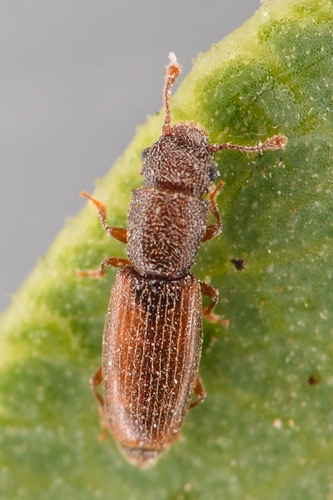
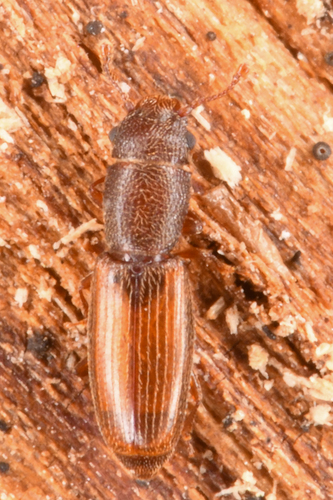
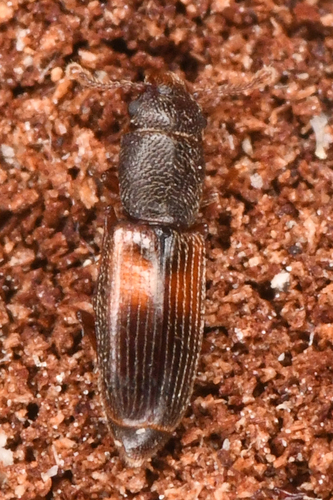
More photos
Questions people ask
How big is Hesperobaenus abbreviatus?
Adults are tiny, measuring about 2.0 to 2.8 mm long.
Source: Wikipedia
Where does this beetle live?
It is usually found under the bark of dead trees such as alder, oak, pine and hackberry.
Source: Wikipedia
Sources
- Wikipedia: https://en.wikipedia.org/wiki/Hesperobaenus_abbreviatus
Look it up elsewhere: GBIF · iNaturalist · BugGuide · ITIS · Wikipedia
Text written 2026-10-25 from the sources above and checked sentence by sentence against them. Data fetched 2026-10-25.