 Bug FAQ
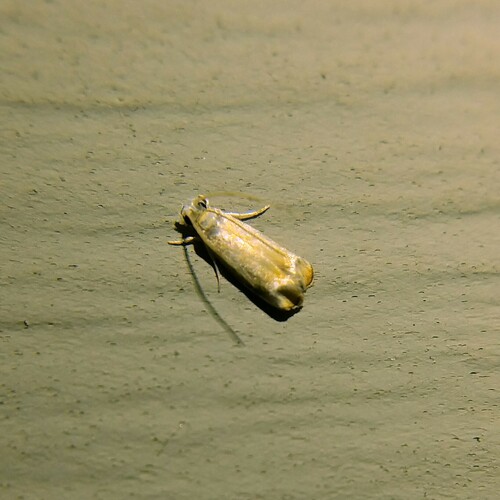
Hawaiian Dancing Moth
Dryadaula terpsichorella · Order: Lepidoptera · Family: Dryadaulidae
Also called: Dancing Moth
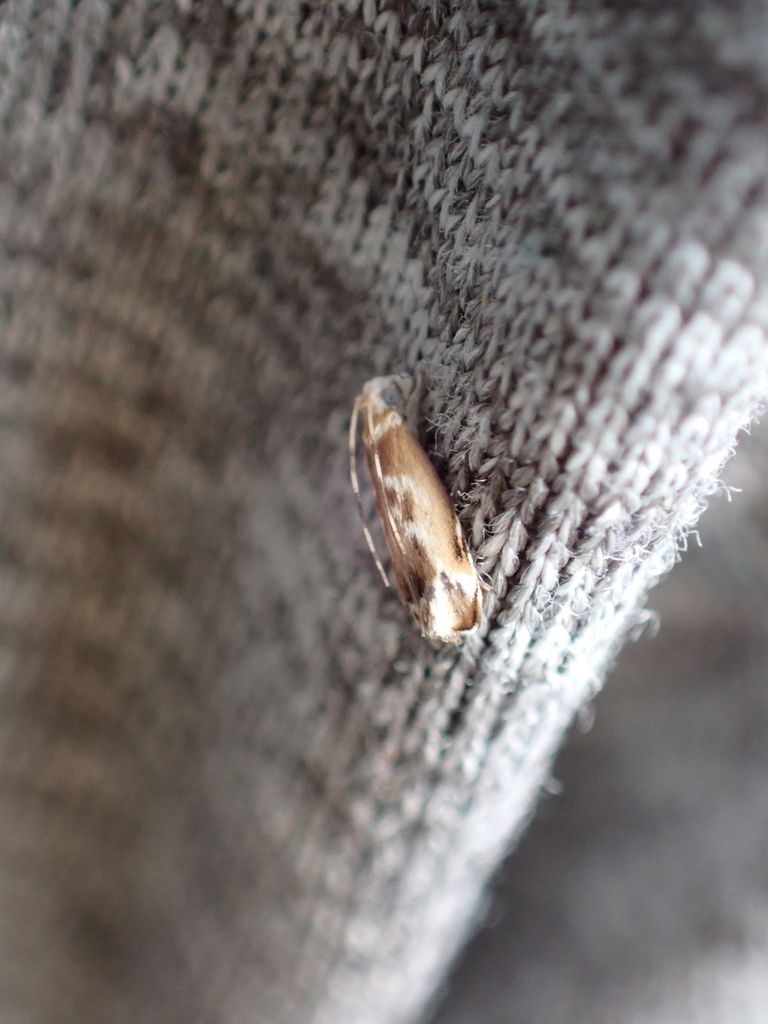
The Hawaiian Dancing Moth gets its name from the dancing motions it makes when it lands. Its larvae live among dead leaves and on plants such as banana, pineapple, sugarcane and ferns.
Source: Wikipedia
How to recognize it
The common name comes from the characteristic dancelike gyrations it performs when it alights.
Source: Wikipedia
Where it lives
Besides its native islands, this moth has been found in Hawaii, Florida and California.
Source: Wikipedia
Where it comes from
It is native to southeastern Polynesia, Samoa and Fiji.
Source: Wikipedia
Where it is found in the US
Recorded in 8 of 51 states and DC. Most records: California, Florida, Hawaii, Texas, Louisiana, Georgia, Alabama, South Carolina.
Darker = more records. Counts are museum and citizen-science records, not population size.
Source: GBIF
Status: introduced in United States. Source: iNaturalist
Months it is reported in the US
Source: GBIF
More photos
Questions people ask
Why is it called the Hawaiian Dancing Moth?
Its name comes from the dancing-like gyrations it makes when it lands.
Source: Wikipedia
Where is the Hawaiian Dancing Moth found?
It is native to southeastern Polynesia, Samoa and Fiji and has also been recorded in Hawaii, Florida and California.
Source: Wikipedia
What plants do the larvae of this moth live on?
The larvae are found among dead leaves and on banana, pineapple, sugarcane, ferns and other plants.
Source: Wikipedia
Sources
- Wikipedia: https://en.wikipedia.org/wiki/Dryadaula_terpsichorella
Look it up elsewhere: GBIF · iNaturalist · BugGuide · Wikipedia
Text written 2026-10-25 from the sources above and checked sentence by sentence against them. Data fetched 2026-10-25.