 Bug FAQ
Harpobittacus septentrionis
Harpobittacus septentrionis · Order: Mecoptera · Family: Bittacidae
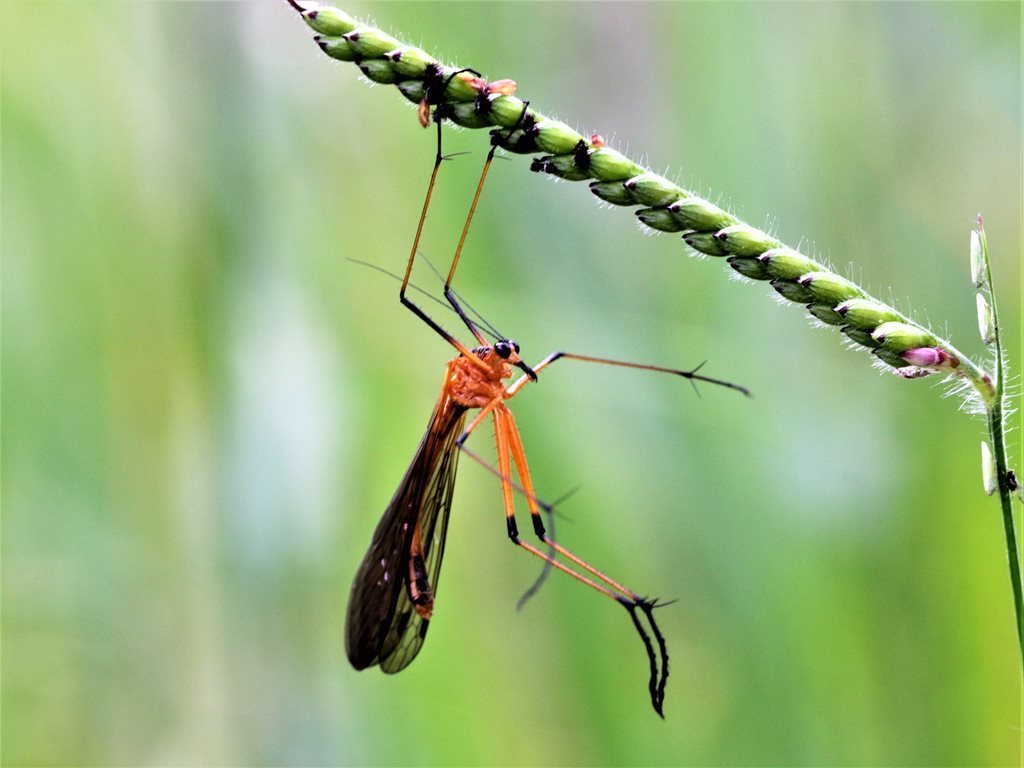
The hangingfly is about 3 cm long and has an orange abdomen with black markings on both sides. Its legs are orange with black joints and claws. It lives on the north-east coast of Australia, hanging from plants by its forelegs and catching prey with its middle and hind legs.
Source: Wikipedia
How to recognize it
The abdomen is orange with black markings on the top and bottom. The legs are orange, turning black at the joints and at the claws.
Source: Wikipedia
Size
It measures roughly 30 mm in length.
Source: Wikipedia
Where it lives
It hangs from plants using its two front legs and captures prey with its middle and hind legs.
Source: Wikipedia
Questions people ask
What does Harpobittacus septentrionis look like?
It has an orange abdomen with black markings and orange legs that are black at the joints and claws.
Source: Wikipedia
Where is Harpobittacus septentrionis found?
It lives on the north-east coast of Australia.
Source: Wikipedia
How does this hangingfly catch its prey?
It hangs from plants by its forelegs and uses its middle and hind legs to grab prey.
Source: Wikipedia
Same family (Bittacidae)


Sources
- Wikipedia: https://en.wikipedia.org/wiki/Harpobittacus_septentrionis
Look it up elsewhere: GBIF · iNaturalist · BugGuide · ITIS · Wikipedia
Text written 2026-10-23 from the sources above and checked sentence by sentence against them. Data fetched 2026-10-23.