 Bug FAQ
Harford's Isopod
Cirolana harfordi · Order: Isopoda · Family: Cirolanidae
Source: Wikipedia
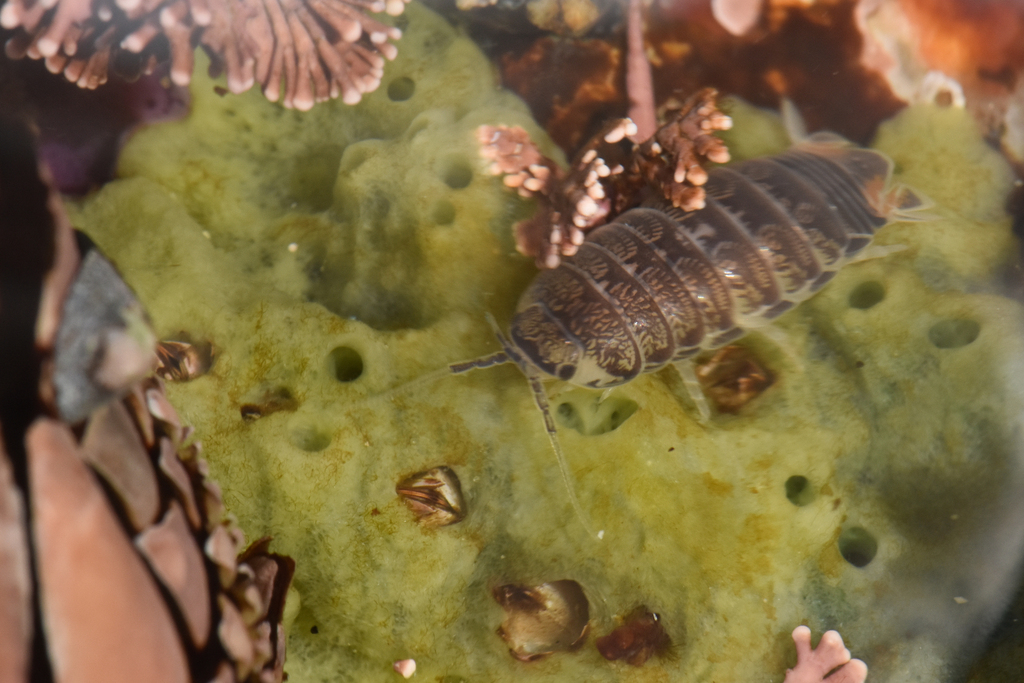
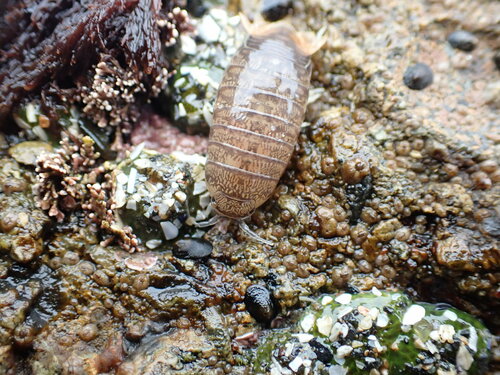
Harford's isopod can grow to about 2 cm and is white with fine brown spots. Females give birth once or twice over a two-year life, brooding the young for three to four months before they emerge as miniature adults.
Source: Wikipedia
How to recognize it
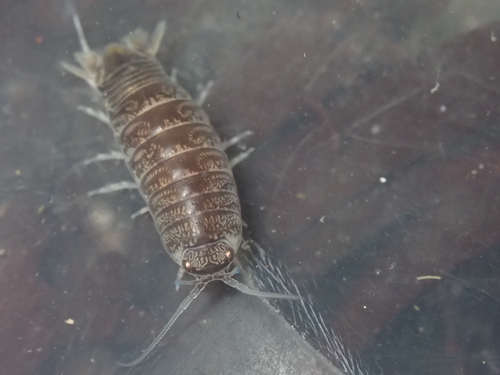
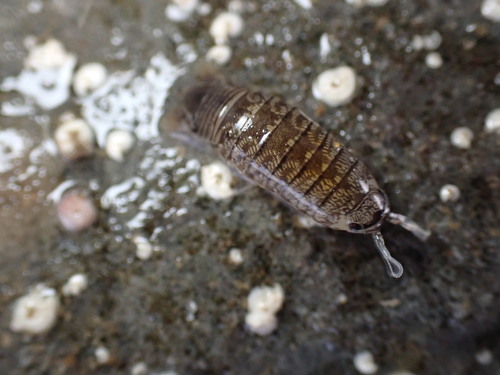
Its body is white with fine brown spots.
Source: Wikipedia
Size
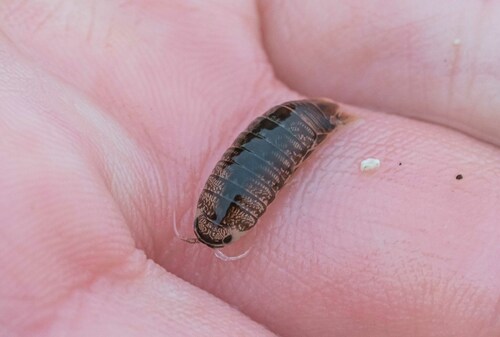
It can reach up to about 2 cm in length.
Source: Wikipedia
Is it a pest in the house?
The isopods can attack and kill living fish, especially those in nets or traps.
Source: Wikipedia
Can it bite, sting or make you sick?
A swarm of Harford's isopods was reported to bite and hospitalize a teenager in Melbourne, Australia. Another expert suggested the injuries might have been caused by an amphipod rather than the isopod.
Source: Wikipedia
What it eats
It feeds both as a scavenger and a predator, eating crustaceans and polychaete worms such as Syllis fasciata.
Source: Wikipedia
Life cycle
The young are brooded for three to four months, molting several times before emerging as mancae that look like tiny adults.
Source: Wikipedia
Where it is found in the US
Recorded in 3 of 51 states and DC. Most records: California, Oregon, Washington.
Darker = more records. Counts are museum and citizen-science records, not population size.
Source: GBIF
Status: native in North America; native in United States; native in Canada. Source: iNaturalist
Months it is reported in the US
Source: GBIF
More photos
Questions people ask
Do they bite people?
Yes, there is a documented case where a swarm bit a teenager, requiring hospital care.
Source: Wikipedia
What do they eat?
They are both scavengers and predators, feeding on crustaceans and polychaete worms like Syllis fasciata.
Source: Wikipedia
Sources
- Wikipedia: https://en.wikipedia.org/wiki/Cirolana_harfordi
Look it up elsewhere: GBIF · iNaturalist · BugGuide · ITIS · Wikipedia
Text written 2026-10-25 from the sources above and checked sentence by sentence against them. Data fetched 2026-10-25.