 Bug FAQ
Hairy Darkling Beetle
Lagria villosa · Order: Coleoptera · Family: Tenebrionidae
Source: Wikipedia
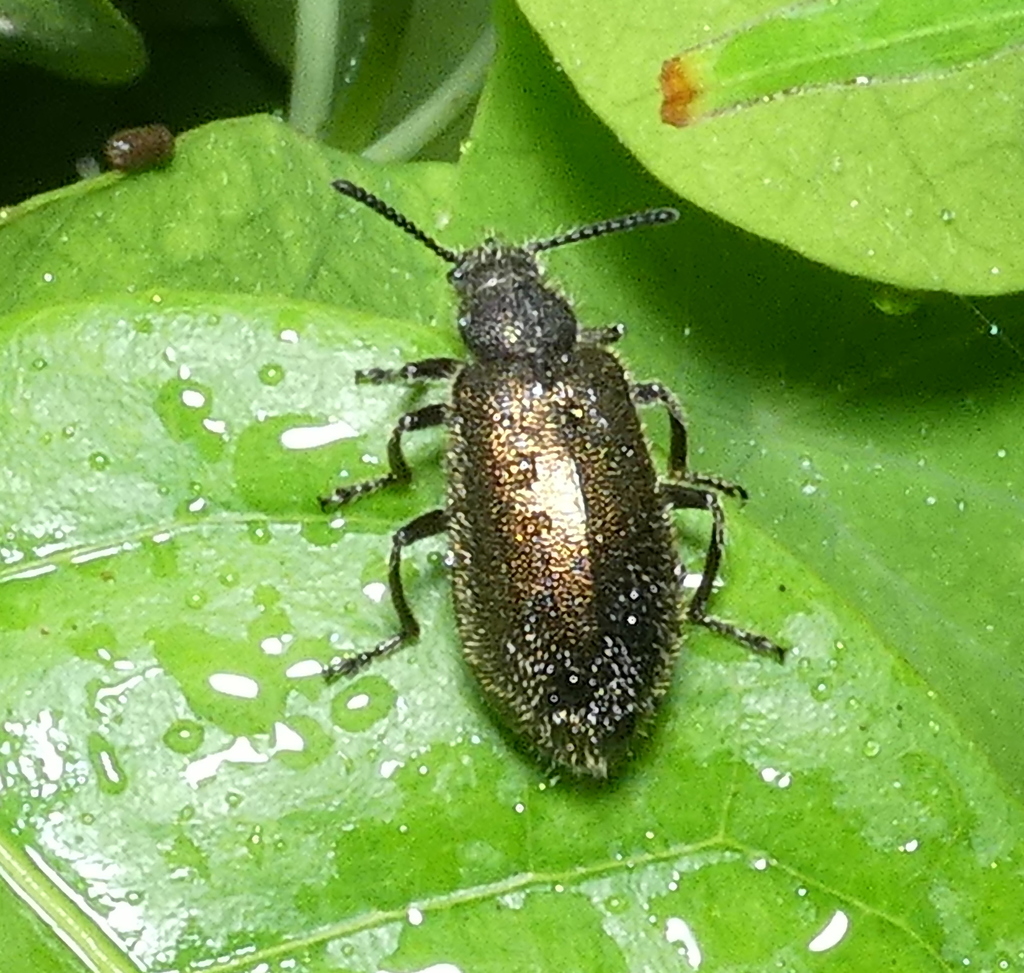
The hairy darkling beetle is native to tropical and subtropical Africa and can be recognized by its dark, metallic-green body and copper-gold elytra. Both larvae and adults eat many cultivated plants such as sorghum, banana, coffee, potatoes, corn and peach, and they also carry Fusarium and Pseudomonas bacteria that can infect these crops.
Source: Wikipedia
How to recognize it
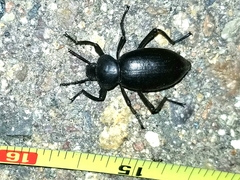
The beetle’s outer shell is dark with a purple-green metallic sheen. Its wing covers (elytra) show copper and golden colors, unlike the pale yellow-to-black-brown elytra of European Lagria species.
Source: Wikipedia
Where it lives
It lives in partnership with a specific strain of Burkholderia gladioli bacteria.
Source: Wikipedia
What it eats
Adults and larvae feed on many crops, including sorghum, pineapple, bananas, coffee, potatoes, corn and peach. While feeding, they can transmit Fusarium and Pseudomonas bacterial pathogens.
Source: Wikipedia
Life cycle
The beetle’s bacterial symbiont produces a compound that protects its eggs from fungal and bacterial infection.
Source: Wikipedia
Where it comes from
It originates from tropical and subtropical regions of Africa.
Source: Wikipedia
Lookalikes
It can be told apart from European Lagria species by its dark metallic body and copper-gold elytra.
Source: Wikipedia
Where it is found in the US
Recorded in 1 of 51 states and DC. Most records: Indiana.
Darker = more records. Counts are museum and citizen-science records, not population size.
Source: GBIF
More photos


Questions people ask
What crops does the hairy darkling beetle damage?
It feeds on sorghum, pineapple, bananas, coffee, potatoes, corn and peach, and can spread bacterial diseases to these plants.
Source: Wikipedia
How can I recognize this beetle?
Look for a dark, metallic-green body and wing covers that are copper-gold in color.
Source: Wikipedia
Same family (Tenebrionidae)


Sources
- Wikipedia: https://en.wikipedia.org/wiki/Lagria_villosa
Look it up elsewhere: GBIF · iNaturalist · BugGuide · Wikipedia
Text written 2026-10-22 from the sources above and checked sentence by sentence against them. Data fetched 2026-10-22.