 Bug FAQ
Greenhouse Whitefly
Trialeurodes vaporariorum · Order: Hemiptera · Family: Aleyrodidae
Also called: Glasshouse Whitefly, Greenhouse white fly
Source: Wikipedia
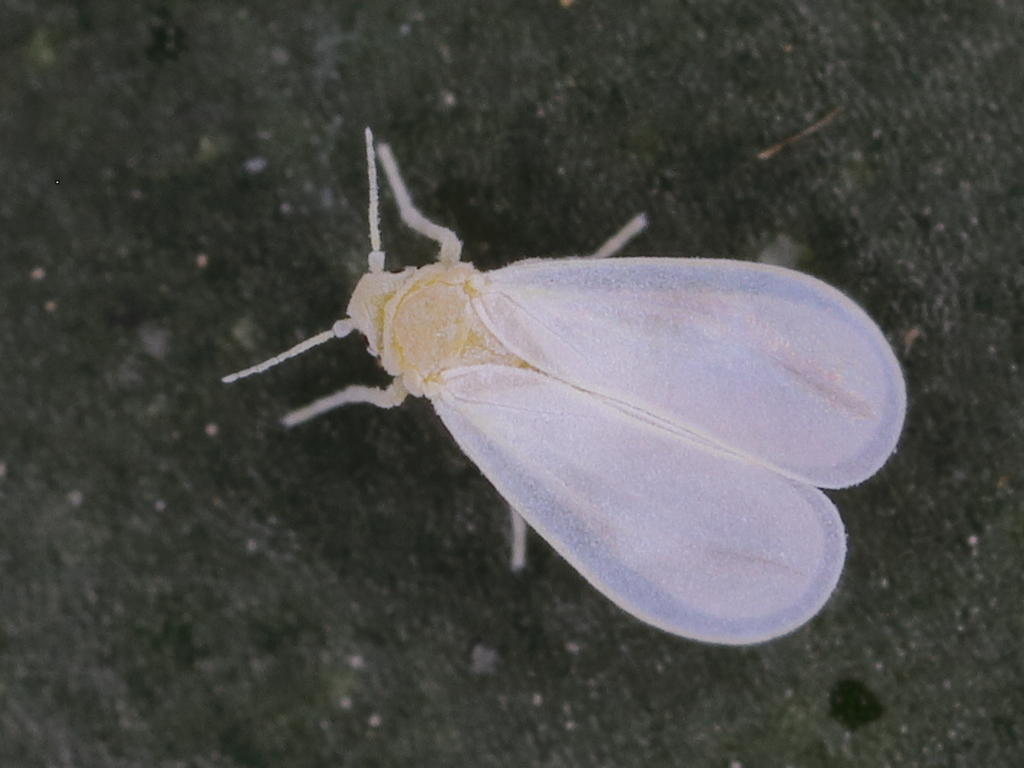
They thrive in protected horticultural sites such as greenhouses and polytunnels and are found throughout temperate regions. Natural enemies like the parasitoid wasp Encarsia formosa and biopesticides such as Lecanicillium muscarium are effective controls.
Source: Wikipedia
How to recognize it
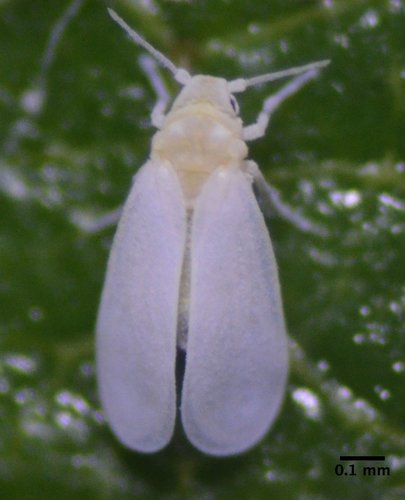
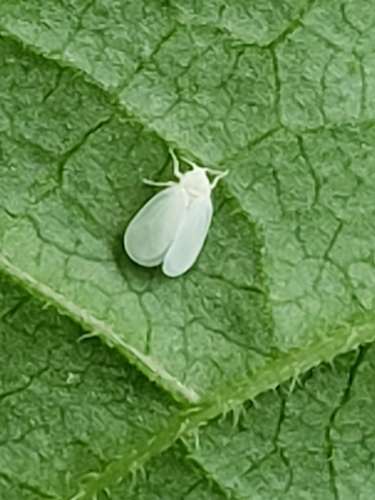
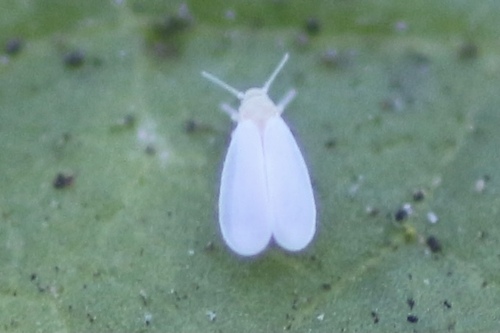
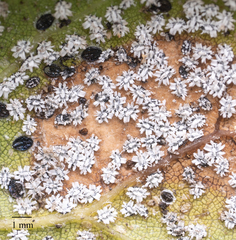
Adults have yellowish bodies and four wax-coated wings that sit nearly parallel to the leaf surface.
Source: Wikipedia
Size
The insect measures only 1 to 2 mm in length.
Source: Wikipedia
Is it a pest in the house?
Feeding damage is caused by all life stages except eggs and pupae.
Source: Wikipedia
How to get rid of it
Releasing the parasitoid wasp Encarsia formosa has long been an effective biological control. Selective insecticides or biopesticides like Lecanicillium muscarium can be added to an IPM program when needed.
Source: Wikipedia
Where it lives
It is commonly found inside glasshouses, polytunnels and other protected growing environments.
Source: Wikipedia
What it eats
All active stages feed by inserting a stylet into leaf veins and sucking phloem sap.
Source: Wikipedia
Life cycle
Females can mate within a day of emerging and lay eggs on the undersides of leaves. The first two nymph stages appear as pale, translucent, flat scales that are hard to see. In the final immature stage, called the pupa, the nymph thickens, rises from the leaf, and its eyes and body become visible.
Source: Wikipedia
Where it comes from
The species occurs in temperate zones worldwide.
Source: Wikipedia
Where it is found in the US
Recorded in 18 of 51 states and DC. Most records: California, Alaska, Florida, Texas, New York, Georgia, Hawaii, Illinois.
Darker = more records. Counts are museum and citizen-science records, not population size.
Source: GBIF
Months it is reported in the US
Source: GBIF
More photos

Questions people ask
How can I tell if I have greenhouse whitefly?
Look for tiny 1 to 2 mm insects with yellowish bodies and wax-coated wings lying flat on leaf surfaces, and for pale, translucent scales on the undersides of leaves.
Source: Wikipedia
Where do greenhouse whiteflies usually live?
They are most often found inside glasshouses, polytunnels and other protected horticultural structures in temperate regions.
Source: Wikipedia
What damage do they cause to plants?
Feeding adults and nymphs pierce leaf veins and suck phloem sap, which can weaken fruit, vegetable and ornamental crops.
Source: Wikipedia
How can I control greenhouse whitefly?
Introduce the parasitoid wasp Encarsia formosa and, if necessary, apply selective insecticides or biopesticides such as Lecanicillium muscarium as part of an integrated pest management plan.
Source: Wikipedia
Same family (Aleyrodidae)
Sources
- Wikipedia: https://en.wikipedia.org/wiki/Greenhouse_whitefly
Look it up elsewhere: GBIF · iNaturalist · BugGuide · ITIS · Wikipedia
Text written 2026-10-23 from the sources above and checked sentence by sentence against them. Data fetched 2026-10-22.