 Bug FAQ
Green-striped slender dartlet
Aciagrion occidentale · Order: Odonata · Family: Coenagrionidae
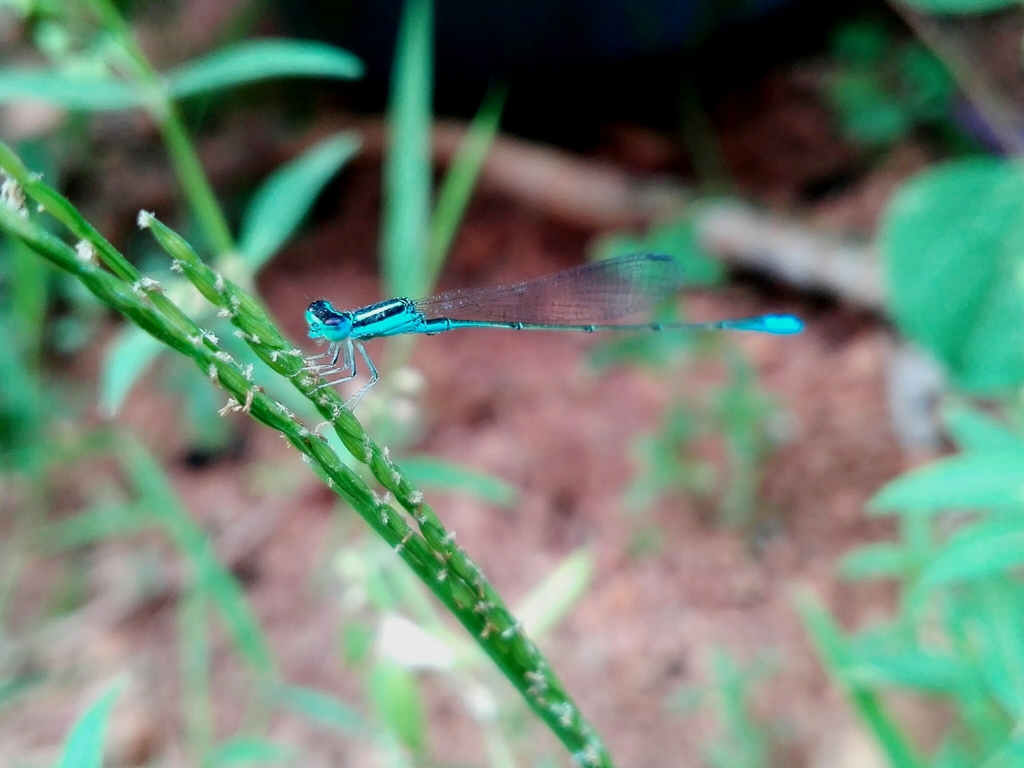
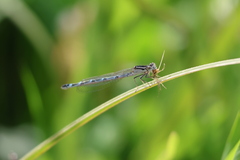
The green-striped slender dartlet is a very thin damselfly with black dorsal markings on the first seven abdominal segments and blue sides, plus a distinctive black triangle on segment 8 (-). It lives low over shrub-filled wetlands in South and Southeast Asia, can migrate high in the air, and is found in India, Sri Lanka, the Maldives, Vietnam and Thailand (-).
Source: Wikipedia
How to recognize it
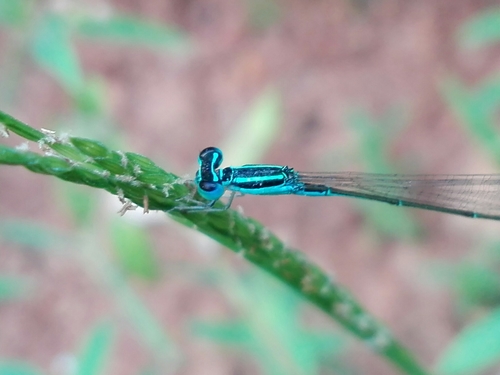
It is a long, thin damselfly with a black spot on a blue background on the eighth abdominal segment. Its thorax is black with side azure-blue stripes. The abdomen is very slender, black on the top of segments 1-7 and light blue on the sides, while segment 8 is blue with a narrow black triangle on top, segment 9 is blue, and segment 10 is black on top and blue on the sides.
Source: Wikipedia
Where it lives
It flies close to the ground in shrub-dominated wetlands. Despite its delicate build, it can migrate by rising high and using air currents.
Source: Wikipedia
Where it comes from
It occurs in India, Sri Lanka, the Maldives, Vietnam and Thailand.
Source: Wikipedia
More photos
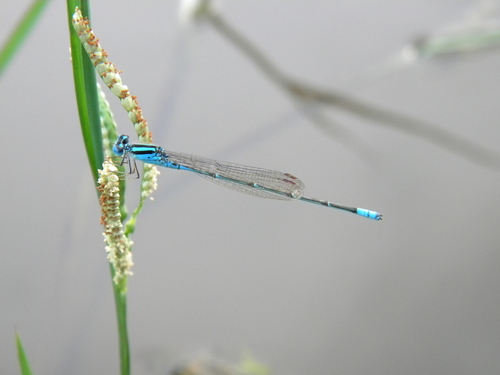
Same family (Coenagrionidae)
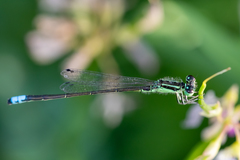
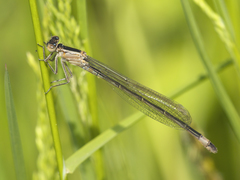

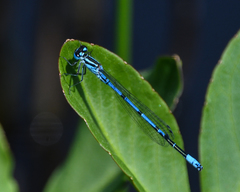

Sources
- Wikipedia: https://en.wikipedia.org/wiki/Aciagrion_occidentale
Look it up elsewhere: GBIF · iNaturalist · BugGuide · Wikipedia
Text written 2026-10-23 from the sources above and checked sentence by sentence against them. Data fetched 2026-10-23.