 Bug FAQ
Green Meshweaver
Nigma walckenaeri · Order: Araneae · Family: Dictynidae
Also called: Green Leaf Web Spider
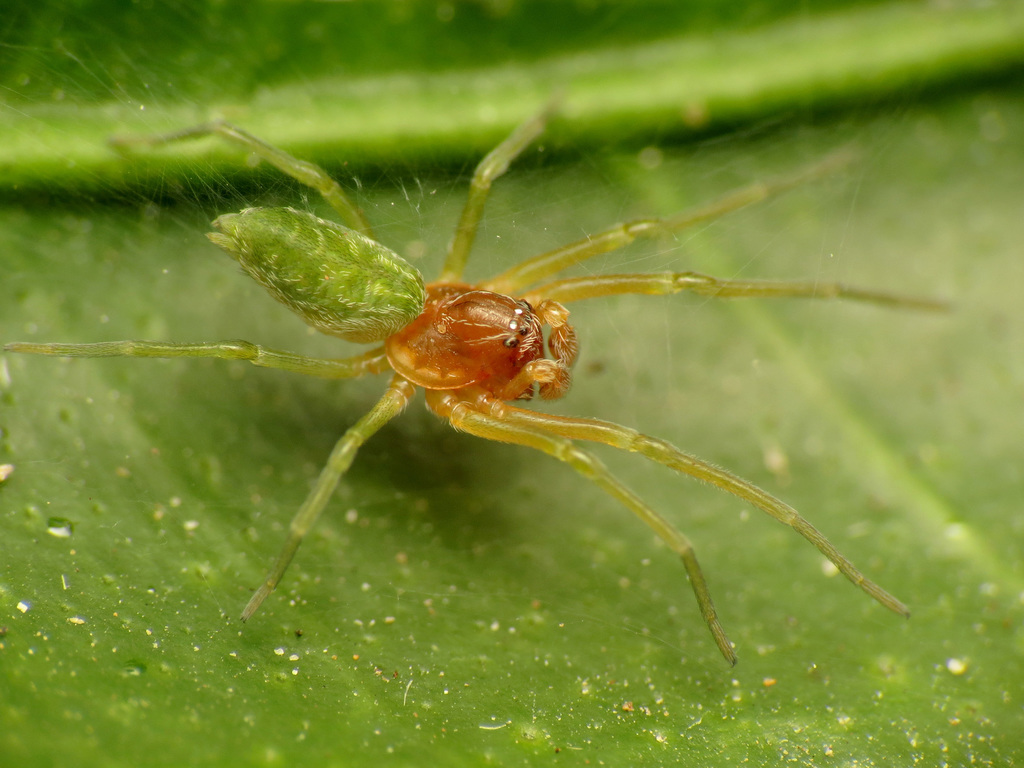
The green meshweaver is a tiny spider, up to five millimetres long, with a shining green abdomen that makes it easy to recognise. From August to October it lives on garden walls and large leaves such as lilac or wild grapevine, catching insects in its sheet web. It is native to the Palearctic region and may have first been introduced to the UK via Kew Gardens; the female hides a 7-mm egg sac away from her retreat.
Source: Wikipedia
How to recognize it
The spider’s abdomen shines green while the rest of the body is yellowish, making it easy to spot.
Source: Wikipedia
Size
It grows up to about five millimetres long.
Source: Wikipedia
Where it lives
From August through October you’ll find it on garden walls or large leaves like lilac and wild grapevine.
Source: Wikipedia
What it eats
It builds a sheet web on leaf surfaces to catch insects, sometimes larger than itself.
Source: Wikipedia
Life cycle
The female places a 7-mm long egg sac away from her retreat.
Source: Wikipedia
When you see it
Adults are most common from August to October.
Source: Wikipedia
Where it comes from
It is native to the Palearctic region and may have first arrived in the UK via Kew Gardens.
Source: Wikipedia
Lookalikes
Its bright green abdomen makes it distinct from other spiders.
Source: Wikipedia
More photos

Sources
- Wikipedia: https://en.wikipedia.org/wiki/Nigma_walckenaeri
Look it up elsewhere: GBIF · iNaturalist · BugGuide · ITIS · Wikipedia
Text written 2026-10-22 from the sources above and checked sentence by sentence against them. Data fetched 2026-10-22.