 Bug FAQ
Great Grig
Cyphoderris monstrosa · Order: Orthoptera · Family: Prophalangopsidae
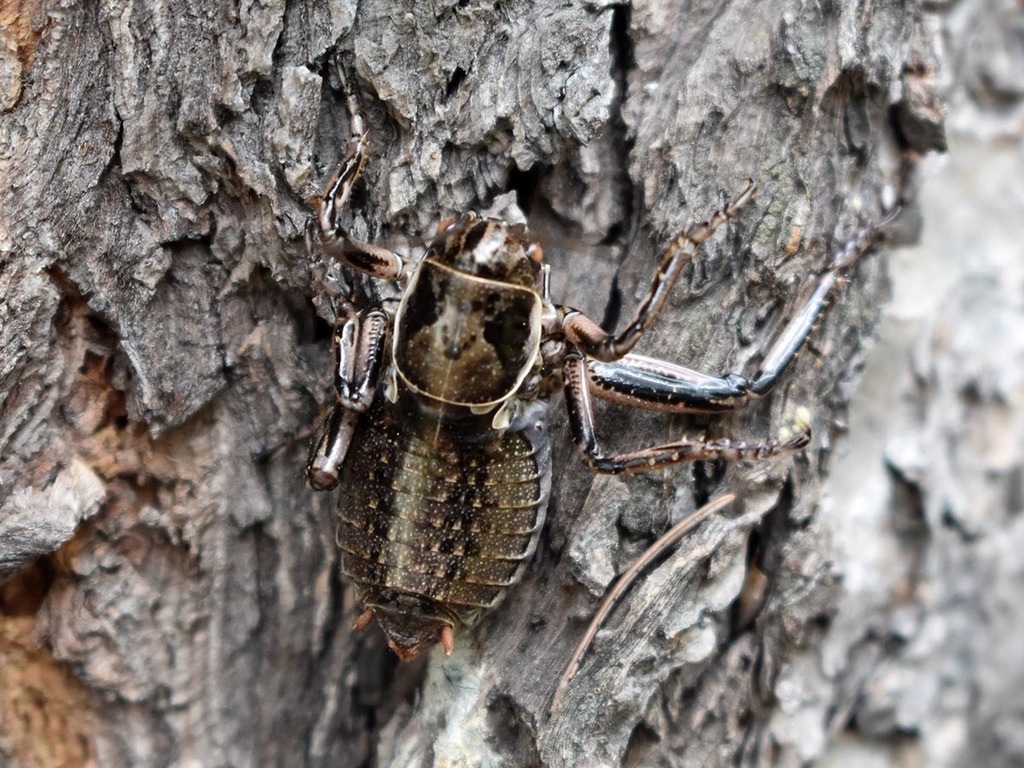
Great Grig crickets are about 20 to 30 mm long and weigh roughly 1.5 g. Adults feed mainly on conifer pollen but will also eat other flowers, fruits, and occasional small insects.
Source: Wikipedia
How to recognize it
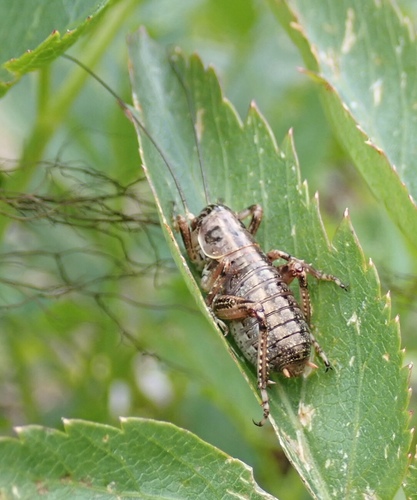
The back (dorsal side) of the cricket is dark, ranging from light brown to black. The belly (ventral side) is lighter, usually white or beige.
Source: Wikipedia
Size
Body length is typically 20 to 30 mm and weight about 1.5 g.
Source: Wikipedia
Where it lives
They prefer coniferous forests that contain lodgepole pine and Engelmann spruce.
Source: Wikipedia
What it eats
Their main food is pollen from conifer trees, but they also eat other flowers, fruits, and sometimes small insects.
Source: Wikipedia
Life cycle
Great Grigs undergo incomplete metamorphosis like other Orthoptera. Late-instar nymphs spend the winter in autumn and emerge in spring, becoming adults that mate through June to August.
Source: Wikipedia
When you see it
Males start calling at sundown.
Source: Wikipedia
Where it is found in the US
Recorded in 4 of 51 states and DC. Most records: Washington, Oregon, Montana, Idaho.
Darker = more records. Counts are museum and citizen-science records, not population size.
Source: GBIF
Status: native in North America; native in Canada. Source: iNaturalist
Months it is reported in the US
Source: GBIF
More photos
Questions people ask
How can I tell a male Great Grig apart from similar crickets?
Look for a distinct hook-shaped structure on the ventral side of the subgenital plate of the male.
Source: Wikipedia
Sources
- Wikipedia: https://en.wikipedia.org/wiki/Cyphoderris_monstrosa
Look it up elsewhere: GBIF · iNaturalist · BugGuide · ITIS · Wikipedia
Text written 2026-10-26 from the sources above and checked sentence by sentence against them. Data fetched 2026-10-26.