 Bug FAQ
Grape Phylloxera
Daktulosphaira vitifoliae · Order: Hemiptera · Family: Phylloxeridae
Also called: Grapevine Phylloxera
Source: Wikipedia

Grape phylloxera are tiny pale-yellow insects that feed on grapevine roots and leaves, forming galls on leaves of some American vines (e4, e8). They originated in eastern North America and are known simply as phylloxera (e6, e7). Control relies on grafting European vines onto resistant American rootstock; no chemical cure exists (e16, e17).
Source: Wikipedia
How to recognize it
They are almost microscopic, pale yellow, and related to aphids (e1).
Source: Wikipedia
Size
The insects are almost microscopic in size (e1).
Source: Wikipedia
How to get rid of it
There is no chemical cure; control relies on grafting onto resistant American rootstock (e16, e17).
Source: Wikipedia
Where it lives
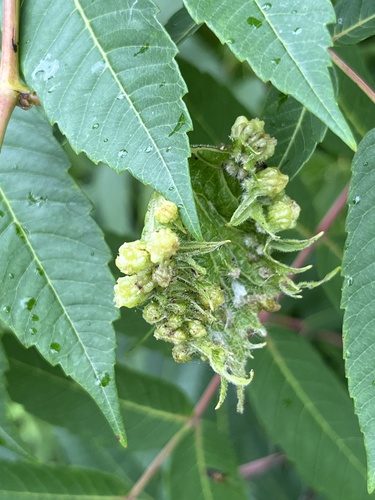
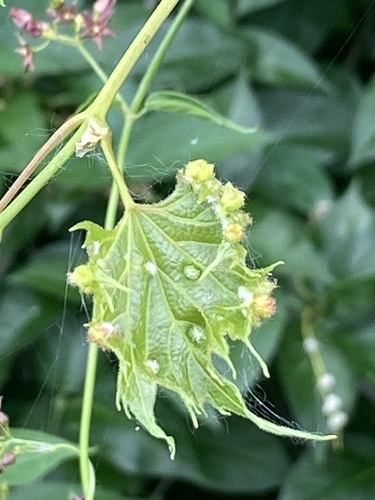
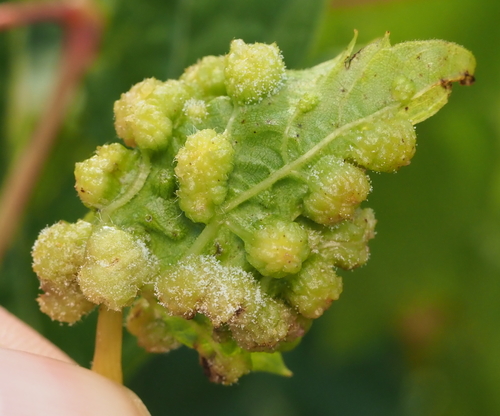
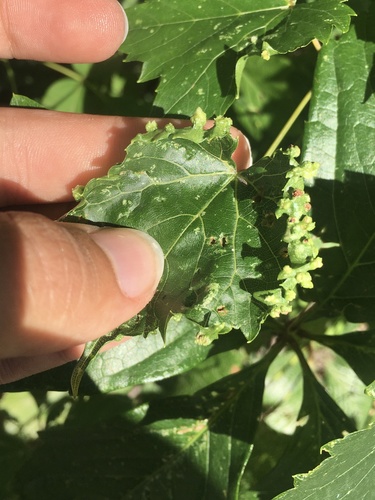
They feed on grapevine roots and leaves, depending on the strain (e4). Nymphs make protective leaf galls on some Vitis species and overwinter under bark or on roots (e5).
Source: Wikipedia
What it eats
They suck sap from grapevine roots and leaves (e8). The fundatrix nymph climbs onto a leaf, injects saliva, and creates a gall to lay eggs (e9).
Source: Wikipedia
Life cycle
Phylloxera has up to 18 stages grouped into four main forms (e10). The sexual form starts with male and female eggs on young leaf undersides; the hatchlings lack a digestive system, mate, and die (e11).
Source: Wikipedia
When you see it
Leaf galls form on some vines and the insects overwinter under bark or on roots (e12). Nymphs may move to other leaves or to roots to start new infections (e13).
Source: Wikipedia
Where it comes from
Phylloxera is native to eastern North America (e6). The name comes from Greek words for leaf and dry (e7).
Source: Wikipedia
Lookalikes
They look like tiny pale-yellow aphid relatives (e14). The common name is simply phylloxera, from Greek for leaf and dry (e15).
Source: Wikipedia
Where it is found in the US
Recorded in 41 of 51 states and DC. Most records: New York, Ohio, Illinois, Wisconsin, Minnesota, Michigan, Maryland, Pennsylvania.
Darker = more records. Counts are museum and citizen-science records, not population size.
Source: GBIF
Months it is reported in the US
Source: GBIF
More photos
Questions people ask
How can I get rid of phylloxera in my garden?
The only effective method is to graft susceptible vines onto phylloxera-resistant American rootstock; there is no chemical treatment.
Source: Wikipedia
What damage does phylloxera cause?
It attacks grapevine roots and leaves, forming galls and weakening the plant, which can kill vines if untreated.
Source: Wikipedia
Sources
- Wikipedia: https://en.wikipedia.org/wiki/Phylloxera
Look it up elsewhere: GBIF · iNaturalist · BugGuide · Wikipedia
Text written 2026-10-22 from the sources above and checked sentence by sentence against them. Data fetched 2026-10-22.