 Bug FAQ
Golden Dung Fly
Scathophaga stercoraria · Order: Diptera · Family: Scathophagidae
Also called: Yellow Dung Fly
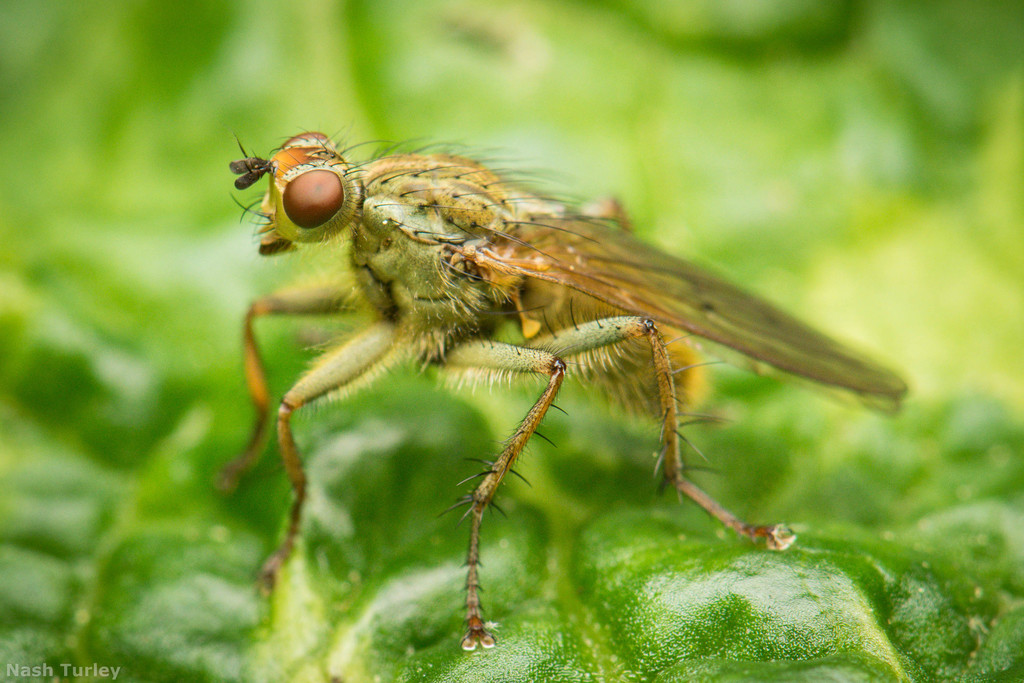
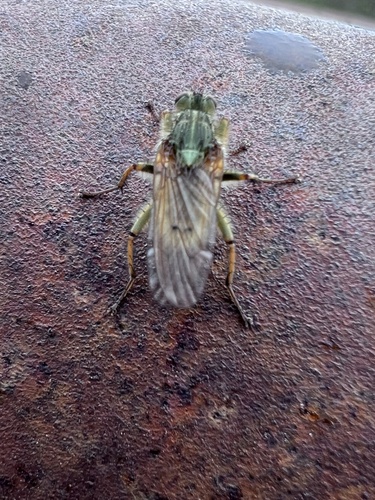
Adult golden dung flies are 5 to 11 mm long; males are larger and bright golden-yellow with orange-yellow front-leg fur, while females are duller green-brown without bright fur. They live on the dung of large mammals in cooler temperate regions of North America, Europe and Asia, where larvae feed on the dung and adults hunt other small flies. Adults live one to two months, mate with multiple partners, and the sex ratio on dung pats is heavily male-biased, leading to strong competition.
Source: Wikipedia
How to recognize it
Females are duller green-brown and lack the bright front-leg fur.
Source: Wikipedia
Size
Adults measure between 5 and 11 mm, males generally larger than females.
Source: Wikipedia
Where it lives
Their range is in cooler temperate zones of North America, Europe and Asia.
Source: Wikipedia
What it eats
Adults prey on smaller insects, mainly other flies. Larvae feed on dung.
Source: Wikipedia
Life cycle
Adults live about one to two months and show sexual dimorphism. Both sexes often have multiple mates.
Source: Wikipedia
When you see it
Their feeding helps reduce numbers of pest flies. Dung pats have a male-biased sex ratio and high competition.
Source: Wikipedia
Where it comes from
They occur in temperate regions of North America, Europe and Asia.
Source: Wikipedia
Where it is found in the US
Recorded in 47 of 51 states and DC. Most records: California, Oregon, Pennsylvania, New York, Kansas, Washington, Texas, Alaska.
Darker = more records. Counts are museum and citizen-science records, not population size.
Source: GBIF
Status: native in North America; native in Canada; native in United States. Source: iNaturalist
Months it is reported in the US
Source: GBIF
More photos
Sources
- Wikipedia: https://en.wikipedia.org/wiki/Scathophaga_stercoraria
Look it up elsewhere: GBIF · iNaturalist · BugGuide · ITIS · Wikipedia
Text written 2026-10-22 from the sources above and checked sentence by sentence against them. Data fetched 2026-10-22.