 Bug FAQ
Golden Banded-Skipper
Telegonus cellus · Order: Scorpiones · Family: Bothriuridae
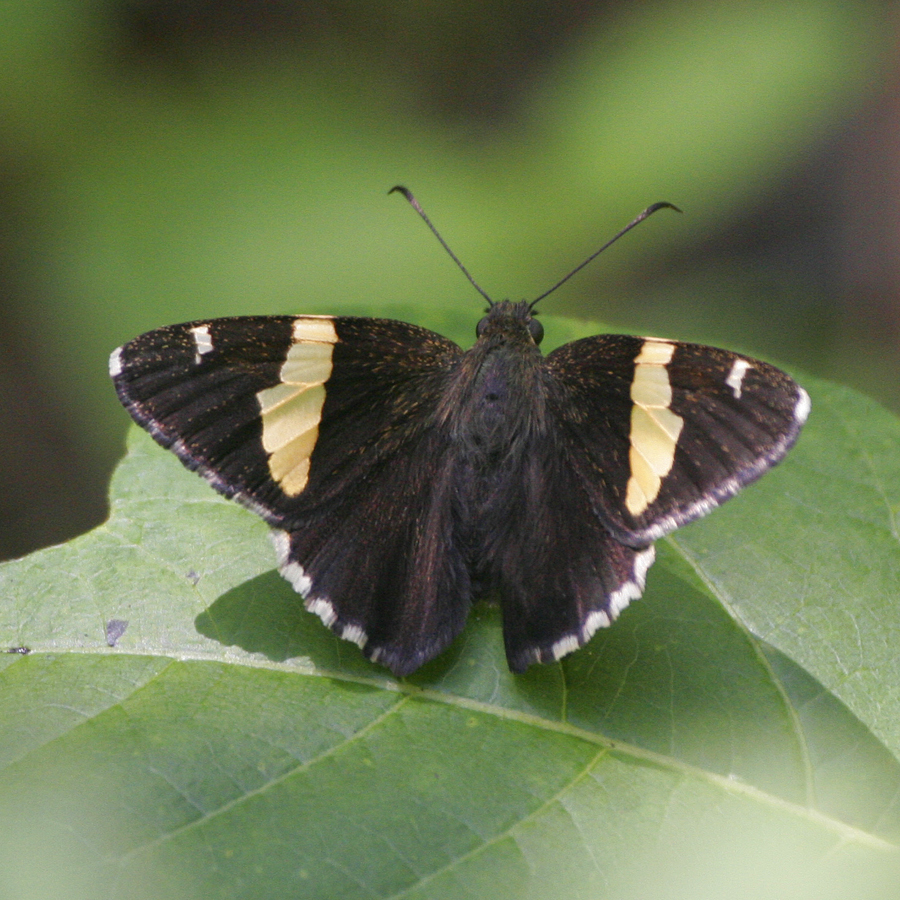
It lives in moist, steep woodlands in the east and canyon riparian areas in the southwest, but its eastern populations are declining where habitat has been lost. Adults fly mid-morning and late afternoon, with flight periods ranging from June-August in the east, February-September in Florida, and mid-June-early September in Arizona; the species produces one to three broods per year and overwinters as a pupa.
Source: Wikipedia
How to recognize it
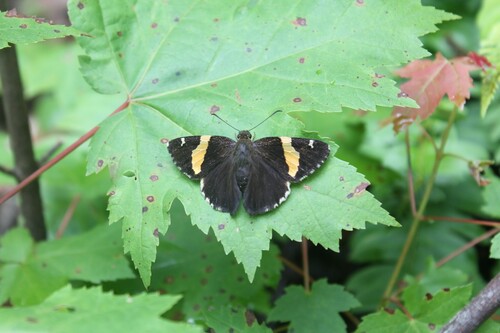
The hindwing edge shows a checkered fringe.
Source: Wikipedia
Size
Its wingspan ranges from 32 to 44 mm (about 1.25 to 1.75 in).
Source: Wikipedia
Where it lives
In the eastern part of its range it prefers moist, steep woodlands. In the southwestern part it favors canyon riparian habitats. Eastern populations are declining where habitat has been lost around Washington, D.C., and West Virginia.
Source: Wikipedia
What it eats
Southwestern populations use several host plants, ranging from uncommon to common in the area.
Source: Wikipedia
Life cycle
It overwinters in the pupal stage. Adults may have one to three generations each year.
Source: Wikipedia
When you see it
Adults are most active mid-morning and late afternoon. Flight time is June-August in the east, February-September in Florida, and mid-June-early September in Arizona.
Source: Wikipedia
Where it comes from
The golden banded-skipper is native to North and Central America.
Source: Wikipedia
Lookalikes
It can be confused with several other banded-skippers, such as the Sonoran banded-skipper, Sierra Madre banded-skipper, Chisos banded-skipper, dark-fringed banded-skipper, spiky banded-skipper, two-spotted banded-skipper, sharp banded-skipper, and narrow banded-skipper.
Source: Wikipedia
Where it is found in the US
Recorded in 16 of 51 states and DC. Most records: Arizona, Texas, Florida, Virginia, Arkansas, Tennessee, North Carolina, Georgia.
Darker = more records. Counts are museum and citizen-science records, not population size.
Source: GBIF
Status: native in North America; native in United States. Source: iNaturalist
Months it is reported in the US
Source: GBIF
More photos
Same family (Bothriuridae)

Sources
- Wikipedia: https://en.wikipedia.org/wiki/Telegonus_cellus
Look it up elsewhere: GBIF · iNaturalist · BugGuide · Wikipedia
Text written 2026-10-24 from the sources above and checked sentence by sentence against them. Data fetched 2026-10-24.