 Bug FAQ
Goblet-marked Damselfly
Erythromma lindenii · Order: Odonata · Family: Coenagrionidae
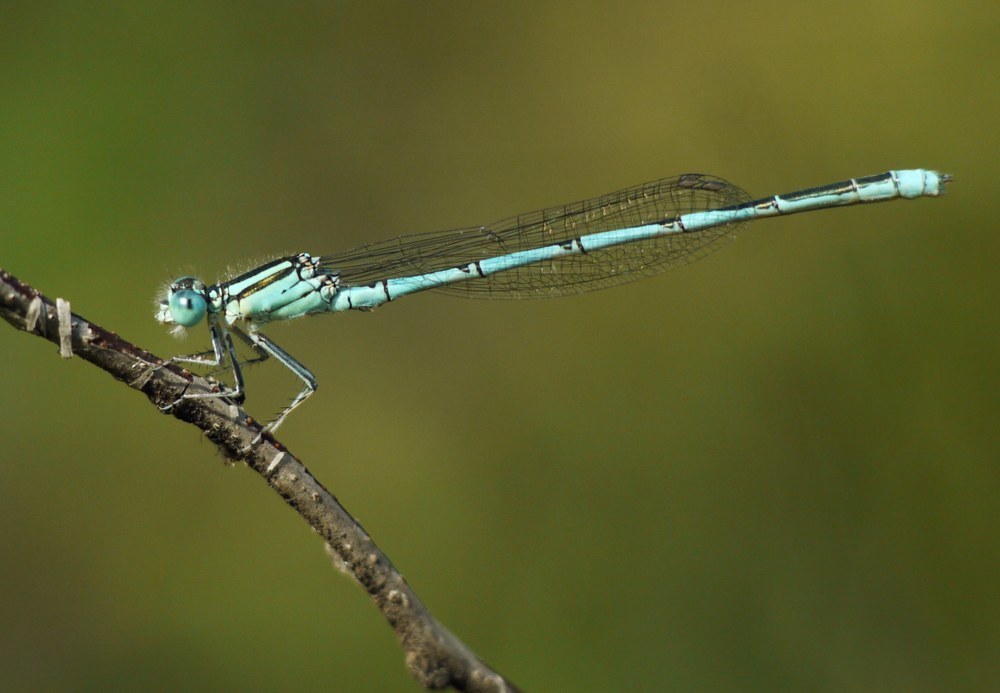
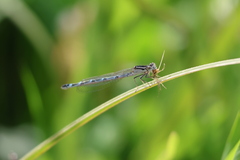
The goblet-marked damselfly is a medium-sized insect with blue-and-black or green-and-black coloring. Males have very bright blue eyes, wide antehumeral stripes, narrow post-ocular spots, long curved appendages and spear-shaped marks on abdominal segments S3-S6. It lives in southern and western Europe, parts of Russia, and Africa, but not in the British Isles, Scandinavia or eastern Europe.
Source: Wikipedia
How to recognize it
Key field marks are wide antehumeral stripes, narrow post-ocular spots, very bright blue eyes in males, long curved appendages and spear-shaped marks on abdominal segments S3-S6.
Source: Wikipedia
Size
It is a medium-sized damselfly.
Source: Wikipedia
Where it lives
Common in southern and western Europe, also found in Russia and Africa.
Source: Wikipedia
Where it comes from
Absent from the British Isles, Scandinavia and eastern Europe.
Source: Wikipedia
Lookalikes
It was formerly called Coenagrion lindenii and Cercion lindenii.
Source: Wikipedia
Questions people ask
Where can I find the goblet-marked damselfly?
It occurs in southern and western Europe, parts of Russia and Africa, but not in the British Isles, Scandinavia or eastern Europe.
Source: Wikipedia
Same family (Coenagrionidae)


Sources
- Wikipedia: https://en.wikipedia.org/wiki/Goblet-marked_damselfly
Look it up elsewhere: GBIF · iNaturalist · BugGuide · Wikipedia
Text written 2026-10-22 from the sources above and checked sentence by sentence against them. Data fetched 2026-10-22.