 Bug FAQ
Gadim Slender-tailed Scorpion
Hemiscorpius lepturus · Order: Scorpiones · Family: Hemiscorpiidae
Source: Wikipedia
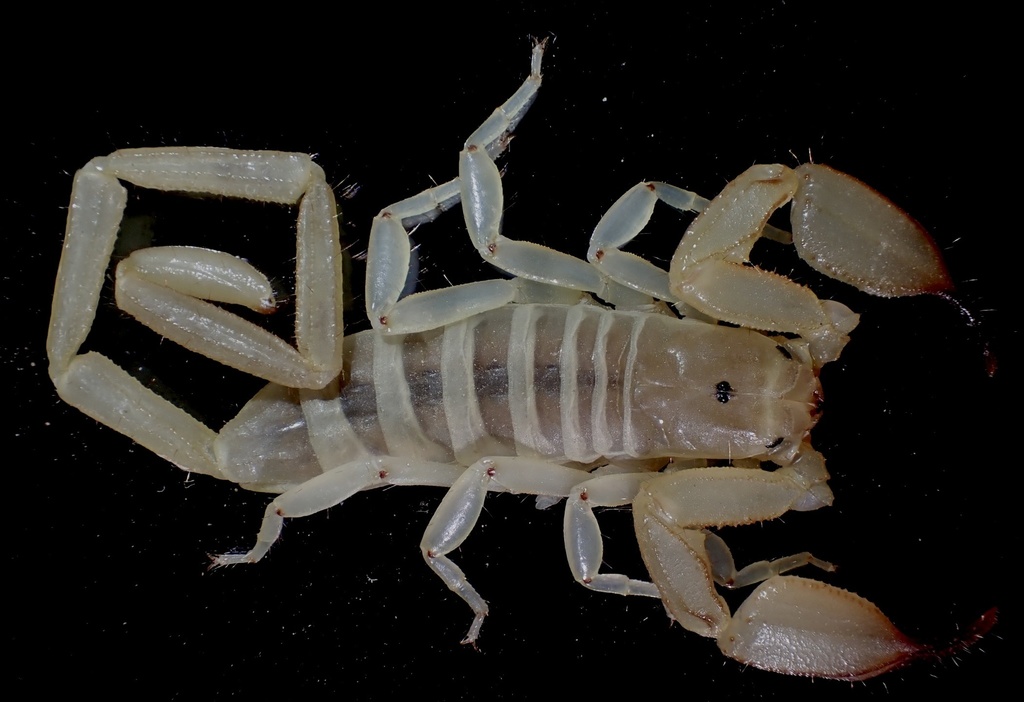
Males reach about 8 cm and females about 5.5 cm, allowing them to hide in tight rock crevices. It lives in the deserts of southern Iraq and Iran and is a solitary desert dweller. Its venom is highly cytotoxic and hemolytic and is responsible for most scorpion-sting deaths in the Iran region.
Source: Wikipedia
How to recognize it
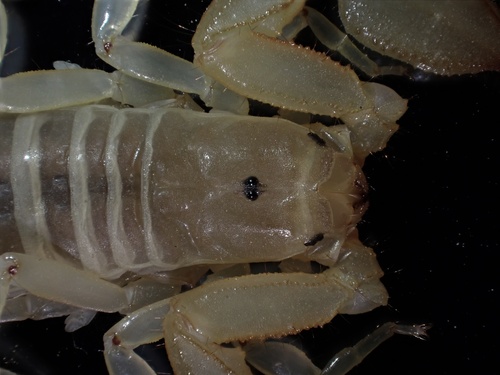
It is yellow-brown with a flat, broad body and a long, thin tail.
Source: Wikipedia
Size
Males grow to about 8 cm (3.1 in) and females to about 5.5 cm (2.2 in).
Source: Wikipedia
Does it bite or sting?
Its venom is highly dangerous, causing cytotoxic and hemolytic effects and many deaths in Iran.
Source: Wikipedia
Where it lives
It inhabits desert regions of the Middle East, especially southern Iraq and Iran. The species is fairly solitary.
Source: Wikipedia
Where it comes from
Its native range is the deserts of southern Iraq and Iran.
Source: Wikipedia
Lookalikes
It has seven pairs of appendages and distinctive trichobothria positions on the pedipalp chela.
Source: Wikipedia
More photos
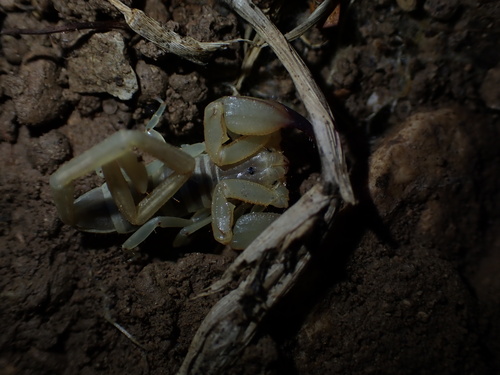
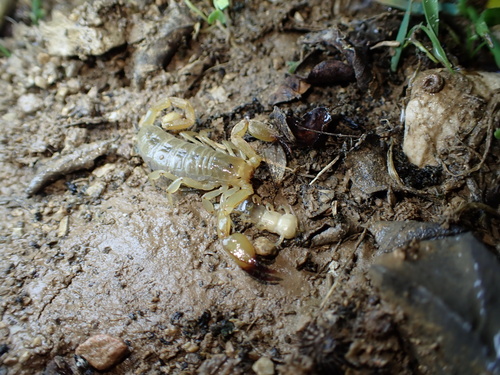
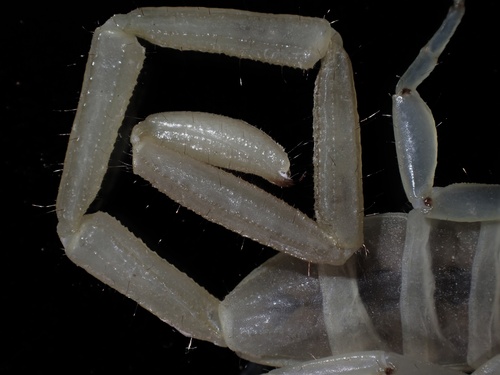
Questions people ask
How dangerous is the sting of Gadim slender-tailed scorpion?
Its sting is medically serious; the venom is highly cytotoxic and has caused many deaths in Iran.
Source: Wikipedia
What does this scorpion look like?
It is yellow-brown, flat-bodied, with a long thin tail and a wide body.
Source: Wikipedia
Sources
- Wikipedia: https://en.wikipedia.org/wiki/Hemiscorpius_lepturus
Look it up elsewhere: GBIF · iNaturalist · BugGuide · Wikipedia
Text written 2026-10-23 from the sources above and checked sentence by sentence against them. Data fetched 2026-10-23.