 Bug FAQ
Four-spotted Yellowneck Moth
Oegoconia quadripuncta · Order: Lepidoptera · Family: Autostichidae
Also called: (European) Four-spotted Yellowneck Moth, Four-spotted Obscure
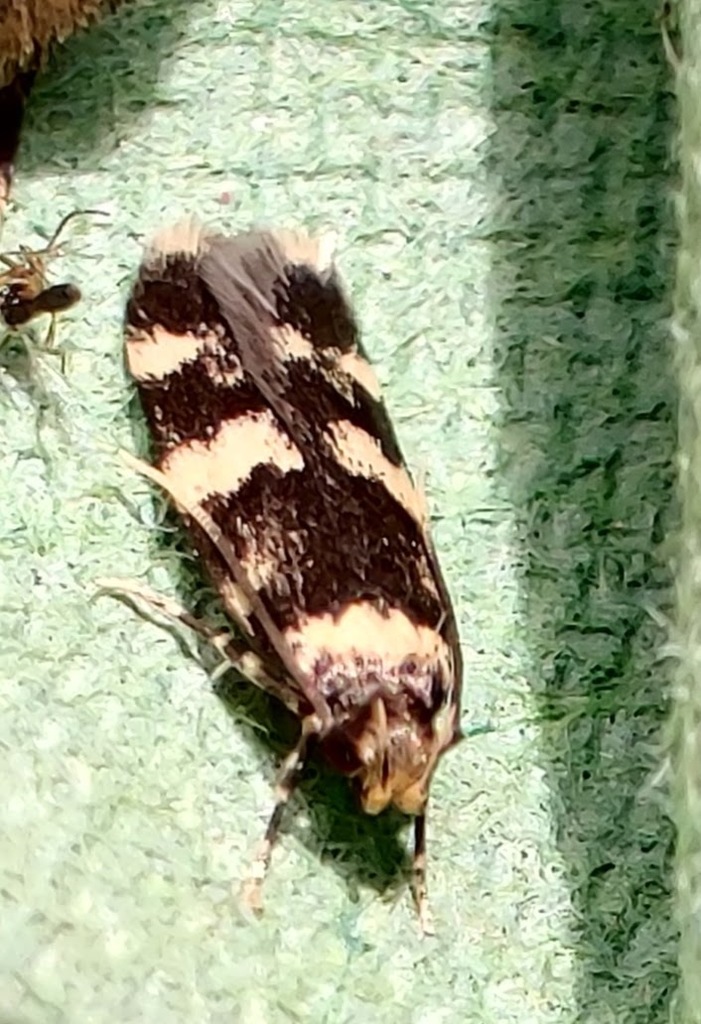
The four-spotted yellowneck moth is a small, blackish moth with two yellow spots on each forewing and a yellow neck area. Its caterpillars live in leaf litter and feed on detritus such as rotting wood.
Source: Wikipedia
Size
The wingspan measures about 11 to 17 mm.
Source: Wikipedia
Where it lives
Caterpillars live in leaf litter.
Source: Wikipedia
What it eats
The larvae eat detritus such as rotting wood.
Source: Wikipedia
When you see it
They are nocturnal and are attracted to lights.
Source: Wikipedia
Lookalikes
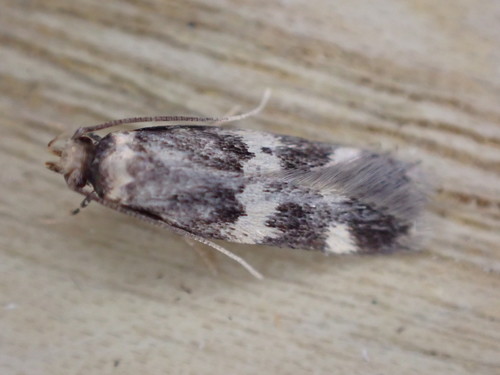
Related species can look identical and may require microscopic examination of the genitalia to tell apart.
Source: Wikipedia
Where it is found in the US
Recorded in 34 of 51 states and DC. Most records: Washington, California, Colorado, New York, New Jersey, Oregon, Maryland, Michigan.
Darker = more records. Counts are museum and citizen-science records, not population size.
Source: GBIF
Status: native in Canada. Source: iNaturalist
Months it is reported in the US
Source: GBIF
More photos
Questions people ask
What do the caterpillars eat?
The larvae feed on detritus such as rotting wood found in leaf litter.
Source: Wikipedia
Same family (Autostichidae)

Sources
- Wikipedia: https://en.wikipedia.org/wiki/Oegoconia_quadripuncta
Look it up elsewhere: GBIF · iNaturalist · BugGuide · Wikipedia
Text written 2026-10-24 from the sources above and checked sentence by sentence against them. Data fetched 2026-10-24.