 Bug FAQ
Foreign grain beetle
Ahasverus advena · Order: Coleoptera · Family: Silvanidae
Source: Wikipedia
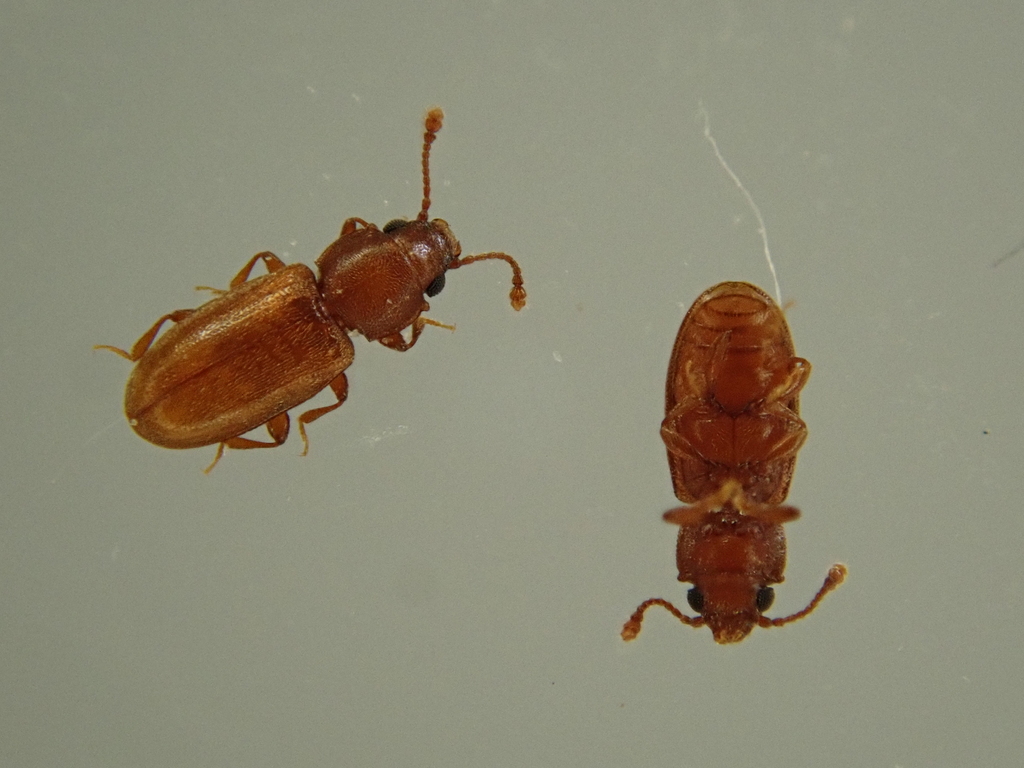
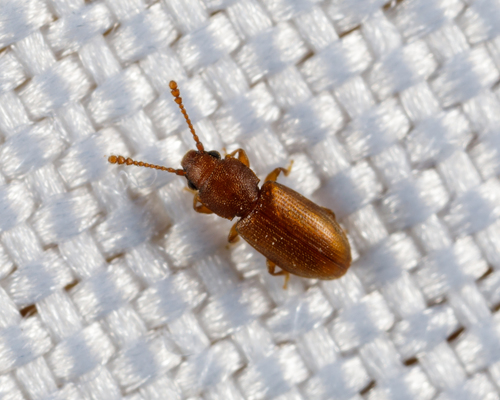
The foreign grain beetle is about 2 mm long and usually reddish-brown, sometimes black, with small knobs on the front corners of the pronotum and club-shaped antennae. It lives in moist places where mold grows, such as house walls near plumbing, stored grains, peanuts, dried fruit and other pantry items. The beetle feeds mainly on fungi and yeasts, especially the mold that develops on stored food.
Source: Wikipedia
How to recognize it
Adults are typically reddish-brown, but can also be black.
Source: Wikipedia
Size
Adults measure about 2 mm (1⁄12 in) in length.
Source: Wikipedia
Is it a pest in the house?
They may infest grains, cereals, oilseeds, dried fruit and spices, especially when the product is moldy. Their presence signals damp storage conditions and spoiled food.
Source: Wikipedia
Can it bite, sting or make you sick?
The beetle is harmless to people.
Source: Wikipedia
How to get rid of it
Eliminating damp habitats helps control the beetle.
Source: Wikipedia
Where it lives
They are found in moist indoor locations where fungus develops, such as walls around plumbing systems. They also occur on stored foodstuffs like peanuts and dried fruits.
Source: Wikipedia
What it eats
They feed chiefly on fungi, including yeasts. In grain storage they eat the mold growing on the grain.
Source: Wikipedia
Life cycle
Females can start laying eggs about 3 to 4 days after emerging from the pupa. Larval development takes longer when conditions are drier.
Source: Wikipedia
Where it comes from
The species occurs in tropical and temperate regions worldwide.
Source: Wikipedia
Lookalikes
It can be confused with other Ahasverus species, especially A. rectus, which also occurs in North American grain bins.
Source: Wikipedia
Where it is found in the US
Recorded in 25 of 51 states and DC. Most records: Kentucky, Pennsylvania, Kansas, Indiana, Illinois, New Mexico, California, Michigan.
Darker = more records. Counts are museum and citizen-science records, not population size.
Source: GBIF
Status: introduced in Canada. Source: iNaturalist
Months it is reported in the US
Source: GBIF
More photos
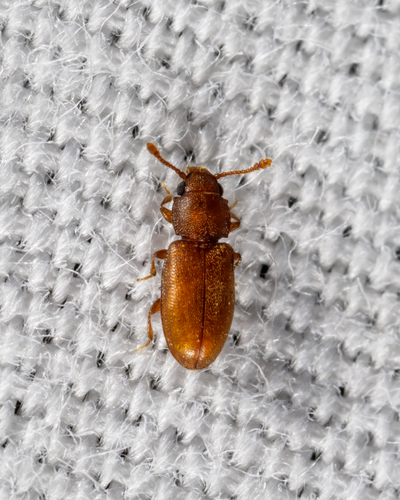
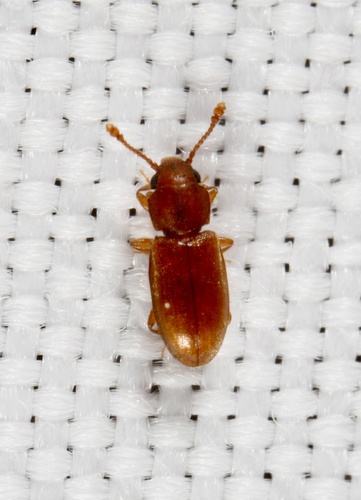
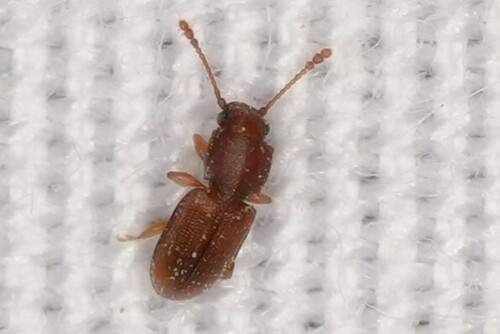
Questions people ask
How can I identify a foreign grain beetle?
Look for a tiny (≈2 mm) reddish-brown beetle with small knobs on the front corners of the pronotum and club-shaped antennae.
Source: Wikipedia
How do I get rid of them?
Reduce moisture in storage areas and use fumigants or contact insecticides if needed, but removing dampness is essential to prevent re-infestation.
Source: Wikipedia
What does their presence indicate?
Finding these beetles usually means the stored food is damp and moldy.
Source: Wikipedia
Same family (Silvanidae)


Sources
- Wikipedia: https://en.wikipedia.org/wiki/Ahasverus_advena
Look it up elsewhere: GBIF · iNaturalist · BugGuide · ITIS · Wikipedia
Text written 2026-10-27 from the sources above and checked sentence by sentence against them. Data fetched 2026-10-27.