 Bug FAQ
Forcepfly
Merope tuber · Order: Mecoptera · Family: Meropeidae
Also called: earwig scorpionfly
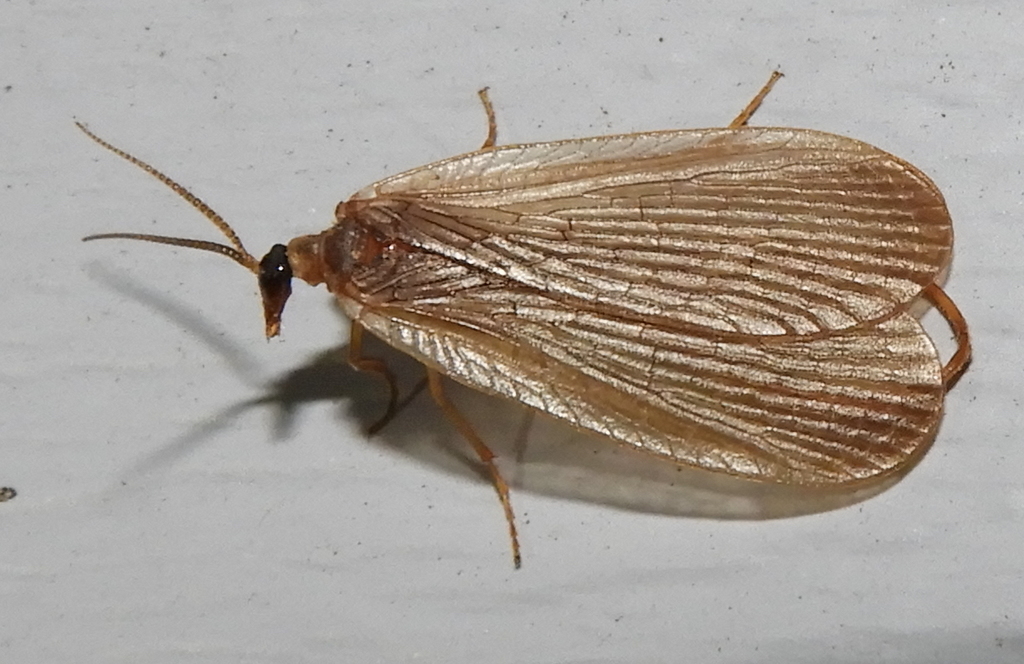
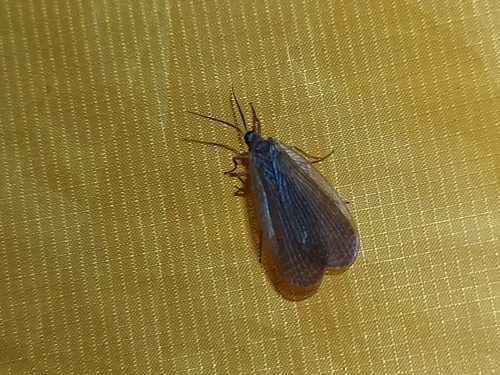
Males have large genital forceps on the abdomen that look like earwig cerci. They have long, heavily veined wings and lack simple eyes. Adults are nocturnal, often found under logs, near streams, or attracted to lights at night.
Source: Wikipedia
Where it lives
Adults are secretive, nocturnal, and are sometimes caught in malaise traps near streams or under logs. Their flat body suggests they live close to the ground in cracks and small openings. They are attracted to lights at night.
Source: Wikipedia
Where it comes from
It occurs across the eastern United States from Ontario down to Georgia and west to Kansas. It has recently also been recorded in Florida.
Source: Wikipedia
Where it is found in the US
Recorded in 33 of 51 states and DC. Most records: Virginia, Ohio, Maryland, Vermont, Pennsylvania, New York, Illinois, Michigan.
Darker = more records. Counts are museum and citizen-science records, not population size.
Source: GBIF
Status: native in North America; native in Canada. Source: iNaturalist
Months it is reported in the US
Source: GBIF
More photos
Questions people ask
How can I recognize this bug?
Look for the big genital forceps on the male’s abdomen and long, heavily veined wings without ocelli.
Source: Wikipedia
Where might I find this insect?
They are nocturnal and may be found under logs, in ground cracks, or near streams, and they are attracted to lights at night.
Source: Wikipedia
Sources
- Wikipedia: https://en.wikipedia.org/wiki/Merope_tuber
Look it up elsewhere: GBIF · iNaturalist · BugGuide · ITIS · Wikipedia
Text written 2026-10-23 from the sources above and checked sentence by sentence against them. Data fetched 2026-10-23.