 Bug FAQ
Five-spotted Bogus Yucca Moth
Prodoxus quinquepunctella · Order: Lepidoptera · Family: Prodoxidae
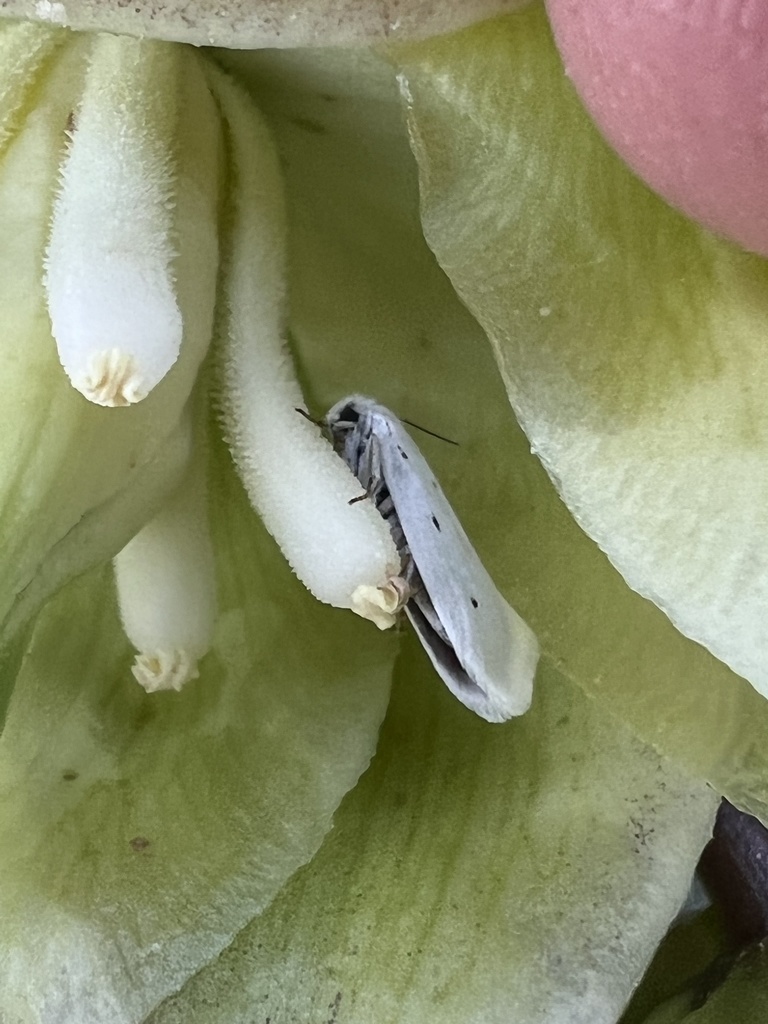
The five-spotted bogus yucca moth has a wingspan of about 12 to 23 mm. It lives in deserts, grasslands, forest openings, coastal chaparral and dunes. Its range extends from southern Alberta in Canada down to the Mexican Plateau of northern Mexico.
Source: Wikipedia
Size
Wingspan is roughly 12 to 23 mm.
Source: Wikipedia
Where it lives
Found in desert, grassland, forest openings, coastal chaparral and dunes.
Source: Wikipedia
Where it is found in the US
Recorded in 20 of 51 states and DC. Most records: Mississippi, Texas, Connecticut, South Carolina, Georgia, New Mexico, Colorado, Tennessee.
Darker = more records. Counts are museum and citizen-science records, not population size.
Source: GBIF
Status: native in North America; native in Canada; native in United States. Source: iNaturalist
Months it is reported in the US
Source: GBIF
Questions people ask
Where is the five-spotted bogus yucca moth found?
It ranges from southern Alberta in Canada down to the Mexican Plateau of northern Mexico.
Source: Wikipedia
Same family (Prodoxidae)
Sources
- Wikipedia: https://en.wikipedia.org/wiki/Prodoxus_quinquepunctellus
Look it up elsewhere: GBIF · iNaturalist · BugGuide · Wikipedia
Text written 2026-10-27 from the sources above and checked sentence by sentence against them. Data fetched 2026-10-27.