 Bug FAQ
European Yellow-tailed Scorpion
Tetratrichobothrius flavicaudis · Order: Scorpiones · Family: Euscorpiidae
Source: Wikipedia
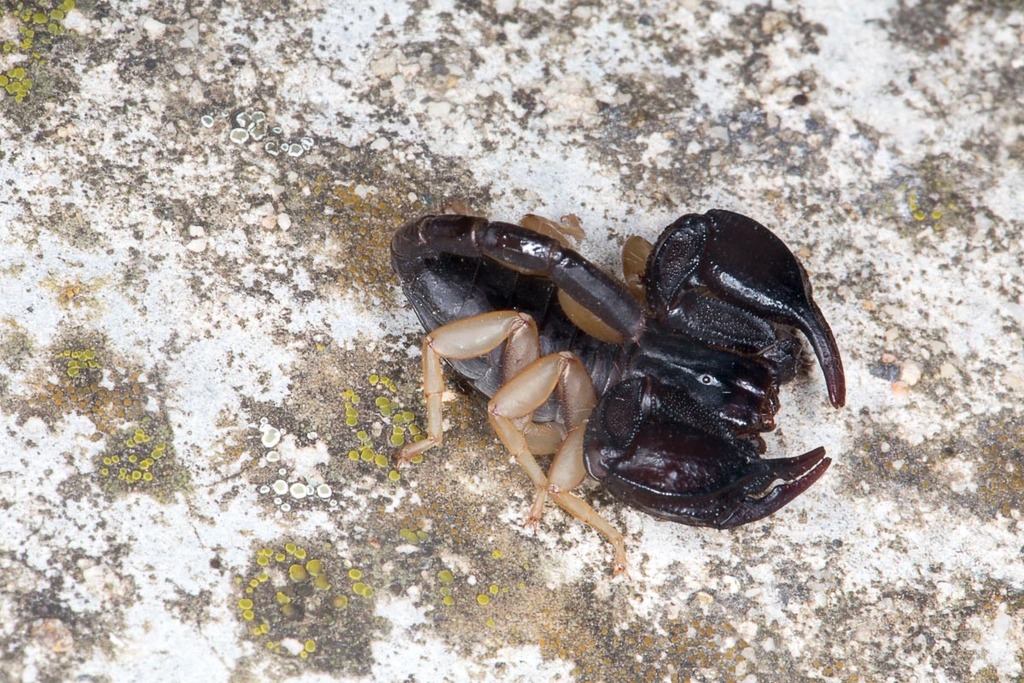
Adults are 35 to 45 mm long and have a black body with yellow-brown legs and a short, thin tail. They live in warm temperate areas, often in cracks and holes of walls where mortar has crumbled, and they eat woodlice and other small insects. Females carry embryos for 10 to 14 months and the young become adults after 1 to 2 years.
Source: Wikipedia
How to recognize it
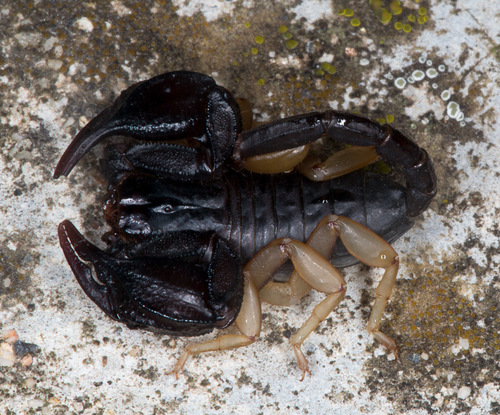
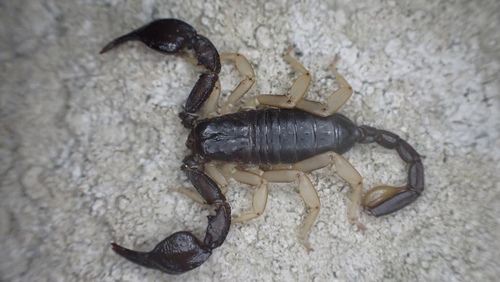
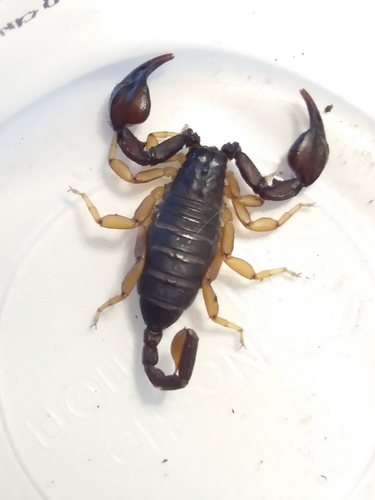
It has relatively large, strong claws and a short, thin tail.
Source: Wikipedia
Size
Adults measure about 35 to 45 mm (1 ⅖ to 1 ⅘ in) long.
Source: Wikipedia
Does it bite or sting?
It is mildly venomous and rarely uses its stinger.
Source: Wikipedia
Where it lives
In warm temperate climates it is found in built-up areas. In the UK it lives in cracks and holes of walls where mortar has crumbled.
Source: Wikipedia
What it eats
Its main prey are woodlice, but it also catches other small insects. It can survive long periods without food, needing only a few woodlice per year.
Source: Wikipedia
Life cycle
Gestation lasts 10 to 14 months, depending on food and climate.
Source: Wikipedia
Where it comes from
It is native to southern Europe and north-west Africa.
Source: Wikipedia
More photos
Questions people ask
Do they sting people?
Yes, they can sting, but the sting is only mildly painful, less than a bee sting.
Source: Wikipedia
How long do they live before becoming adults?
Young scorpions become adults after one to two years.
Source: Wikipedia
Where might I find them in my house?
They often hide in cracks and holes of walls where mortar has crumbled.
Source: Wikipedia
Same family (Euscorpiidae)

Sources
- Wikipedia: https://en.wikipedia.org/wiki/Tetratrichobothrius_flavicaudis
Look it up elsewhere: GBIF · iNaturalist · BugGuide · Wikipedia
Text written 2026-10-23 from the sources above and checked sentence by sentence against them. Data fetched 2026-10-22.