 Bug FAQ
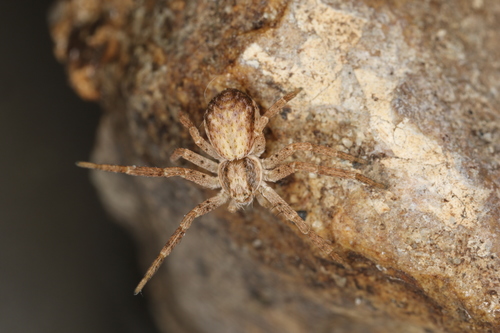
Eurasian Running Crab Spider
Philodromus dispar · Order: Araneae · Family: Philodromidae
Also called: house crab-spider
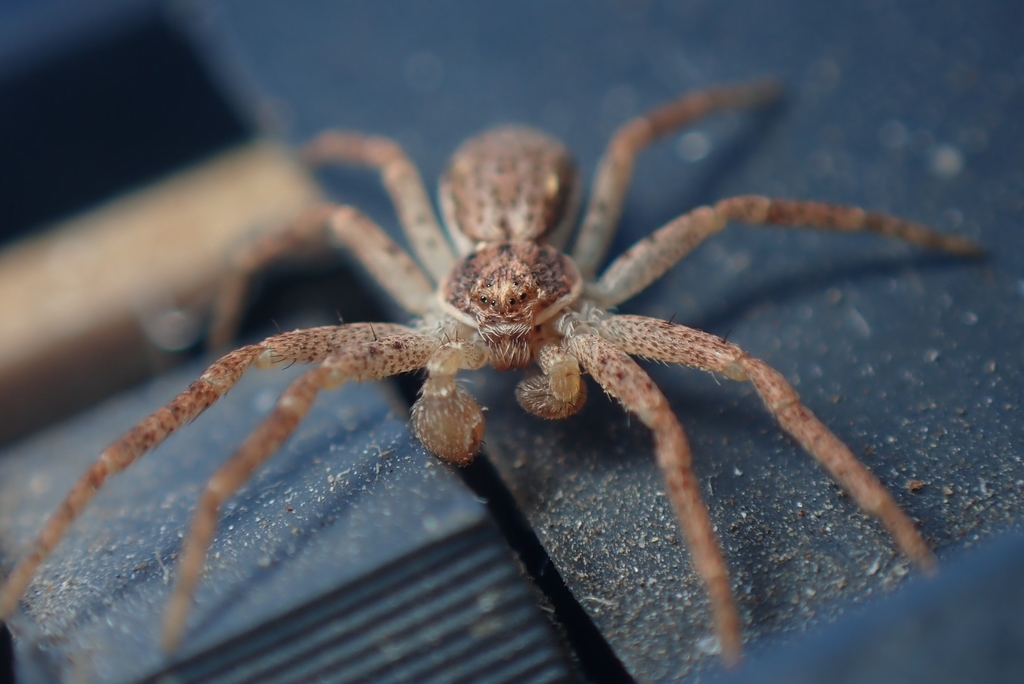
The Eurasian Running Crab Spider is about 5 mm long and shows variable coloration in females, while males are shiny black or dark brown with white edges. It lives on trees and bushes, does not spin a web, and catches flies and other insects by waiting in ambush.
Source: Wikipedia
How to recognize it
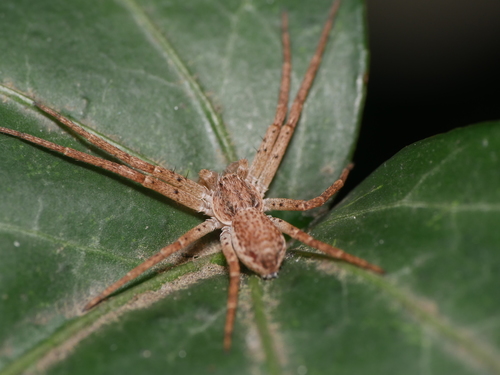
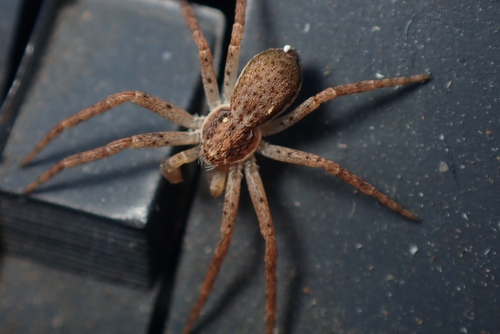
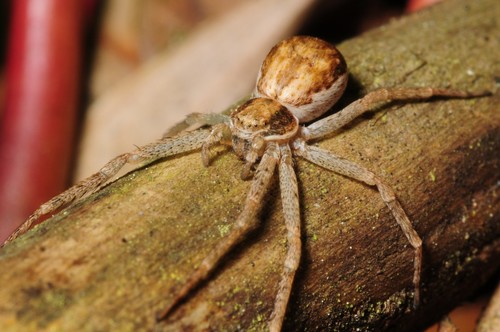
Females vary in size and colour, whereas males are glossy black or dark brown with white margins.
Source: Wikipedia
Size
Adults are roughly 5 mm in length.
Source: Wikipedia
Where it lives
Found on trees and bushes; it does not build a web but waits motionless to ambush prey.
Source: Wikipedia
What it eats
It preys on flies and other insects.
Source: Wikipedia
Where it is found in the US
Recorded in 7 of 51 states and DC. Most records: Washington, Oregon, Idaho, Montana, Colorado, Maine, California.
Darker = more records. Counts are museum and citizen-science records, not population size.
Source: GBIF
Status: introduced in North America; introduced in Canada; introduced in United States. Source: iNaturalist
Months it is reported in the US
Source: GBIF
More photos
Sources
- Wikipedia: https://en.wikipedia.org/wiki/Philodromus_dispar
Look it up elsewhere: GBIF · iNaturalist · BugGuide · ITIS · Wikipedia
Text written 2026-10-22 from the sources above and checked sentence by sentence against them. Data fetched 2026-10-22.