 Bug FAQ
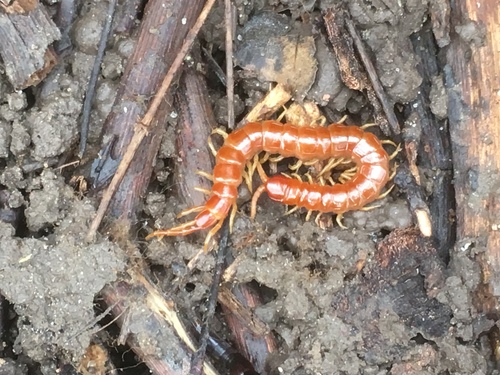
Eastern Red Centipede
Scolopocryptops sexspinosus · Order: Scolopendromorpha · Family: Scolopocryptopidae
Source: Wikipedia
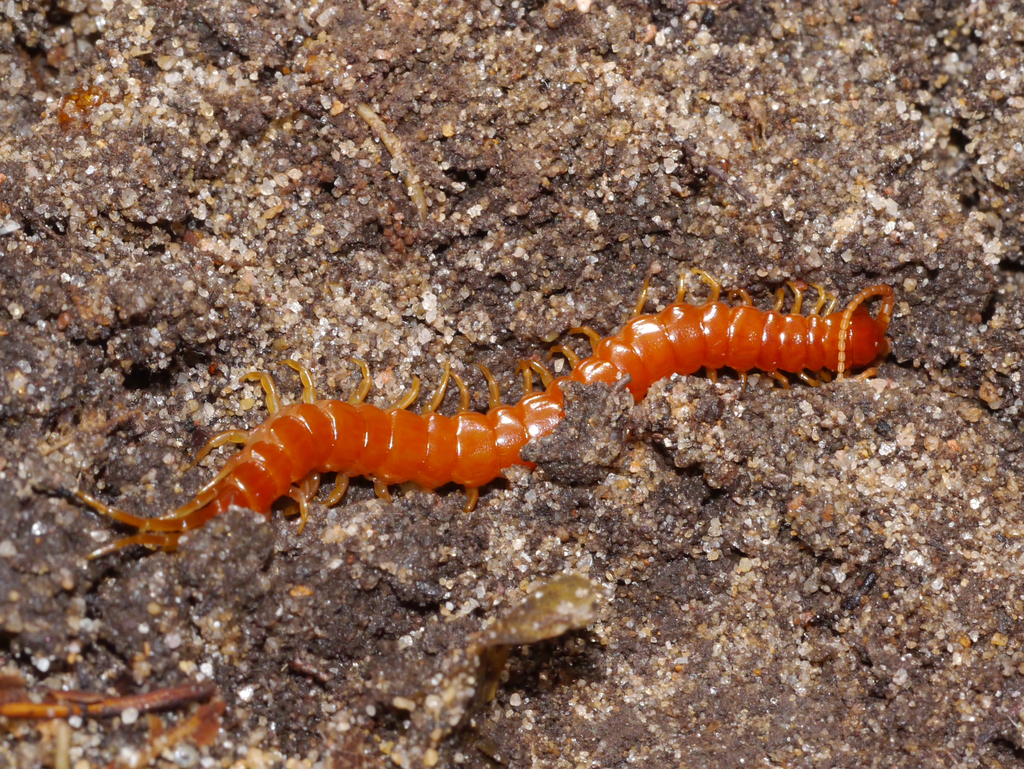
The eastern red centipede can grow to about 7 cm (≈ 69 mm) long. It lives under decaying logs, leaf litter, rotting wood or bark, especially in summer when females guard their eggs. It preys on spiders, insects, earthworms and smaller centipedes.
Source: Wikipedia
Size
Adults can reach up to 69 mm (about 7 cm) in length.
Source: Wikipedia
Does it bite or sting?
These centipedes move quickly and can give a painful bite.
Source: Wikipedia
Where it lives
It hides in decaying logs, leaf litter, rotting wood or under bark.
Source: Wikipedia
Life cycle
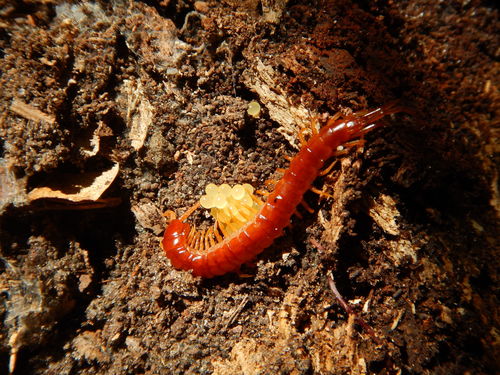
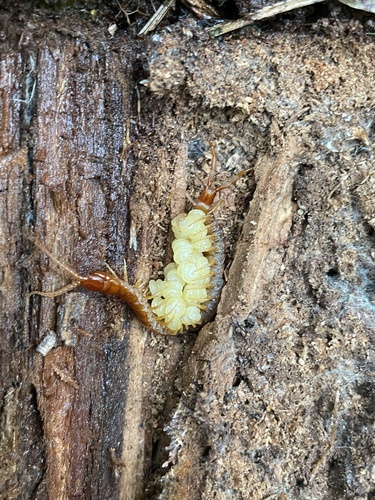
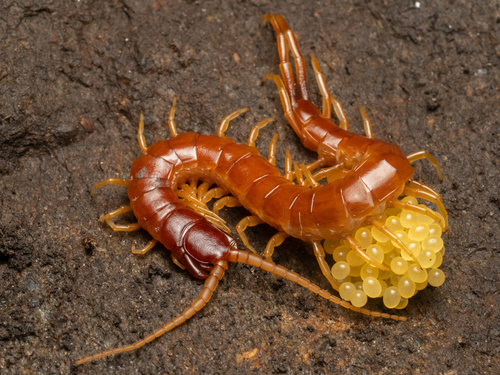
In summer, females coil around their brood of eggs or newly hatched young in rotting wood or under bark.
Source: Wikipedia
When you see it
Adults are active throughout the year.
Source: Wikipedia
Lookalikes
Specimens from British Columbia once thought to be this species were later identified as S. spinicaudus.
Source: Wikipedia
Where it is found in the US
Recorded in 36 of 51 states and DC. Most records: North Carolina, Pennsylvania, Virginia, Georgia, Florida, Alabama, Ohio, New York.
Darker = more records. Counts are museum and citizen-science records, not population size.
Source: GBIF
Status: native in North America; native in Canada; native in United States. Source: iNaturalist
Months it is reported in the US
Source: GBIF
More photos
Questions people ask
Where are they found?
They hide under decaying logs, leaf litter, rotting wood or bark, especially in summer.
Source: Wikipedia
Sources
- Wikipedia: https://en.wikipedia.org/wiki/Scolopocryptops_sexspinosus
Look it up elsewhere: GBIF · iNaturalist · BugGuide · ITIS · Wikipedia
Text written 2026-10-22 from the sources above and checked sentence by sentence against them. Data fetched 2026-10-22.