 Bug FAQ
Eastern Phantom Crane Fly
Bittacomorpha clavipes · Order: Diptera · Family: Ptychopteridae
Also called: Phantom Crane Fly
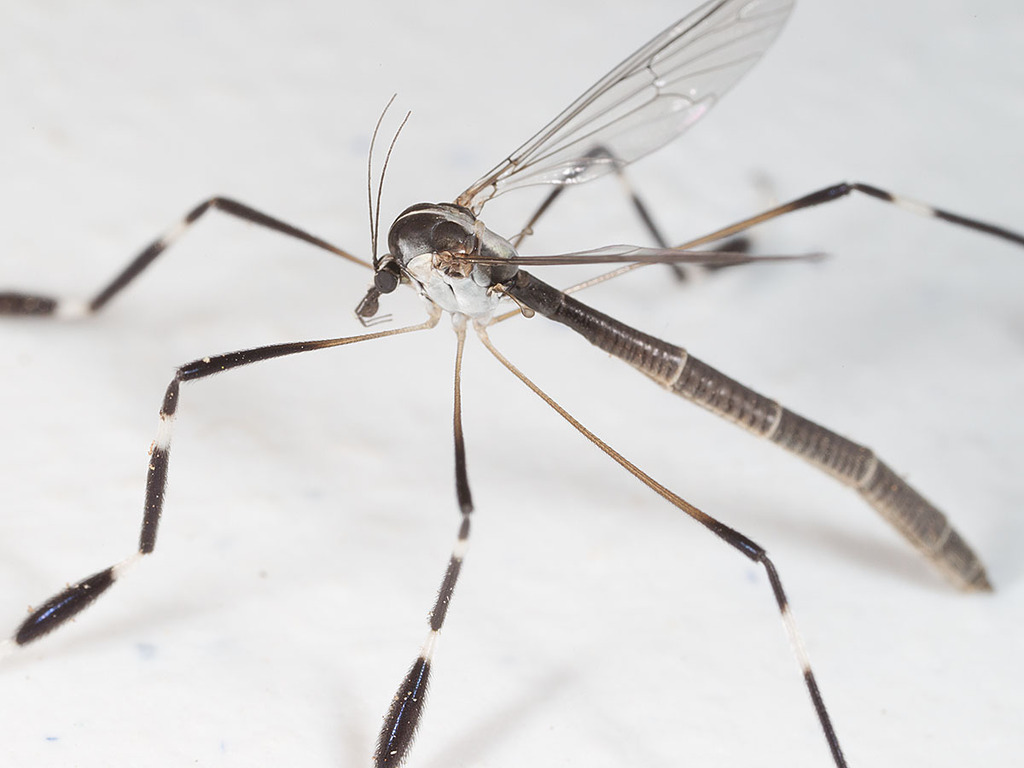
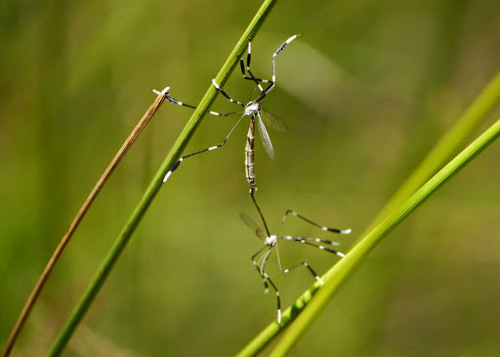
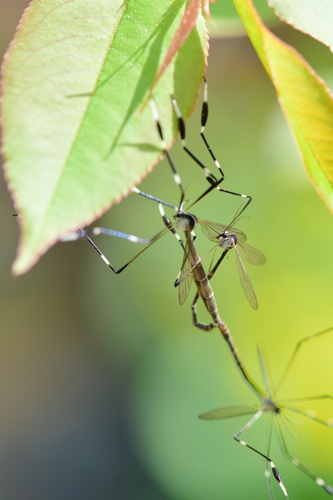
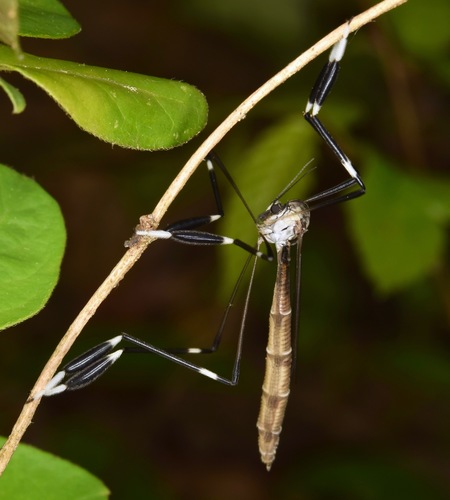
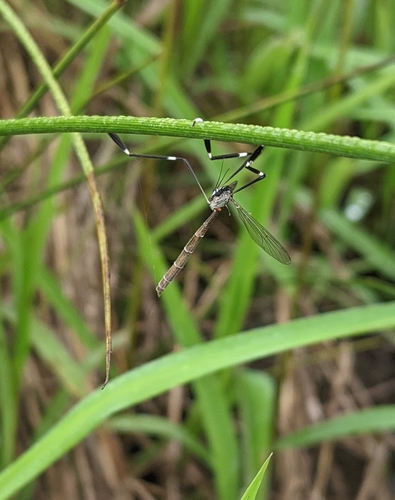
The eastern phantom crane fly is a small, half-inch insect with thin black legs that have white sheaths near the tips. It lives in shady, moist edges of wetlands across eastern North America from late spring to early fall.
Source: Wikipedia
How to recognize it
It can be told apart by its eastern range, the amount of white on its thorax, and its larger legs and tarsi compared with similar species. All members of its subfamily have a striking black-and-white pattern, which gives them the name “phantom crane fly”.
Source: Wikipedia
Size
The body is about half an inch long and its legs are thin, black, with white sheaths near the tips.
Source: Wikipedia
What it eats
Larvae live in the top inch of substrate and feed on decaying material. Adults probably feed little or not at all.
Source: Wikipedia
Life cycle
There is one generation per year, but two generations occur in the northern part of its range. Eggs hatch in about seven days.
Source: Wikipedia
When you see it
Adults are most commonly seen from late spring through autumn in shaded, moist habitats.
Source: Wikipedia
Lookalikes
Do not confuse it with the pygmy phantom crane fly (Bittacomorphella jonesi) or the western phantom crane fly (Bittacomorpha occidentalis).
Source: Wikipedia
Where it is found in the US
Recorded in 42 of 51 states and DC. Most records: Massachusetts, Ohio, North Carolina, Michigan, Georgia, Maryland, New York, Virginia.
Darker = more records. Counts are museum and citizen-science records, not population size.
Source: GBIF
Status: native in North America; native in Canada; native in United States. Source: iNaturalist
Months it is reported in the US
Source: GBIF
More photos
Questions people ask
When are eastern phantom crane flies active?
They are most often seen from late spring through autumn.
Source: Wikipedia
Where do I find these crane flies?
Look for them in shady, moist edges of wetlands in eastern North America.
Source: Wikipedia
What do the larvae eat?
Larvae feed on decaying organic material in the top inch of wet soil.
Source: Wikipedia
How can I tell this species apart from similar crane flies?
Its eastern range, white on the thorax, and larger legs and tarsi distinguish it from related species.
Source: Wikipedia
Sources
- Wikipedia: https://en.wikipedia.org/wiki/Bittacomorpha_clavipes
Look it up elsewhere: GBIF · iNaturalist · BugGuide · ITIS · Wikipedia
Text written 2026-10-22 from the sources above and checked sentence by sentence against them. Data fetched 2026-10-22.