 Bug FAQ
Ear Mange Mite
Otodectes cynotis · Order: Sarcoptiformes · Family: Psoroptidae
Also called: Mite, Cat/Dog Ear Mite
Source: Wikipedia
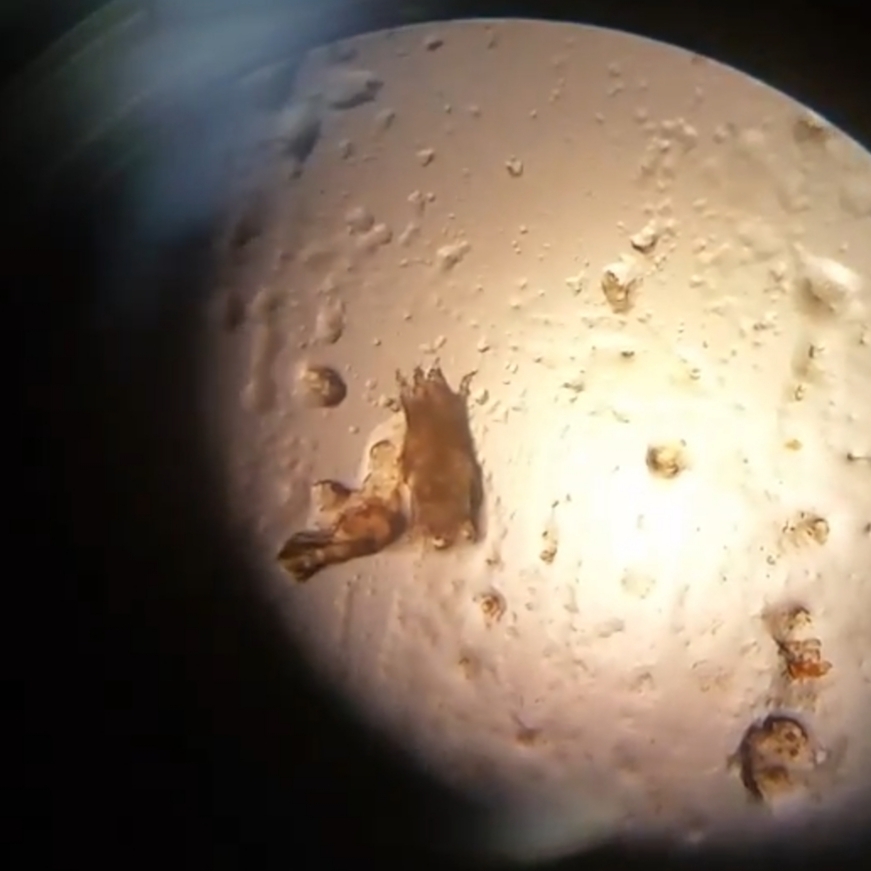
Ear mange mites are tiny (about 0.4 mm) and can be seen without magnification. They live in the external ear canal of dogs, cats, ferrets and many other mammals, causing intense irritation and otitis externa. The mite’s life cycle completes in roughly three weeks and spread occurs through direct contact with an infected animal.
Source: Wikipedia
Size
It measures approximately 0.4 mm (0.016 in).
Source: Wikipedia
Is it a pest in the house?
It spreads mainly by direct contact with an infected animal and does not persist in the environment.
Source: Wikipedia
Where it lives
It inhabits the external ear canal of its host.
Source: Wikipedia
What it eats
It is an external parasite of dogs, cats, ferrets and many other mammals.
Source: Wikipedia
Life cycle
The complete life cycle takes about three weeks.
Source: Wikipedia
Where it comes from
Otodectes species are found worldwide.
Source: Wikipedia
Where it is found in the US
Recorded in 17 of 51 states and DC. Most records: Wisconsin, New York, Illinois, Ohio, Louisiana, South Carolina, Texas, California.
Darker = more records. Counts are museum and citizen-science records, not population size.
Source: GBIF
Months it is reported in the US
Source: GBIF
More photos
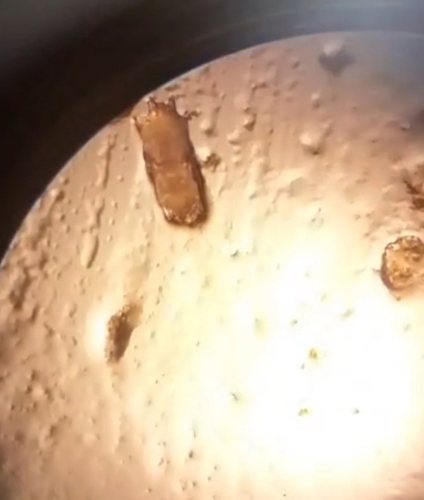
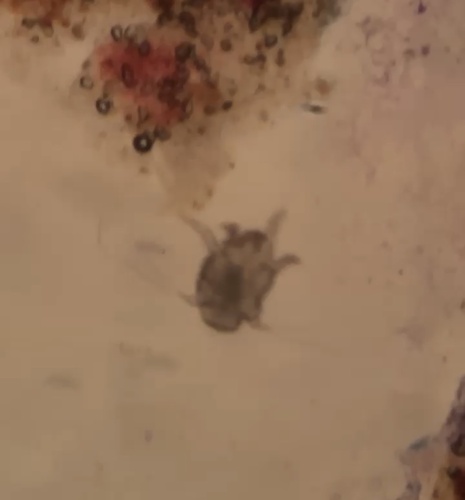
Questions people ask
How long does it take for ear mange mites to develop?
The mite’s life cycle is completed in about three weeks.
Source: Wikipedia
Sources
- Wikipedia: https://en.wikipedia.org/wiki/Otodectes
Look it up elsewhere: GBIF · iNaturalist · BugGuide · Wikipedia
Text written 2026-10-27 from the sources above and checked sentence by sentence against them. Data fetched 2026-10-27.