 Bug FAQ
Double-striped Bluet
Enallagma basidens · Order: Odonata · Family: Coenagrionidae
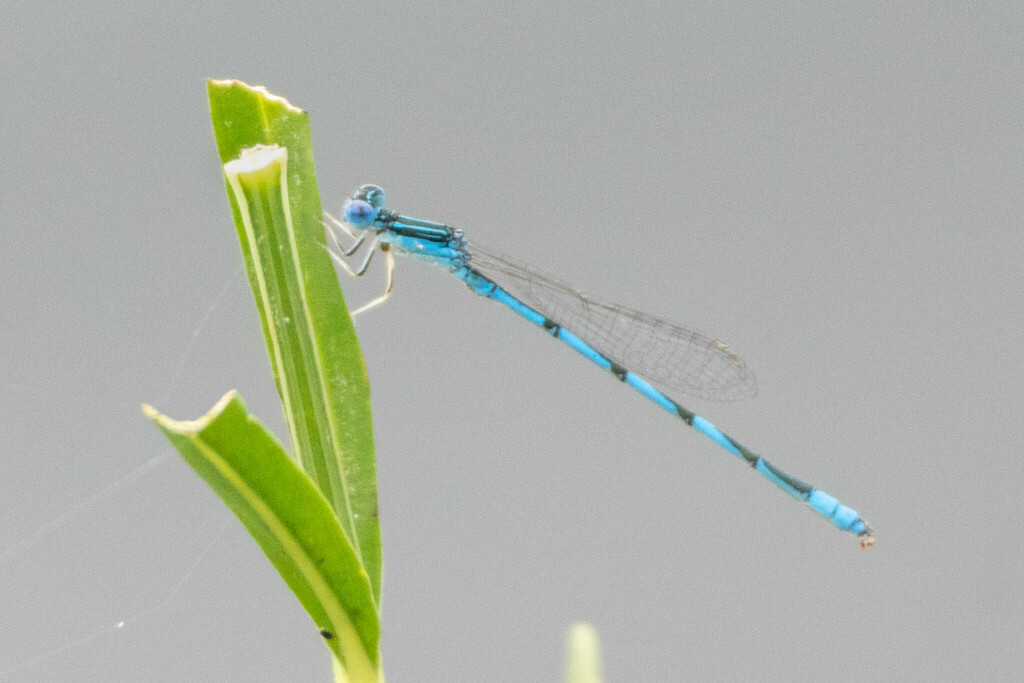
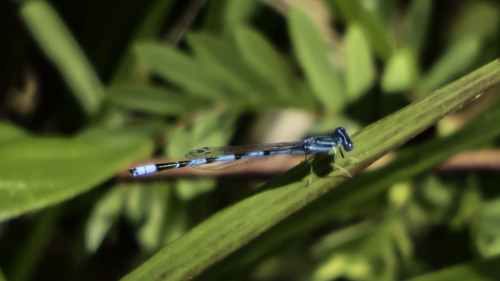
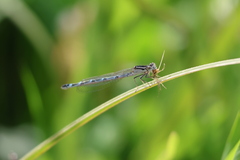
The double-striped bluet is a small damselfly about 21 to 28 mm long. Its most distinctive feature is a black shoulder stripe split by a thin blue line, a pattern found on no other damselfly. It lives near lakes, ponds, and sometimes slow streams across many U.S. states and parts of Mexico.
Source: Wikipedia
How to recognize it
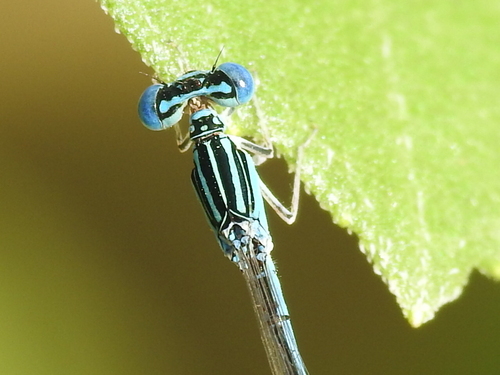
Look for a black shoulder stripe divided by a thin blue stripe; this is unique to the species.
Source: Wikipedia
Size
Adults measure 21 to 28 mm in length.
Source: Wikipedia
Where it lives
Found mainly beside lakes and ponds, occasionally near slow-moving streams.
Source: Wikipedia
Where it comes from
Occurs in many U.S. states including California, Texas, and Florida, and in Mexican states such as Baja California and Chihuahua.
Source: Wikipedia
Lookalikes
No other damselfly shares the same split shoulder stripe.
Source: Wikipedia
Where it is found in the US
Recorded in 39 of 51 states and DC. Most records: Ohio, Texas, New Jersey, Oklahoma, Illinois, Virginia, Michigan, Arizona.
Darker = more records. Counts are museum and citizen-science records, not population size.
Source: GBIF
Status: native in North America; native in Canada; native in United States. Source: iNaturalist
Months it is reported in the US
Source: GBIF
More photos
Questions people ask
How can I tell a double-striped bluet from other damselflies?
Check the shoulder: a black stripe cut in two by a thin blue line is unique to this species.
Source: Wikipedia
Same family (Coenagrionidae)


Sources
- Wikipedia: https://en.wikipedia.org/wiki/Double-striped_bluet
Look it up elsewhere: GBIF · iNaturalist · BugGuide · ITIS · Wikipedia
Text written 2026-10-22 from the sources above and checked sentence by sentence against them. Data fetched 2026-10-22.