 Bug FAQ
Diamondback Soil Centipede
Geophilus vittatus · Order: Geophilomorpha · Family: Geophilidae
Source: Wikipedia
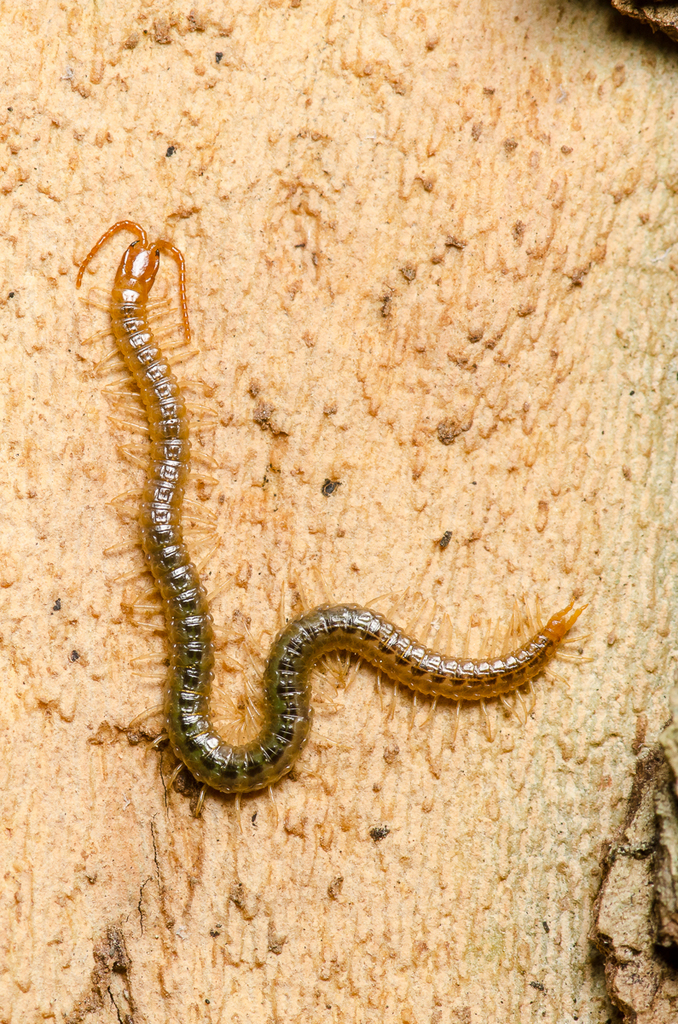
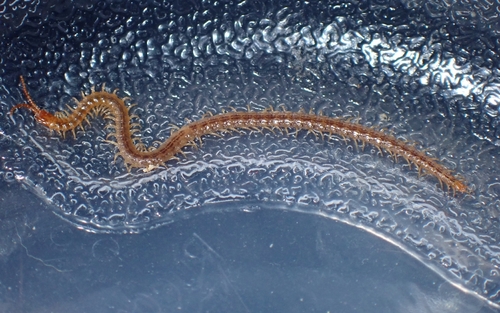
Adults grow up to about 5 cm, but most are between 2.5 and 4 cm long. They are named for the dark, diamond-shaped band across their backs. They live under forest debris, especially loose bark, and can also be found near the sea.
Source: Wikipedia
How to recognize it
It has a dark, diamond-shaped stripe running across its back.
Source: Wikipedia
Size
Adults can reach about 5 cm in length, though most are between 2.5 and 4 cm.
Source: Wikipedia
Can it bite, sting or make you sick?
When threatened it releases a poisonous fluid from its underside.
Source: Wikipedia
Where it lives
You’ll often find it under forest debris, especially loose bark, and sometimes near the sea.
Source: Wikipedia
Where it comes from
It is widespread across North America.
Source: Wikipedia
Where it is found in the US
Recorded in 26 of 51 states and DC. Most records: Illinois, Pennsylvania, New York, Virginia, Michigan, Maryland, Massachusetts, North Carolina.
Darker = more records. Counts are museum and citizen-science records, not population size.
Source: GBIF
Status: native in North America; native in Canada; native in United States. Source: iNaturalist
Months it is reported in the US
Source: GBIF
More photos
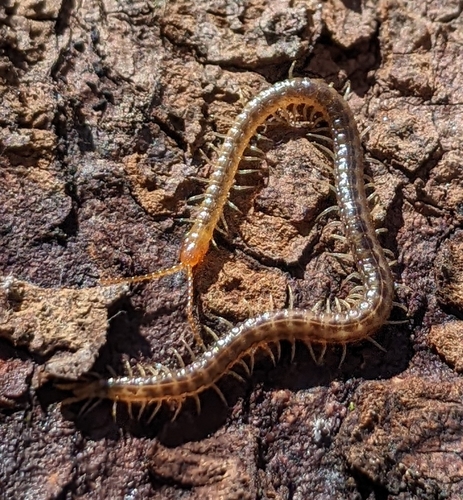
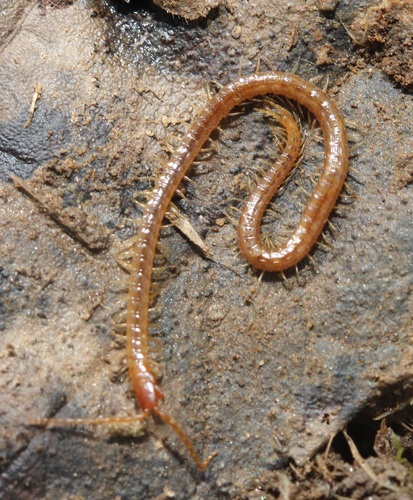
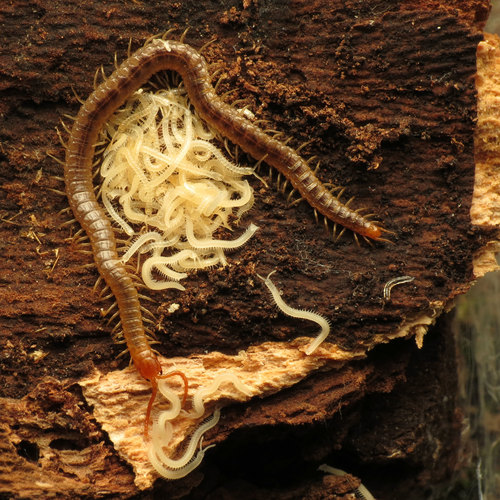
Questions people ask
How big does the diamondback soil centipede get?
Adults can be up to about 5 cm long, but most are between 2.5 and 4 cm.
Source: Wikipedia
What does the name ‘diamondback’ refer to?
It refers to the dark, diamond-shaped band across its back.
Source: Wikipedia
Where might I find this centipede?
It lives under forest debris, especially loose bark, and can also be found near the sea.
Source: Wikipedia
Can it bite or sting?
When threatened it releases a poisonous fluid from its underside, which can cause a mild sting.
Source: Wikipedia
Sources
- Wikipedia: https://en.wikipedia.org/wiki/Diamondback_soil_centipede
Look it up elsewhere: GBIF · iNaturalist · BugGuide · ITIS · Wikipedia
Text written 2026-10-27 from the sources above and checked sentence by sentence against them. Data fetched 2026-10-27.