 Bug FAQ
Diamondback Moth
Plutella xylostella · Order: Lepidoptera · Family: Plutellidae
Also called: Diamond Backed Moth, Diamond-back Moth, cabbage moth
Source: Wikipedia
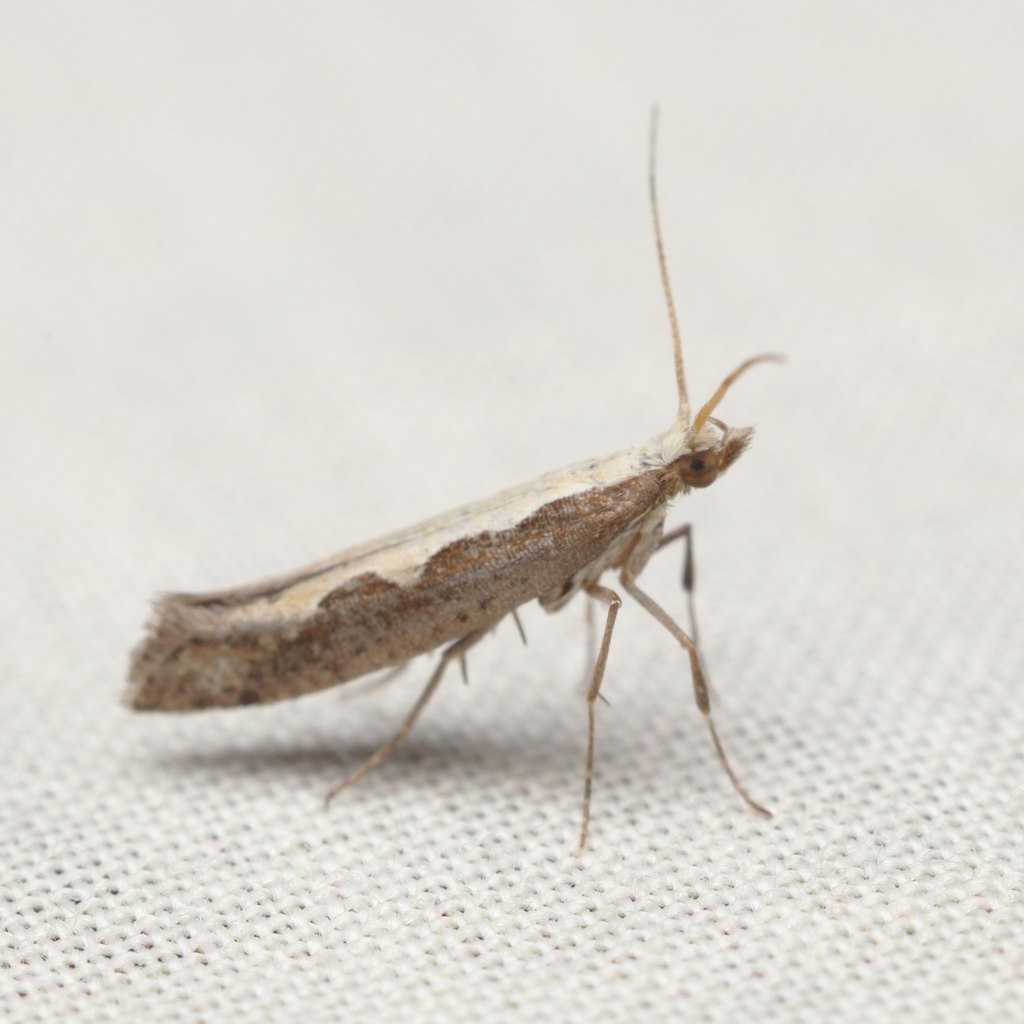
The diamondback moth is a tiny gray-brown moth about 15 mm across, sometimes showing a cream-colored diamond shape on its back. Its larvae feed on leaves, buds, flowers and seed buds of cruciferous plants, causing serious crop loss. It is found worldwide, can migrate long distances, and reproduces quickly, completing a generation in about two weeks at warm temperatures.
Source: Wikipedia
How to recognize it
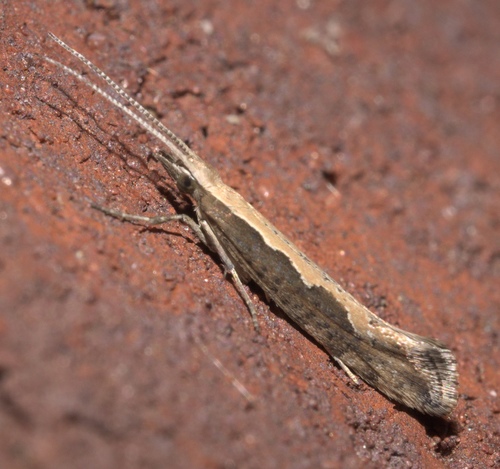
The adult moth is gray and brown, and may have a cream-colored diamond-shaped band on its back.
Source: Wikipedia
Size
Wingspan is about 15 mm and body length about 6 mm.
Source: Wikipedia
Is it a pest in the house?
It is considered a pest because it feeds on cruciferous crops and plants that produce glucosinolates.
Source: Wikipedia
How to get rid of it
Pesticides were once used, but the moth has developed resistance to many chemicals. New biological and chemical methods, plus different planting strategies, are being explored to reduce damage.
Source: Wikipedia
What it eats
Adults and larvae feed on plants that contain glucosinolates, especially cultivated crucifers.
Source: Wikipedia
Life cycle
At 25 °C it can complete a generation in about 14 days and produces many offspring. First-instar larvae mine leaves, though the mines are tiny and hard to see.
Source: Wikipedia
When you see it
Adults look identical to the New Zealand endemic Plutella antiphona.
Source: Wikipedia
Where it comes from
Its original range is uncertain but likely Europe, South Africa or the Mediterranean region.
Source: Wikipedia
Lookalikes
Adults are visually identical to the New Zealand endemic moth Plutella antiphona.
Source: Wikipedia
Where it is found in the US
Recorded in 51 of 51 states and DC. Most records: Texas, California, Maryland, Massachusetts, New York, Minnesota, Pennsylvania, Colorado.
Darker = more records. Counts are museum and citizen-science records, not population size.
Source: GBIF
Status: introduced in United States. Source: iNaturalist
Months it is reported in the US
Source: GBIF
More photos

Questions people ask
How can I control them?
Because they have become resistant to many pesticides, growers are turning to biological controls, newer chemicals and crop-rotation or planting methods to limit their impact.
Source: Wikipedia
Sources
- Wikipedia: https://en.wikipedia.org/wiki/Diamondback_moth
Look it up elsewhere: GBIF · iNaturalist · BugGuide · Wikipedia
Text written 2026-10-22 from the sources above and checked sentence by sentence against them. Data fetched 2026-10-22.