 Bug FAQ
Desert Tarantula
Aphonopelma iodius · Order: Araneae · Family: Theraphosidae
Also called: Bay Area Blonde, Fresno County Brown, Salt Lake County Brown

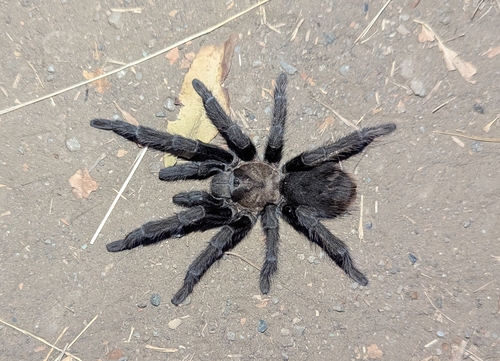
The Desert Tarantula is a tarantula species found in the western United States, especially the Mojave Desert region. It lives in burrows beneath desert soil, sealing the entrance with a silk-and-dirt plug to keep out heat and predators.
Source: Wikipedia
How to recognize it
This tarantula is common west of the Colorado River in the Mojave Desert.
Source: Wikipedia
Size
It belongs to the tarantula family Theraphosidae.
Source: Wikipedia
Where it lives
The burrow entrance is often blocked with a silk-and-dirt plug for protection.
Source: Wikipedia
Life cycle
Females lay their eggs in the spring or summer after mating.
Source: Wikipedia
When you see it
In autumn, mature males prepare to mate.
Source: Wikipedia
Where it comes from
It is native to the United States, occurring in California, Nevada, Arizona, and Utah.
Source: Wikipedia
Lookalikes
Aphonopelma smithii has been considered a synonym of this species.
Source: Wikipedia
Where it is found in the US
Recorded in 5 of 51 states and DC. Most records: California, Utah, Nevada, Arizona, Colorado.
Darker = more records. Counts are museum and citizen-science records, not population size.
Source: GBIF
Status: native in North America; native in United States. Source: iNaturalist
Months it is reported in the US
Source: GBIF
More photos


Questions people ask
Where does the Desert Tarantula live?
It lives in desert burrows in California, Nevada, Utah, and parts of Arizona, often in the Mojave Desert west of the Colorado River.
Source: Wikipedia
When do Desert Tarantulas reproduce?
Males become mature at about seven years and look for mates in autumn; females lay eggs the next spring or summer.
Source: Wikipedia
What does the Desert Tarantula’s burrow entrance look like?
The entrance is usually sealed with a plug made of silk and dirt to protect against heat and predators.
Source: Wikipedia
Is Aphonopelma smithii a different species?
Aphonopelma smithii has been synonymized with Aphonopelma iodius, meaning they are considered the same species.
Source: Wikipedia
Same family (Theraphosidae)

Sources
- Wikipedia: https://en.wikipedia.org/wiki/Aphonopelma_iodius
Look it up elsewhere: GBIF · iNaturalist · BugGuide · ITIS · Wikipedia
Text written 2026-10-23 from the sources above and checked sentence by sentence against them. Data fetched 2026-10-23.