 Bug FAQ
Dark Hendrickson
Ephemerella subvaria · Order: Ephemeroptera · Family: Ephemerellidae
Also called: Hendrickson, Dark Hendrickson Mayfly, Hendrickson's spiny crawler mayfly, Midboreal Mayfly
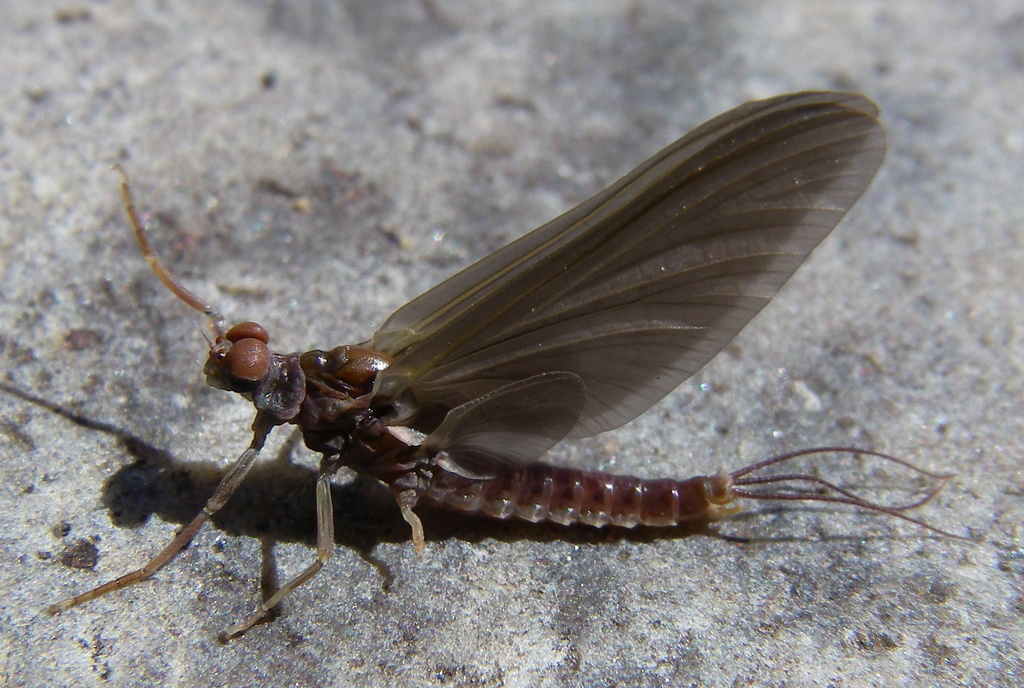
Adult males have large reddish eyes and a rusty-red abdomen, while females are larger, darker brown to grey-olive and have smaller pink eyes. They live in fast, cool, shallow streams in North America and the nymphs feed on detritus and algae, providing food for trout. Adults emerge in spring (April-May in the northern Midwest) solely to mate and then die.
Source: Wikipedia
How to recognize it
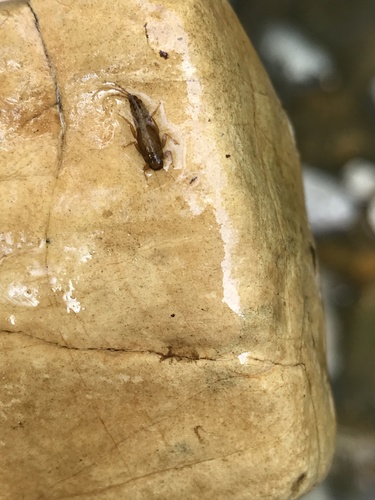
Males show large reddish eyes and a dark rusty-red abdomen. Females are larger, darker brown to grey-olive, and have smaller pink eyes.
Source: Wikipedia
Size
Females are larger than males and have a duller grey-brown to olive colour. Males are smaller with bright red eyes and a reddish-rusty body.
Source: Wikipedia
Where it lives
Nymphs live on gravel bottoms of cool, shallow, fast-moving streams. Adults stay near the same fast-moving stream habitat to mate and lay eggs.
Source: Wikipedia
What it eats
Both nymphs and adults break down decaying plants and algae as detritivores and herbivores.
Source: Wikipedia
Life cycle
Nymphs may live several years, but the species usually follows a one-year life cycle. Adults emerge in spring, form mating swarms, and exist only to reproduce.
Source: Wikipedia
When you see it
In the northern Midwest adults emerge from April to early May when water warms to 40-50 °F. Emergence occurs in spring and the sole purpose of the adults is to mate.
Source: Wikipedia
Where it comes from
It is native to North America.
Source: Wikipedia
Lookalikes
Nymphs resemble those of Ephemerella invaria, being small and somewhat pale.
Source: Wikipedia
Where it is found in the US
Recorded in 16 of 51 states and DC. Most records: Vermont, Michigan, Virginia, Pennsylvania, New Hampshire, Massachusetts, New York, Wisconsin.
Darker = more records. Counts are museum and citizen-science records, not population size.
Source: GBIF
Status: native in North America; native in Canada. Source: iNaturalist
Months it is reported in the US
Source: GBIF
More photos
Questions people ask
When do Dark Hendrickson mayflies appear?
Adults emerge in spring, typically from April to early May in the northern Midwest when water temperatures reach 40-50 °F.
Source: Wikipedia
Where are they found?
They are native to North America, occurring in the U.S. Midwest, northern Southeast, Mid-Atlantic and Northeast, and in Canadian provinces such as Ontario and Quebec.
Source: Wikipedia
How can I tell males from females?
Males have large reddish eyes and a rusty-red abdomen, while females are larger, darker brown to grey-olive and have smaller pink eyes.
Source: Wikipedia
What do they eat?
They feed on decaying plant material and algae, acting as detritivores and herbivores.
Source: Wikipedia
Sources
- Wikipedia: https://en.wikipedia.org/wiki/Ephemerella_subvaria
Look it up elsewhere: GBIF · iNaturalist · BugGuide · ITIS · Wikipedia
Text written 2026-10-23 from the sources above and checked sentence by sentence against them. Data fetched 2026-10-23.