 Bug FAQ
Dancing Kiss Fly
Platystoma seminationis · Order: Diptera · Family: Platystomatidae
Also called: Fly
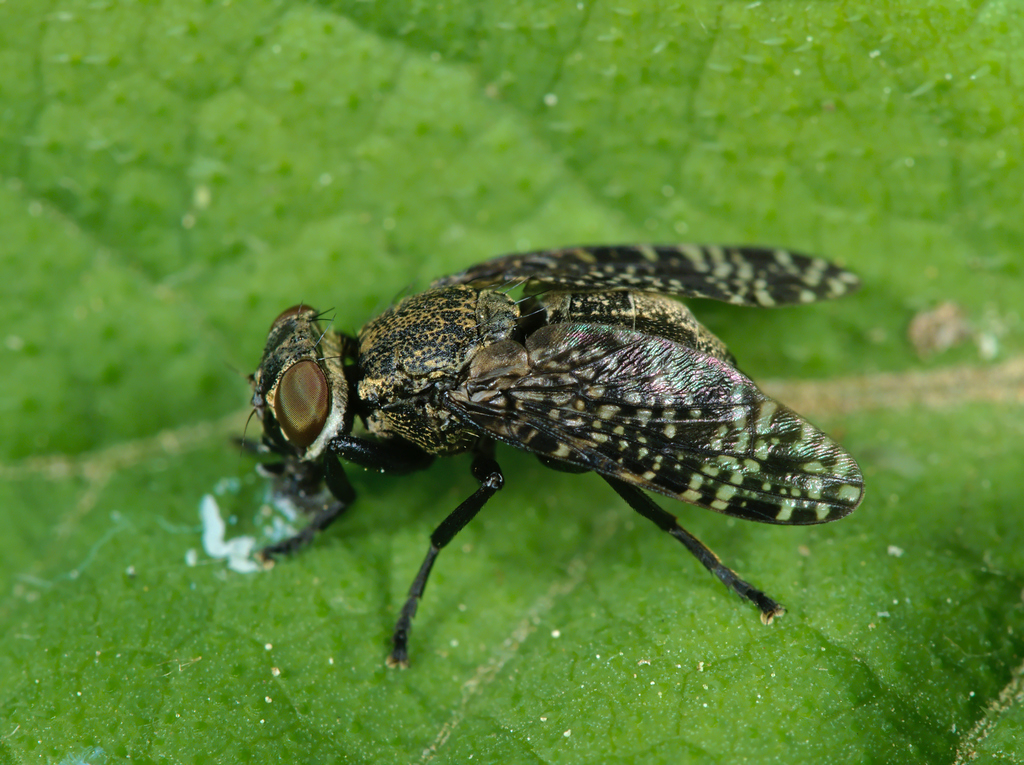
The dancing kiss fly is a small insect about 5.5 to 6.5 mm long, with reddish-brown eyes, black face area and translucent grey-brown wings marked with light spots. It lives on shady herbaceous plants at forest edges and hedges across most of Europe and the Near East, and adults are active from May through October.
Source: Wikipedia
How to recognize it
The space between the eyes and the mouthparts are black, the eyes are reddish-brown, and the wings are translucent grey-brown with pale spots.
Source: Wikipedia
Size
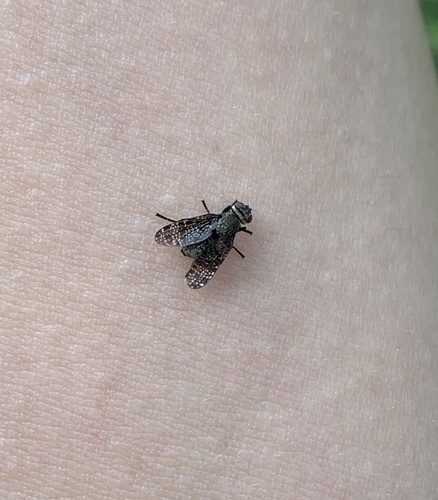
Adults measure between 5.5 and 6.5 mm in body length.
Source: Wikipedia
Where it lives
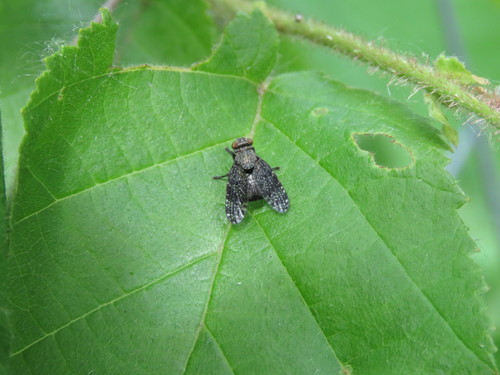
They are found on low herbaceous vegetation in shady spots at forest margins or hedgerows.
Source: Wikipedia
What it eats
Larvae develop in decaying plant material, mushrooms and mushroom-infected roots, feeding on this organic matter.
Source: Wikipedia
Life cycle
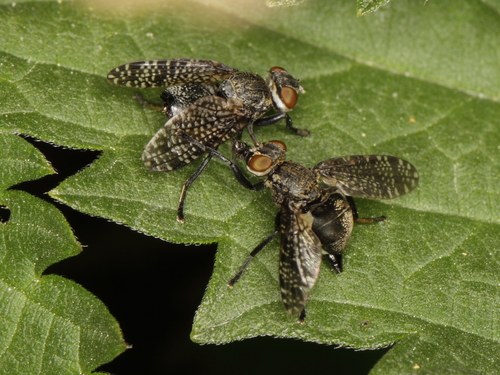
Mating involves a courtship dance followed by a brief “kiss” where the male and female touch proboscises for several seconds.
Source: Wikipedia
When you see it
Adults can be observed from May until October.
Source: Wikipedia
Where it comes from
The species occurs throughout most of Europe and also in the Near East.
Source: Wikipedia
Where it is found in the US
Recorded in 4 of 51 states and DC. Most records: Illinois, Wisconsin, Minnesota, Colorado.
Darker = more records. Counts are museum and citizen-science records, not population size.
Source: GBIF
Status: introduced in United States; introduced in Canada. Source: iNaturalist
Months it is reported in the US
Source: GBIF
More photos

Questions people ask
What do the larvae eat?
The larvae feed on decaying vegetable matter, mushrooms and roots of plants infected by mushrooms.
Source: Wikipedia
Same family (Platystomatidae)

Sources
- Wikipedia: https://en.wikipedia.org/wiki/Platystoma_seminationis
Look it up elsewhere: GBIF · iNaturalist · BugGuide · Wikipedia
Text written 2026-10-25 from the sources above and checked sentence by sentence against them. Data fetched 2026-10-25.