 Bug FAQ
Dainty Damselfly
Coenagrion scitulum · Order: Odonata · Family: Coenagrionidae
Also called: Dainty Blue Damselfly, Dainty Bluet
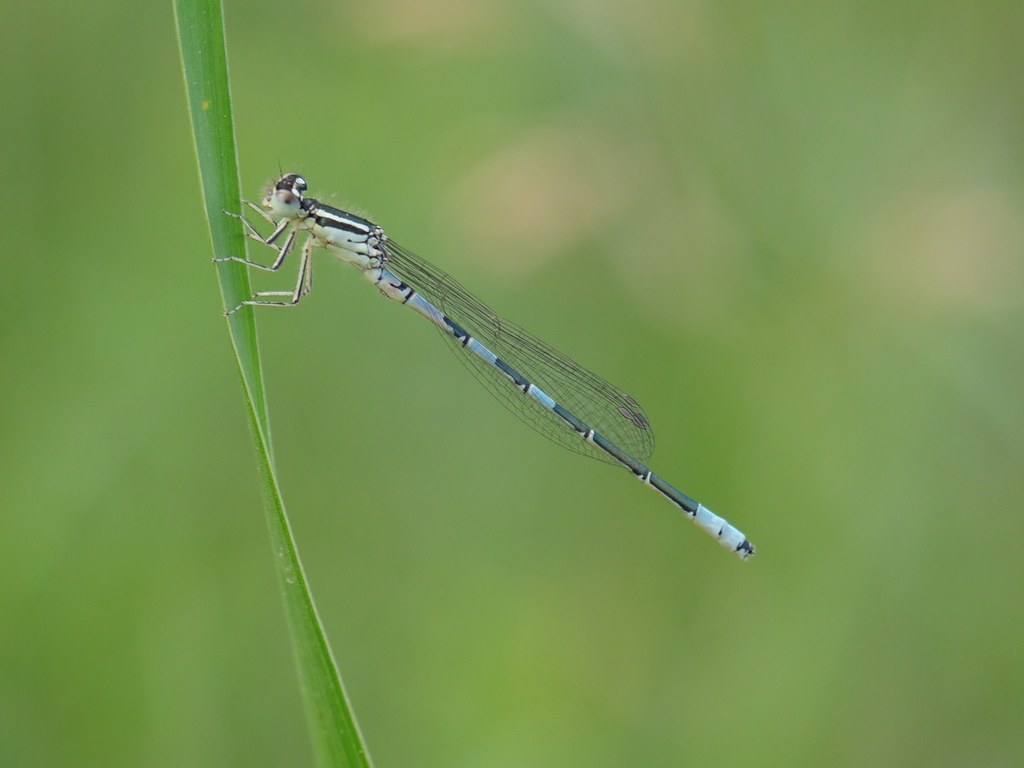
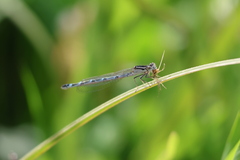
The dainty damselfly grows to about 30 to 33 mm long, with hind-wings 15 to 20 mm long. Males have a blue eighth abdominal segment and a black ninth, while females are darker with smaller blue spots. They live around still water such as ponds, ditches and constructed wetlands that have plenty of aquatic plants.
Source: Wikipedia
How to recognize it
Males show a blue segment eight and black segment nine; females are mostly black with limited blue markings.
Source: Wikipedia
Size
Adults reach 30 to 33 mm in total length and have hind-wings 15 to 20 mm long.
Source: Wikipedia
Where it lives
Found in large, stagnant ponds with vegetation like water-milfoil and hornwort, as well as flooded ditches. Constructed wetlands serve as important refuges.
Source: Wikipedia
What it eats
They are predatory damselflies that hunt other small insects.
Source: Wikipedia
Life cycle
Mating behavior differs from most other odonates. Populations typically have one generation per year.
Source: Wikipedia
When you see it
Adults are most noticeable in June and July.
Source: Wikipedia
Where it comes from
Native to southern Europe, north-west Africa, southwest Asia and parts of Central America.
Source: Wikipedia
Lookalikes
They can be mistaken for the common blue damselfly. A central Asian population may represent a separate species or a range expansion.
Source: Wikipedia
Same family (Coenagrionidae)


Sources
- Wikipedia: https://en.wikipedia.org/wiki/Dainty_damselfly
Look it up elsewhere: GBIF · iNaturalist · BugGuide · Wikipedia
Text written 2026-10-23 from the sources above and checked sentence by sentence against them. Data fetched 2026-10-22.