 Bug FAQ
Curly Woodlouse
Cylisticus convexus · Order: Isopoda · Family: Cylisticidae
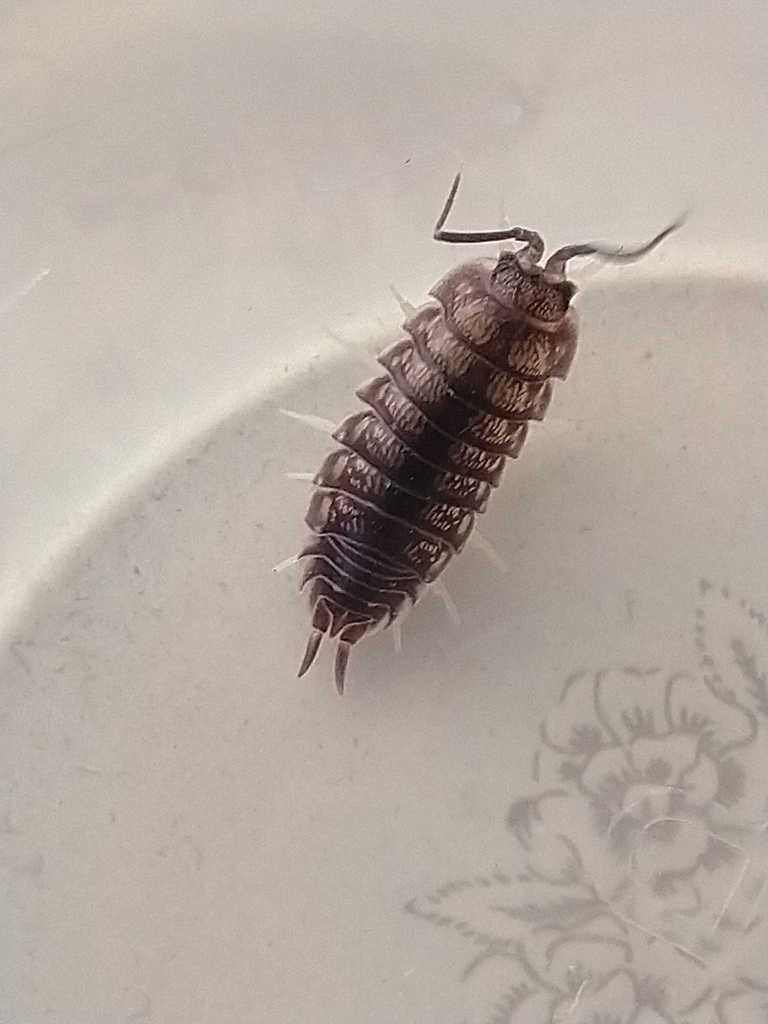
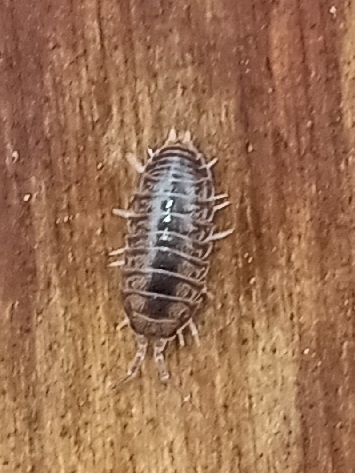
The curly woodlouse reaches about 9 mm in males and 10 mm in females and has an elongated, convex body. It lives on the ground near buildings, is active at night, and feeds on dead wood and leaf litter. Native to Europe and Asia, it has been introduced to North Africa, North America, and South America.
Source: Wikipedia
How to recognize it
The head shield has almost square side lobes that point outward, and the eyes contain 22 tiny lenses.
Source: Wikipedia
Size
Males grow up to 9 mm long, while females can reach 10 mm.
Source: Wikipedia
Where it lives
They are found on the ground close to buildings. They are nocturnal detritivores that eat dead wood and leaf litter.
Source: Wikipedia
What it eats
Their diet consists mainly of dead wood and leaf litter.
Source: Wikipedia
Where it comes from
Originally from Europe and Asia, they have spread to North Africa, North America, and South America.
Source: Wikipedia
Lookalikes
It can be told apart from Armadillidium species and Eluma caelata by its five pairs of pleopodal lungs and the shape of its uropods.
Source: Wikipedia
Where it is found in the US
Recorded in 43 of 51 states and DC. Most records: Virginia, North Carolina, Wisconsin, Minnesota, Michigan, Georgia, Colorado, Utah.
Darker = more records. Counts are museum and citizen-science records, not population size.
Source: GBIF
Status: introduced in North America; introduced in Canada; introduced in United States. Source: iNaturalist
Months it is reported in the US
Source: GBIF
More photos
Questions people ask
How can I identify a curly woodlouse?
Look for a 9 to 10 mm elongated, convex body, square lateral lobes on the head, and eyes with 22 ommatidia.
Source: Wikipedia
Where might I find curly woodlice in my yard?
They are usually on the ground near buildings, active at night, feeding on dead wood and leaf litter.
Source: Wikipedia
Is the curly woodlouse native to my region?
It is native to Europe and Asia but has been introduced to North Africa, North America, and South America.
Source: Wikipedia
Sources
- Wikipedia: https://en.wikipedia.org/wiki/Cylisticus_convexus
Look it up elsewhere: GBIF · iNaturalist · BugGuide · ITIS · Wikipedia
Text written 2026-10-23 from the sources above and checked sentence by sentence against them. Data fetched 2026-10-22.