 Bug FAQ
Cottony cushion scale
Icerya purchasi · Order: Hemiptera · Family: Margarodidae
Also called: Australian fluted scale, Fluted Scale, citrus fluted scale, white scale
Source: Wikipedia
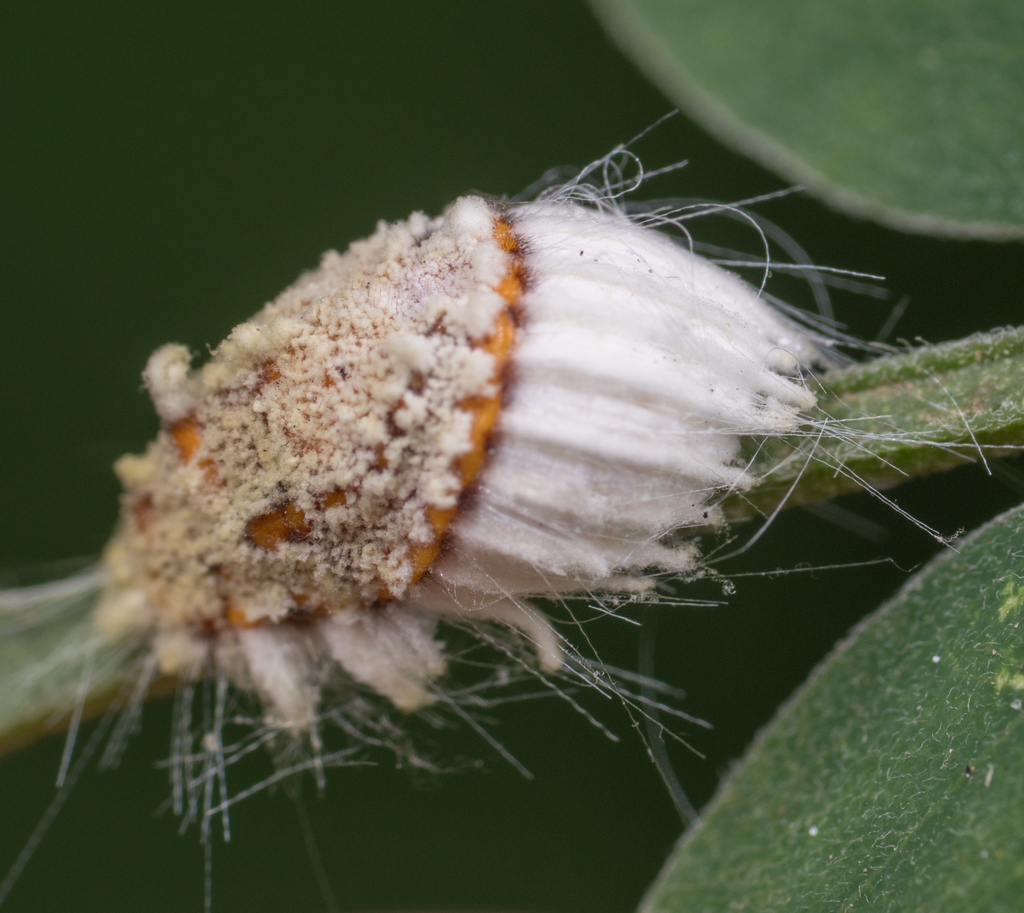
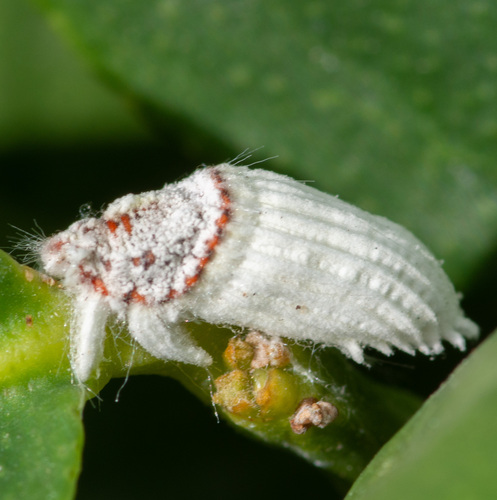
Adult females are about 5 mm long, oval, reddish-brown and covered with black hairs. They live on twigs and branches of citrus and other plants worldwide, originating from Australia. They feed by attaching to plant tissue, laying white egg sacs that contain hundreds of red eggs, and the young nymphs cause most of the damage.
Source: Wikipedia
How to recognize it
Adults are oval, reddish-brown with black hairs.
Source: Wikipedia
Size
Mature hermaphrodites reach about 5 mm in length.
Source: Wikipedia
Is it a pest in the house?
They are present wherever citrus is cultivated worldwide. Their honeydew promotes sooty mold, adding further damage to host plants.
Source: Wikipedia
How to get rid of it
Biological control is the most effective way to manage infestations. Insecticides should be used only when no biological control agents are present.
Source: Wikipedia
Where it lives
They infest twigs and branches of host plants. They are now found wherever citrus is grown worldwide.
Source: Wikipedia
What it eats
Adults attach to plants with waxy secretions and produce a white egg sac that holds hundreds of red eggs. Early-stage nymphs feed on leaf midribs and small twigs, causing the bulk of plant damage.
Source: Wikipedia
Life cycle
Development time lengthens in cold weather and speeds up in heat. Newly hatched nymphs disperse by wind or crawling.
Source: Wikipedia
When you see it
Outbreaks increased after 1950s insecticide use, likely due to drift from early-spring aerial spraying.
Source: Wikipedia
Where it comes from
The species originates from Australia.
Source: Wikipedia
Where it is found in the US
Recorded in 24 of 51 states and DC. Most records: California, Florida, Hawaii, Texas, North Carolina, Georgia, Mississippi, Alabama.
Darker = more records. Counts are museum and citizen-science records, not population size.
Source: GBIF
Status: introduced in Canada. Source: iNaturalist
Months it is reported in the US
Source: GBIF
More photos
Questions people ask
What damage do they cause to citrus trees?
They suck sap from leaves and twigs, weakening the plant, and their honeydew encourages sooty mold growth.
Source: Wikipedia
How can I control an infestation?
Introduce natural enemies such as predatory beetles; use chemicals only if those are absent.
Source: Wikipedia
Sources
- Wikipedia: https://en.wikipedia.org/wiki/Icerya_purchasi
Look it up elsewhere: GBIF · iNaturalist · BugGuide · ITIS · Wikipedia
Text written 2026-10-22 from the sources above and checked sentence by sentence against them. Data fetched 2026-10-22.