 Bug FAQ
Common Striped Woodlouse
Philoscia muscorum · Order: Isopoda · Family: Philosciidae
Also called: fast woodlouse
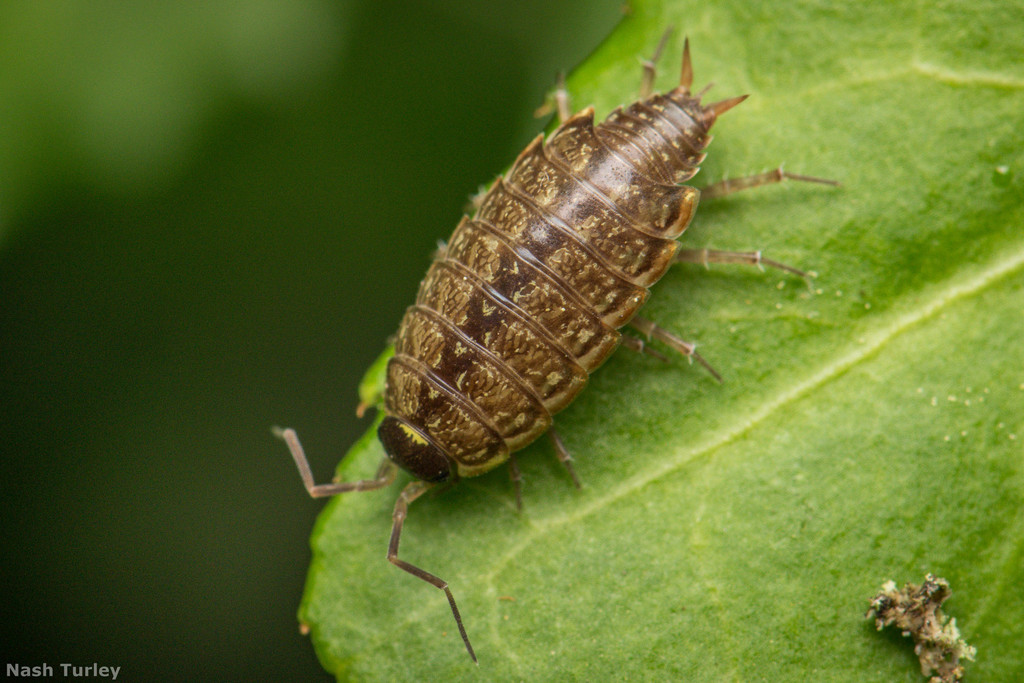
The common striped woodlouse can grow up to about 11 mm long (0.43 in) and has a shiny, mottled grey-brown body with a very dark head. It is native to much of Europe, from southern Scandinavia to Greece and the British Isles, and has been introduced to parts of North America, including Washington, New England, Pennsylvania, New Jersey, and Nova Scotia.
Source: Wikipedia
How to recognize it
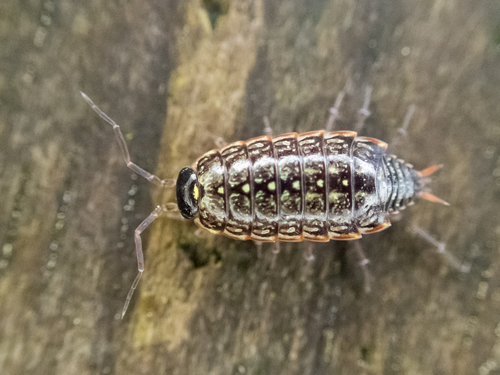
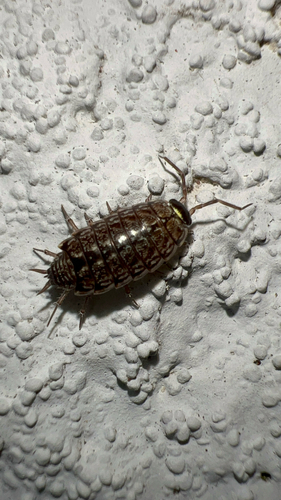
Its body is shiny, mottled, and grey-brown, and the head is always very dark.
Source: Wikipedia
Size
It may reach about 11 mm (0.43 in) in length.
Source: Wikipedia
Where it lives
It lives across Europe and the British Isles, from southern Scandinavia to Ukraine and Greece. It has also spread to Washington, many New England states, Pennsylvania, New Jersey, and Nova Scotia.
Source: Wikipedia
Where it comes from
Its native range covers Europe, the British Isles, and areas from southern Scandinavia to Ukraine and Greece.
Source: Wikipedia
Where it is found in the US
Recorded in 29 of 51 states and DC. Most records: New York, Pennsylvania, Massachusetts, Virginia, Maryland, Ohio, Washington, New Jersey.
Darker = more records. Counts are museum and citizen-science records, not population size.
Source: GBIF
Status: introduced in North America; introduced in Canada; introduced in United States. Source: iNaturalist
Months it is reported in the US
Source: GBIF
More photos

Sources
- Wikipedia: https://en.wikipedia.org/wiki/Philoscia_muscorum
Look it up elsewhere: GBIF · iNaturalist · BugGuide · ITIS · Wikipedia
Text written 2026-10-22 from the sources above and checked sentence by sentence against them. Data fetched 2026-10-22.