 Bug FAQ
Common Schendyla
Schendyla nemorensis · Order: Geophilomorpha · Family: Schendylidae
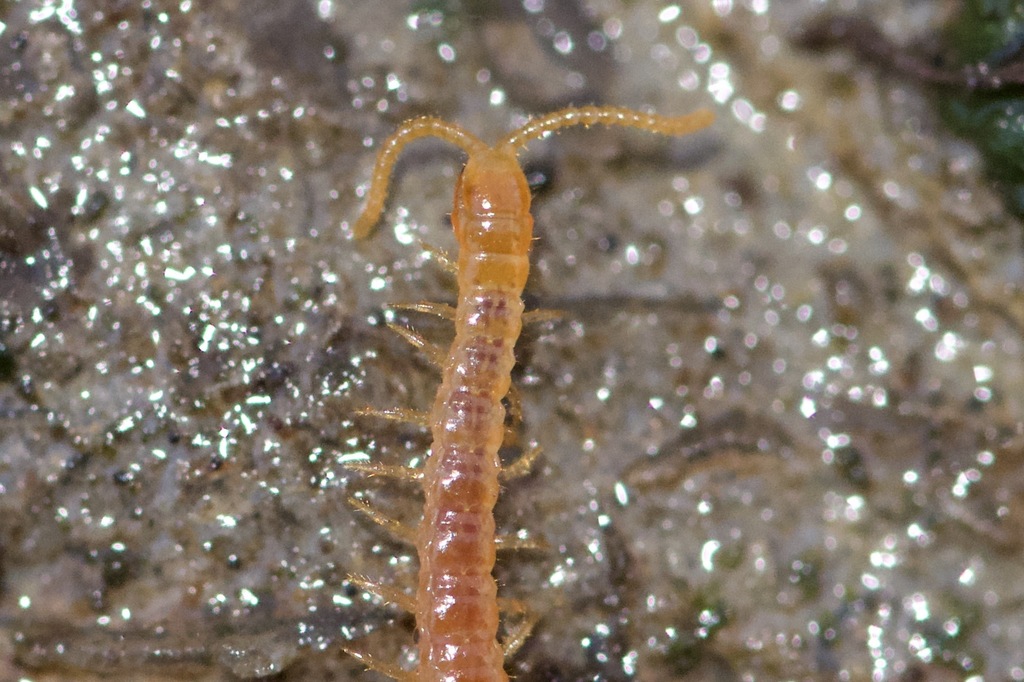
It lives in many habitats across the western Palearctic, including woodlands, grasslands, gardens, churchyards and coastal areas, and is a solitary terrestrial predator.
Source: Wikipedia
How to recognize it
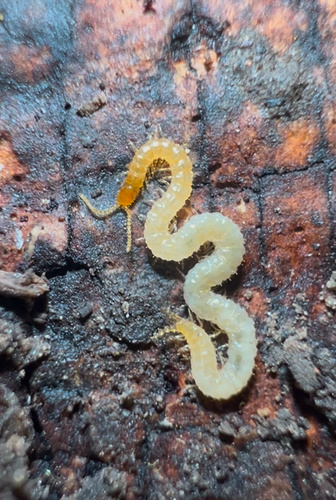
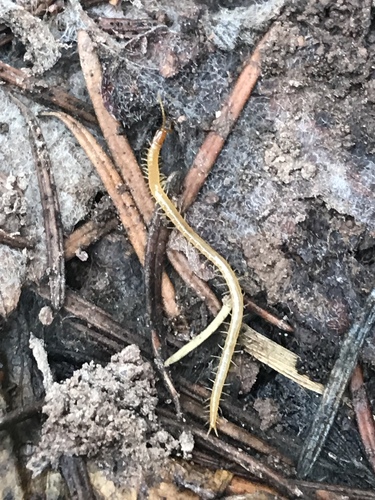
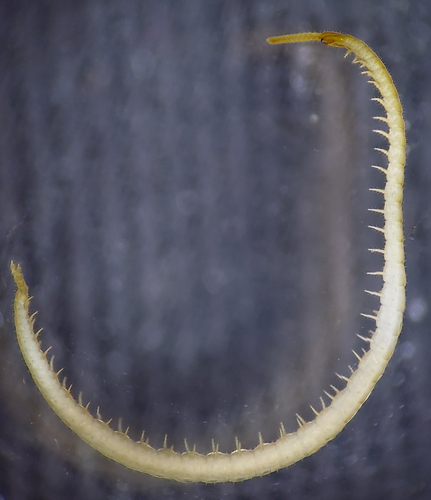
It is a pale yellow centipede, with a slightly darker, rusty-brown head.
Source: Wikipedia
Size
Adults are between 14 mm and 30 mm long, and the species can reach up to 30 mm.
Source: Wikipedia
Where it lives
In Great Britain it lives in woodlands, grasslands, gardens, churchyards and coastal areas.
Source: Wikipedia
What it eats
It is a solitary terrestrial predator.
Source: Wikipedia
Where it comes from
It is widespread across the western Palearctic, recorded in many European countries from Iceland to Greece.
Source: Wikipedia
Where it is found in the US
Recorded in 18 of 51 states and DC. Most records: Illinois, Massachusetts, Pennsylvania, New York, Colorado, California, Georgia, Ohio.
Darker = more records. Counts are museum and citizen-science records, not population size.
Source: GBIF
Status: introduced in United States; introduced in Canada. Source: iNaturalist
Months it is reported in the US
Source: GBIF
More photos
Questions people ask
What color is the common Schendyla?
It is a pale yellow centipede with a slightly darker, rusty-brown head.
Source: Wikipedia
Where is the common Schendyla found?
It occurs across the western Palearctic, in many European countries from Iceland to Greece, and inhabits woodlands, grasslands, gardens, churchyards and coastal sites.
Source: Wikipedia
Sources
- Wikipedia: https://en.wikipedia.org/wiki/Schendyla_nemorensis
Look it up elsewhere: GBIF · iNaturalist · BugGuide · ITIS · Wikipedia
Text written 2026-10-27 from the sources above and checked sentence by sentence against them. Data fetched 2026-10-27.