 Bug FAQ
Common Pantaloon Bee
Dasypoda hirtipes · Order: Hymenoptera · Family: Melittidae
Also called: Hairy Legged Mining Bee, Pantaloon Bee
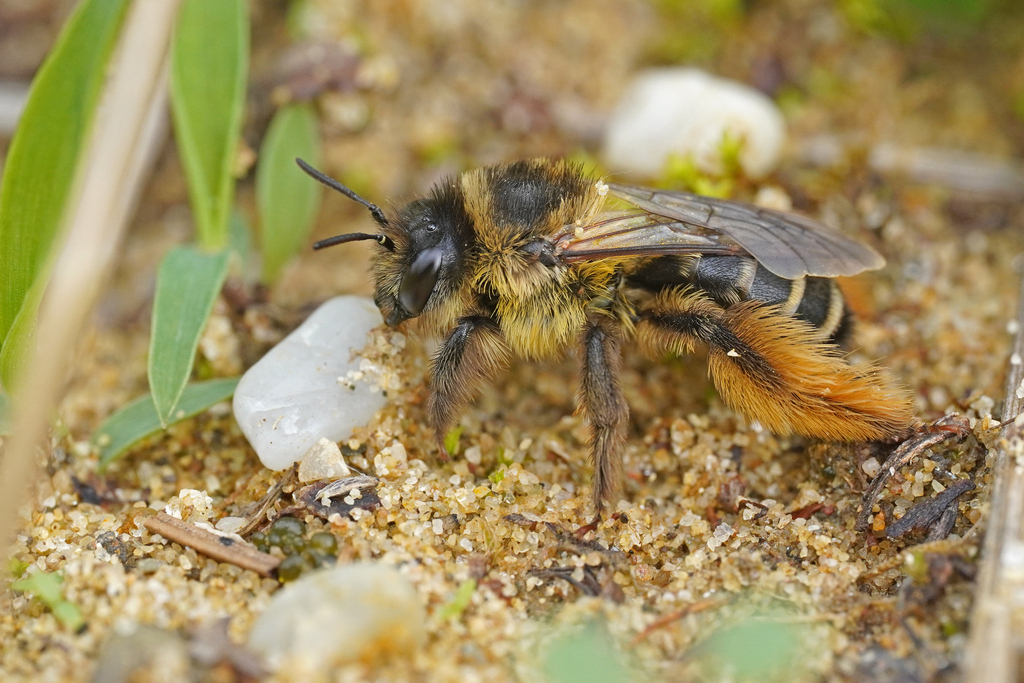
Female pantaloon bees have swollen, golden-hairy hind legs that look like pantaloons, while males turn silvery-white as they age. They live in exposed sandy spots such as heathlands, dunes, Mediterranean shrubland and even urban gardens, and fly from June to late August in Britain.
Source: Wikipedia
How to recognize it
Females are easy to spot because their hind tibiae are covered in golden hairs, and their bodies are yellow-brown with black and golden-brown bands; males look similar but are covered in long brown hairs.
Source: Wikipedia
Size
The name “pantaloon bee” comes from the hairy hind legs of females that swell with pollen, while older males may fade to a silvery-white colour.
Source: Wikipedia
Where it lives
They prefer open sandy areas, including Mediterranean shrubland, grassland, and can also be common in urban and suburban sites. In Britain they are most often found on sandy heathlands and coastal dunes.
Source: Wikipedia
Life cycle
Females dig individual nests in sandy soil, often forming large congregations, and each female cares for her own nest. In Denmark they excavate their nests in the afternoon and rarely leave the burrow after early afternoon.
Source: Wikipedia
When you see it
In Britain the flight period runs from June through late August.
Source: Wikipedia
Where it comes from
Their range stretches across Eurasia from southern Britain all the way to China.
Source: Wikipedia
Questions people ask
How can I tell a female pantaloon bee from other bees?
Look for the swollen hind legs covered in golden hairs that look like pantaloons; the body is yellow-brown with black and golden-brown bands.
Source: Wikipedia
When are pantaloon bees active?
In Britain they are on the wing from June until late August.
Source: Wikipedia
Where are pantaloon bees most likely to be found?
They favor open sandy habitats such as heathlands, coastal dunes, Mediterranean shrubland, and can also appear in gardens and urban areas.
Source: Wikipedia
Same family (Melittidae)

Sources
- Wikipedia: https://en.wikipedia.org/wiki/Dasypoda_hirtipes
Look it up elsewhere: GBIF · iNaturalist · BugGuide · ITIS · Wikipedia
Text written 2026-10-22 from the sources above and checked sentence by sentence against them. Data fetched 2026-10-22.