 Bug FAQ
Common Flat-backed Millipede
Polydesmus angustus · Order: Polydesmida · Family: Polydesmidae
Also called: flat millipede, flat-backed millipede

The common flat-backed millipede usually measures about 24 mm, but individuals can be as small as 18 mm or as large as 50 mm. It prefers heath and moorland with peat soils and avoids soils that contain more than 45 % clay. All 20 body segments are flattened laterally, a trait that helps it dig and hide in leaf litter.
Source: Wikipedia
How to recognize it
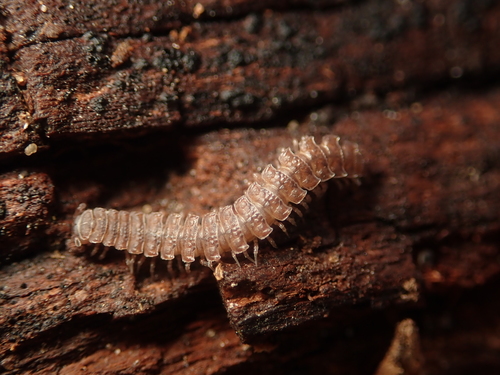
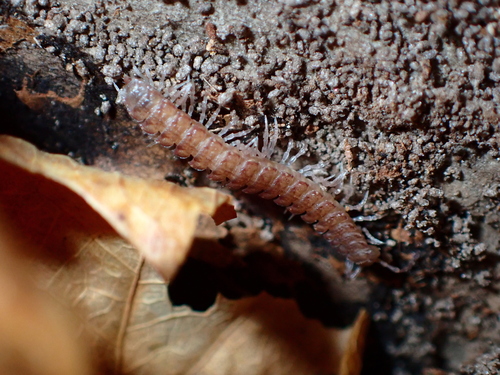
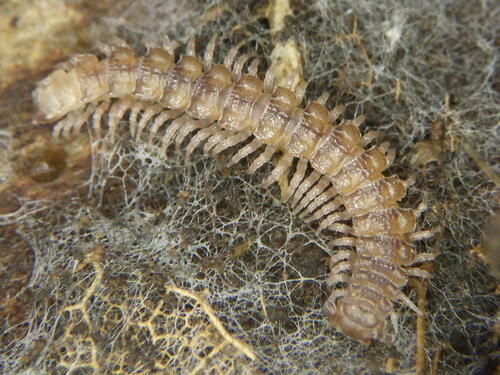
The millipede’s body is flat with each of its 20 segments extending sideways, an adaptation for digging and camouflage.
Source: Wikipedia
Size
Typical length is 24 mm, but captive specimens have ranged from 18 mm up to 50 mm.
Source: Wikipedia
Where it lives
It is most often found in heath and moorland environments on peat soils and avoids soils with more than 45 % clay.
Source: Wikipedia
Lookalikes
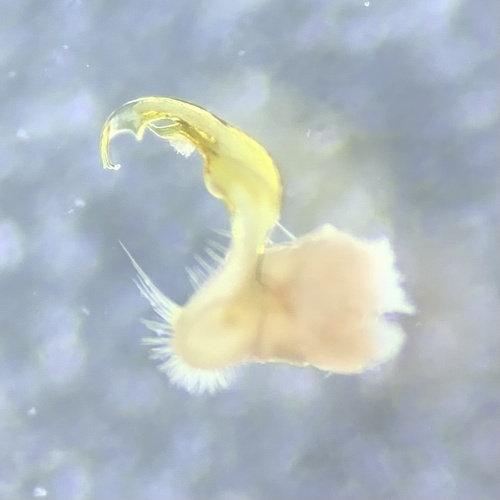
It resembles other Polydesmus species such as P. coriaceus, P. denticulatus and P. inconstans; reliable identification requires examining the male gonopods or female epigyne.
Source: Wikipedia
Where it is found in the US
Recorded in 11 of 51 states and DC. Most records: Pennsylvania, Massachusetts, New Jersey, New York, Oregon, Virginia, Washington, Minnesota.
Darker = more records. Counts are museum and citizen-science records, not population size.
Source: GBIF
Status: introduced in North America; introduced in United States; introduced in Canada. Source: iNaturalist
Months it is reported in the US
Source: GBIF
More photos
Questions people ask
How big does the common flat-backed millipede get?
Adults are usually about 24 mm long, but they can be as small as 18 mm or grow up to 50 mm in size.
Source: Wikipedia
What habitat does this millipede prefer?
It favors heath and moorland areas with peat soils and avoids soils that contain more than 45 % clay.
Source: Wikipedia
How can I tell it apart from similar millipedes?
You need to examine the shape of the male’s gonopods or the female’s epigyne, as its overall appearance is very similar to other Polydesmus species.
Source: Wikipedia
Sources
- Wikipedia: https://en.wikipedia.org/wiki/Polydesmus_angustus
Look it up elsewhere: GBIF · iNaturalist · BugGuide · ITIS · Wikipedia
Text written 2026-10-23 from the sources above and checked sentence by sentence against them. Data fetched 2026-10-22.