 Bug FAQ
Common Eastern Ray Spider
Theridiosoma gemmosum · Order: Araneae · Family: Theridiosomatidae
Also called: Ray Spider
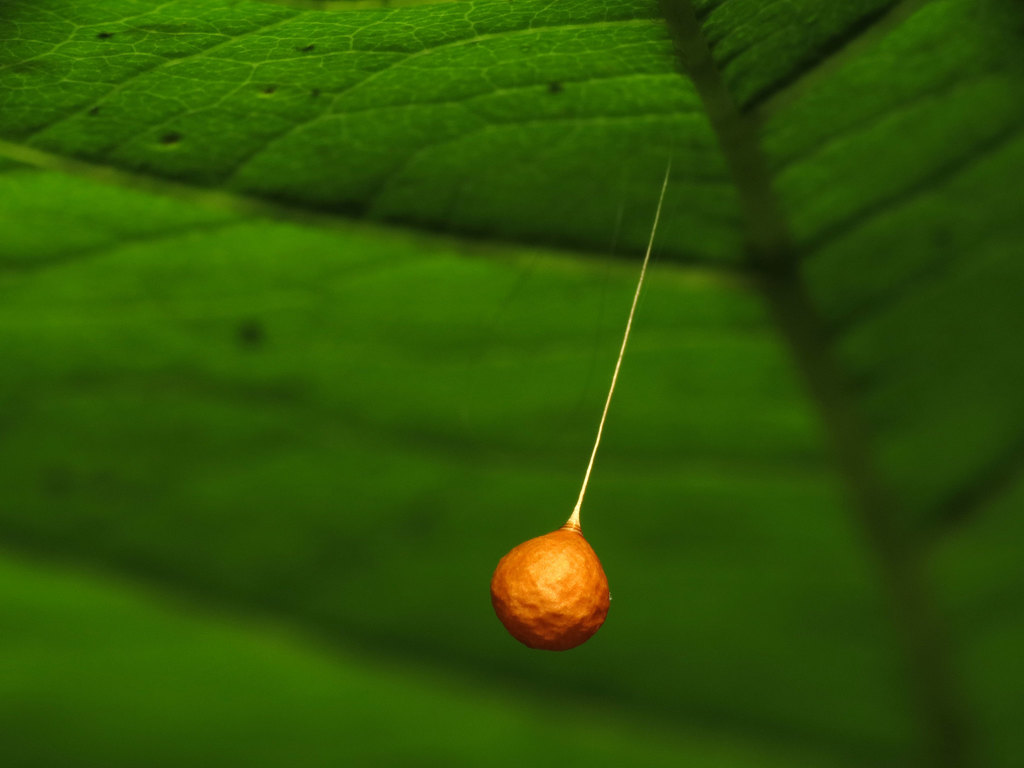
Females are about 2 to 3 mm long and males 1.5 to 2 mm; the carapace is dark brown while the abdomen is silvery with dark markings and appears round from above. The spider catches prey by releasing its web, which snaps forward to trap the target, and it can also sense approaching prey by vibration.
Source: Wikipedia
How to recognize it
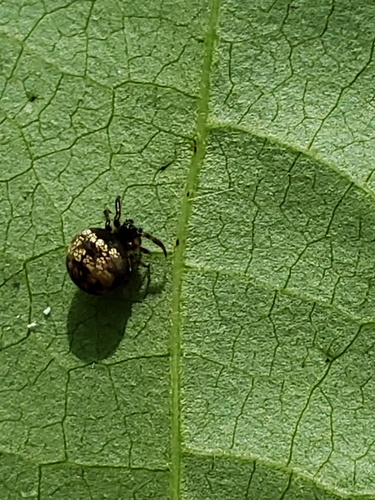
The carapace is dark brown and the abdomen is silvery with dark lines, looking roughly circular from above.
Source: Wikipedia
Size
Females measure 2 to 3 mm long; males are slightly smaller at 1.5 to 2 mm.
Source: Wikipedia
What it eats
The spider releases its web, which snaps forward to catch prey, and it can detect approaching prey by vibration and then release the web.
Source: Wikipedia
Where it is found in the US
Recorded in 27 of 51 states and DC. Most records: Ohio, Virginia, North Carolina, Maryland, New York, Massachusetts, Pennsylvania, Minnesota.
Darker = more records. Counts are museum and citizen-science records, not population size.
Source: GBIF
Status: native in North America; native in Canada. Source: iNaturalist
Months it is reported in the US
Source: GBIF
More photos

Questions people ask
How big is the common eastern ray spider?
Females are about 2 to 3 mm long and males are a bit smaller at 1.5 to 2 mm.
Source: Wikipedia
What does this spider look like?
It has a dark brown carapace and a silvery abdomen with dark lines, and the abdomen appears roughly round from above.
Source: Wikipedia
How does the spider catch its prey?
It releases its web, which snaps forward to trap prey, and it can sense vibrations to know when to release the web.
Source: Wikipedia
Sources
- Wikipedia: https://en.wikipedia.org/wiki/Theridiosoma_gemmosum
Look it up elsewhere: GBIF · iNaturalist · BugGuide · ITIS · Wikipedia
Text written 2026-10-25 from the sources above and checked sentence by sentence against them. Data fetched 2026-10-25.