 Bug FAQ
Common Cluster Fly
Pollenia rudis · Order: Diptera · Family: Polleniidae
Also called: Cluster Fly, Awkward Clusterfly
Source: Wikipedia

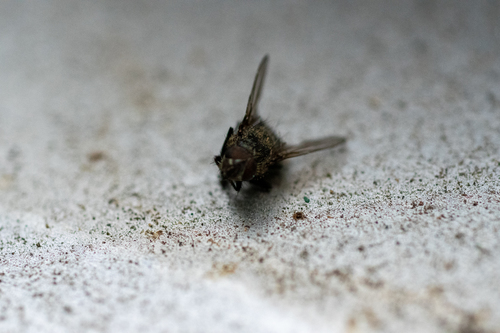
The common cluster fly is a medium-sized fly about 9.5 to 12.7 mm long and has a dark gray body with a checkered black-silvery abdomen; new adults show golden hairs on the thorax that may fade over time. In summer they are found in fields, while in autumn and winter they seek shelter in attics, lofts, or homes, often entering in large numbers to overwinter.
Source: Wikipedia
How to recognize it
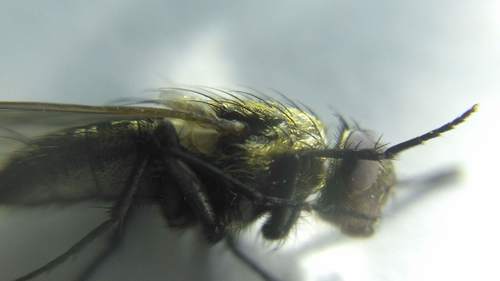
Adults are dark gray with a checkered black and silvery abdomen; newly emerged flies have many golden hairs on the thorax that may be lost later.
Source: Wikipedia
Size
They measure about 9.5 to 12.7 mm (3/8 to 1/2 in) in length, slightly larger than a house fly.
Source: Wikipedia
Is it a pest in the house?
Cluster flies are best known as a household nuisance, but they do not cause structural damage, damage textiles, food, or harm humans.
Source: Wikipedia
How to get rid of it
Seal all exterior cracks and openings to keep flies out, and professional extermination is the most reliable way to eliminate an infestation.
Source: Wikipedia
Where it lives
During summer they occupy fields and open areas, and in autumn and winter they overwinter inside attics or lofts.
Source: Wikipedia
What it eats
Adults feed on various organic matter, while their larvae mainly consume earthworms.
Source: Wikipedia
When you see it
They are active on sunny summer days and commonly enter buildings in late summer or early autumn to find winter shelter.
Source: Wikipedia
Where it comes from
The species is native to Europe and its arrival date in the United States is unclear.
Source: Wikipedia
Lookalikes
They resemble other Pollenia species such as P. pallida and P. dasylpoda.
Source: Wikipedia
Where it is found in the US
Recorded in 29 of 51 states and DC. Most records: California, Hawaii, Virginia, Montana, Washington, Illinois, Tennessee, Missouri.
Darker = more records. Counts are museum and citizen-science records, not population size.
Source: GBIF
Status: native in North America; native in Canada. Source: iNaturalist
Months it is reported in the US
Source: GBIF
More photos
Questions people ask
How can I prevent cluster flies from entering my house?
Seal cracks and openings around the exterior, and consider professional extermination for serious infestations.
Source: Wikipedia
When do cluster flies usually come inside?
They typically enter homes in large numbers during late summer or early autumn to overwinter.
Source: Wikipedia
Same family (Polleniidae)
Sources
- Wikipedia: https://en.wikipedia.org/wiki/Pollenia_rudis
Look it up elsewhere: GBIF · iNaturalist · BugGuide · ITIS · Wikipedia
Text written 2026-10-23 from the sources above and checked sentence by sentence against them. Data fetched 2026-10-22.