 Bug FAQ
Common Citril
Ceriagrion glabrum · Order: Odonata · Family: Coenagrionidae
Also called: Common Pond Damsel, Common Waxtail, Orange Waxtail
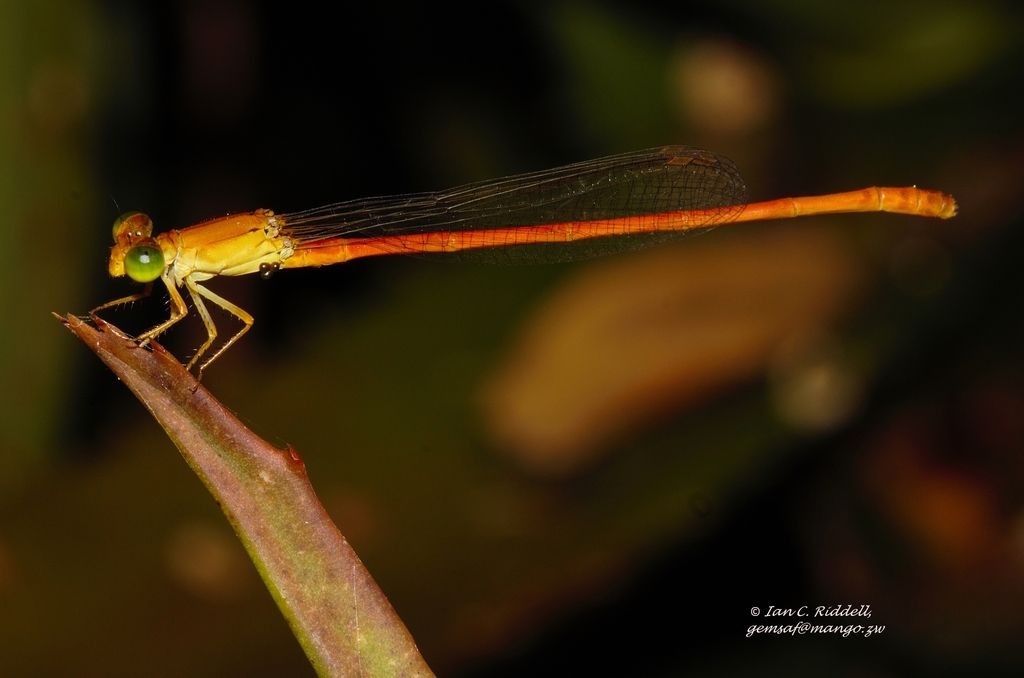
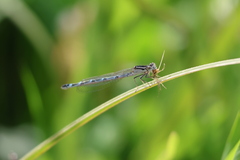
The Common Citril is a small to medium damselfly, up to about 46 mm long with a wingspan near 53 mm. It lives around freshwater sites such as marshes, ponds, dams, pans and quiet river backwaters, especially where reeds, grasses and sedges are abundant.
Source: Wikipedia
How to recognize it
Males have a vivid orange body without any markings, and the sides of the abdomen are a lighter yellow-orange. Females can be brown, green or orange, turning more orange with age but never as bright as the males.
Source: Wikipedia
Size
Adults reach up to 46 mm in length and about 53 mm across the wings.
Source: Wikipedia
Where it lives
It prefers areas rich in reeds, grasses and sedges.
Source: Wikipedia
Where it comes from
The species is widespread across Africa, especially in reed-dominated habitats.
Source: Wikipedia
Questions people ask
How can I tell a male Common Citril from a female?
Males are bright orange all over, while females are brown, green or orange and get more orange as they age.
Source: Wikipedia
Where am I likely to find Common Citrils?
Look for them around freshwater places like marshes, ponds, dams, pans and quiet river backwaters that have plenty of reeds, grasses and sedges.
Source: Wikipedia
What do Common Citrils eat?
They hunt smaller damselflies, especially young ones that are still soft-bodied.
Source: Wikipedia
Same family (Coenagrionidae)


Sources
- Wikipedia: https://en.wikipedia.org/wiki/Ceriagrion_glabrum
Look it up elsewhere: GBIF · iNaturalist · BugGuide · Wikipedia
Text written 2026-10-23 from the sources above and checked sentence by sentence against them. Data fetched 2026-10-22.