 Bug FAQ
Common Alderfly
Sialis lutaria · Order: Megaloptera · Family: Sialidae
Also called: Alderfly, Common European Alderfly
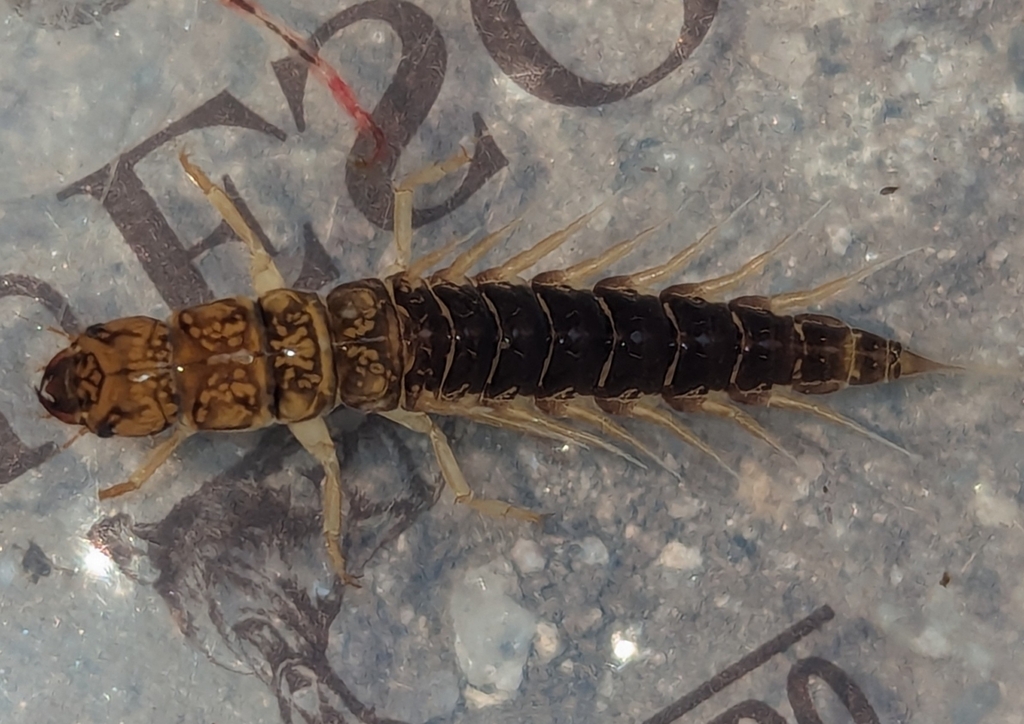
Adult common alderflies are about 20 mm long with a wingspan of 22 to 34 mm; their bodies are stocky, dark brown to black, and their translucent grey wings show strong dark veins. They live near ponds and slow-flowing streams, where adults appear on vegetation in May-June and live only two to three days without feeding. The aquatic larvae are about 17 mm long, live in mud and detritus, and prey on small invertebrates.
Source: Wikipedia
How to recognize it
Adults have a stout, dark body and legs, with greyish translucent wings marked by dark veins.
Source: Wikipedia
Size
Adults reach up to 20 mm in length and a wingspan of 22 to 34 mm. Larvae grow to about 17 mm long.
Source: Wikipedia
Where it lives
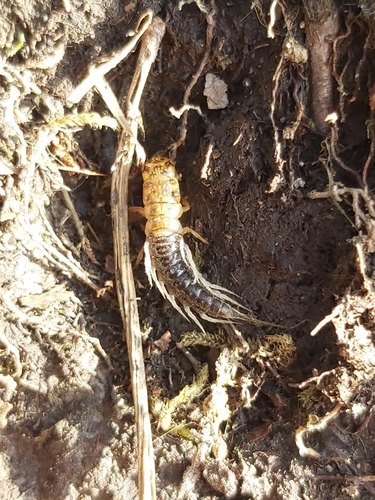
Adults are found around ponds and slow-flowing streams; larvae live in underwater mud and detritus.
Source: Wikipedia
What it eats
Larvae are aquatic predators that eat small invertebrates. Adults do not feed during their short two-to-three-day lifespan.
Source: Wikipedia
Life cycle
The species completes its life cycle in one to two years, with adults living only two to three days without feeding.
Source: Wikipedia
When you see it
Adults are most commonly seen from May through June.
Source: Wikipedia
More photos
Questions people ask
When are common alderflies most likely to be seen?
Adults are usually observed from May to June near ponds and slow-flowing streams.
Source: Wikipedia
Sources
- Wikipedia: https://en.wikipedia.org/wiki/Sialis_lutaria
Look it up elsewhere: GBIF · iNaturalist · BugGuide · Wikipedia
Text written 2026-10-23 from the sources above and checked sentence by sentence against them. Data fetched 2026-10-23.