 Bug FAQ
Colourful bluetail
Ischnura pruinescens · Order: Odonata · Family: Coenagrionidae
Also called: Colorful Bluetail
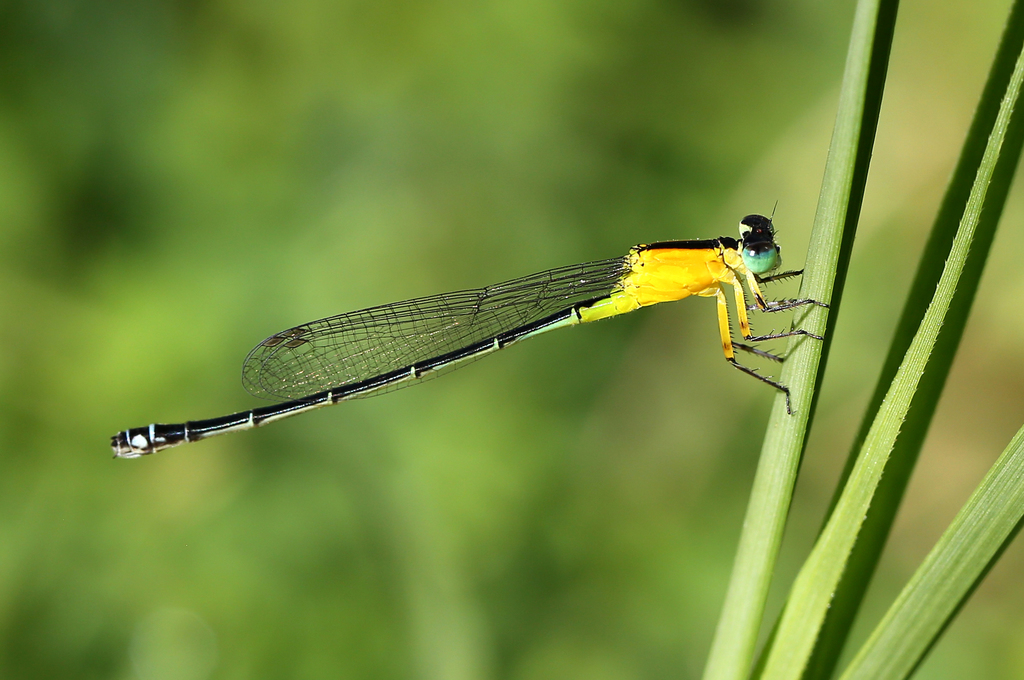
The colourful bluetail is a small to medium damselfly with a wingspan of about 35-50 mm. It lives around freshwater pools, lakes, ponds and swamps. It is native to northeastern Australia, from the Gold Coast up to Cape York and into the tropical north-west, and also occurs in New Guinea.
Source: Wikipedia
How to recognize it
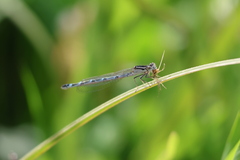
Males have a frosty coating on the middle part of the body and parts of the abdomen. Females show bright yellow-orange on the middle body and legs, a pale green underside of the abdomen, and blue spots on the last two abdominal segments.
Source: Wikipedia
Size
Adults measure roughly 35 to 50 mm across the wings.
Source: Wikipedia
Where it lives
They are found near freshwater habitats such as pools, lakes, ponds and swamps.
Source: Wikipedia
Where it comes from
Their range includes Australia’s north-eastern coast from the Gold Coast to Cape York and the tropical parts of the Northern Territory, as well as New Guinea.
Source: Wikipedia
Lookalikes
It belongs to the damselfly family Coenagrionidae and is commonly called the colourful bluetail.
Source: Wikipedia
Questions people ask
How can I tell a male colourful bluetail from a female?
Males have a frosty (pruinose) coating on the thorax and parts of the abdomen, while females display bright yellow-orange on the thorax and legs, a pale green underside, and blue markings on the last two abdominal segments.
Source: Wikipedia
Where might I find a colourful bluetail?
Look for them around freshwater pools, lakes, ponds and swamps in northeastern Australia and New Guinea.
Source: Wikipedia
Same family (Coenagrionidae)


Sources
- Wikipedia: https://en.wikipedia.org/wiki/Ischnura_pruinescens
Look it up elsewhere: GBIF · iNaturalist · BugGuide · Wikipedia
Text written 2026-10-23 from the sources above and checked sentence by sentence against them. Data fetched 2026-10-23.