 Bug FAQ
Coffee Bean Weevil
Araecerus fasciculatus · Order: Coleoptera · Family: Anthribidae
Also called: Cacao Weevil, Coffee Weevil, Nutmeg Weevil
Source: Wikipedia
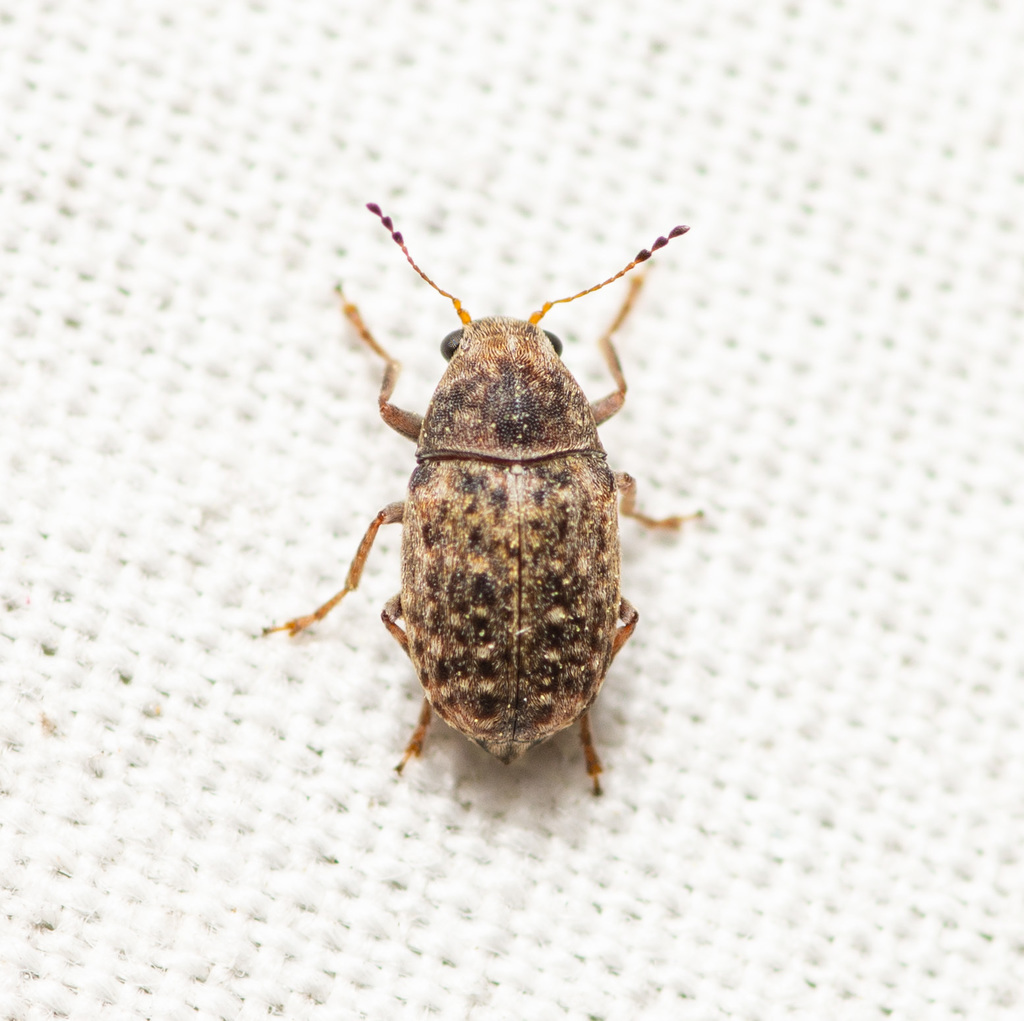
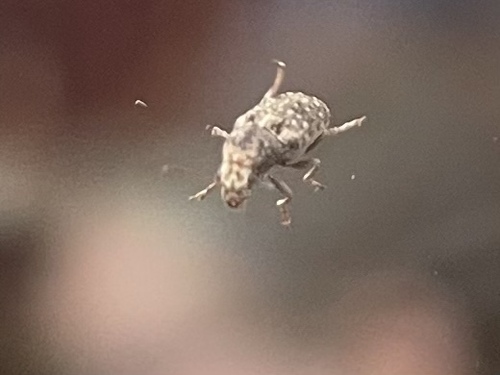
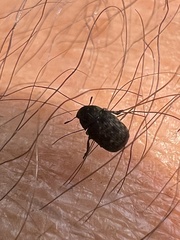
The coffee bean weevil is a small, dome-shaped beetle about 3 to 5 mm long with dark-brown mottled pubescence and a clubbed antenna tip. It is a tropical-subtropical species found worldwide and feeds on many stored crops, where its larvae tunnel inside seeds, pupate, and emerge as adults. Adults become sexually mature within a week, eggs hatch in about 6 days, and pupation takes roughly 7 days.
Source: Wikipedia
How to recognize it
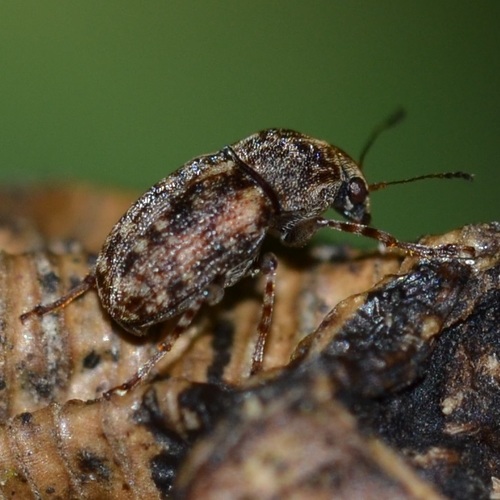
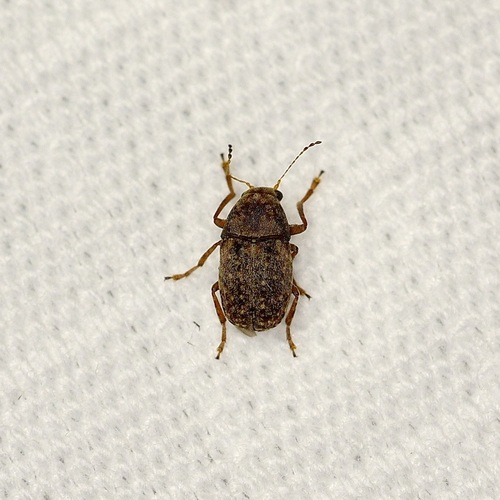
These beetles are dome-shaped, dark-brown with light and dark mottled hairs. Their antennae are slender and end in a three-segment club.
Source: Wikipedia
Size
Adults measure about 3 to 5 mm in length.
Source: Wikipedia
Is it a pest in the house?
When stored under proper temperature and low humidity, it rarely causes significant damage.
Source: Wikipedia
How to get rid of it
- Keeping storage areas at optimal temperature with low relative humidity and moisture helps manage infestations.
- Fumigation is the most widely used control method.
Source: Wikipedia
Where it lives
It is considered a tropical and subtropical species with a cosmopolitan distribution.
Source: Wikipedia
What it eats
Larvae tunnel into seeds, pupate inside them, and emerge by boring holes.
Source: Wikipedia
Life cycle
Males become sexually mature three days after emerging, females after six days. Eggs incubate for 3 to 15 days (average about 6 days) and the pupal stage lasts about 7 days.
Source: Wikipedia
Where it comes from
It has a worldwide (cosmopolitan) distribution as a tropical/subtropical species.
Source: Wikipedia
Where it is found in the US
Recorded in 12 of 51 states and DC. Most records: Hawaii, California, Texas, Arizona, North Carolina, Louisiana, South Carolina, Colorado.
Darker = more records. Counts are museum and citizen-science records, not population size.
Source: GBIF
Months it is reported in the US
Source: GBIF
More photos
Questions people ask
How can I prevent coffee bean weevils in my pantry?
Store grains and nuts at low temperature and low humidity to discourage their development.
Source: Wikipedia
What is the best way to get rid of an infestation?
Fumigation is commonly used to eliminate coffee bean weevils from stored products.
Source: Wikipedia
Do coffee bean weevils damage my food?
Yes, they feed on stored crops and their larvae tunnel inside seeds, causing damage.
Source: Wikipedia
Same family (Anthribidae)


Sources
- Wikipedia: https://en.wikipedia.org/wiki/Araecerus_fasciculatus
Look it up elsewhere: GBIF · iNaturalist · BugGuide · ITIS · Wikipedia
Text written 2026-10-29 from the sources above and checked sentence by sentence against them. Data fetched 2026-10-29.