 Bug FAQ
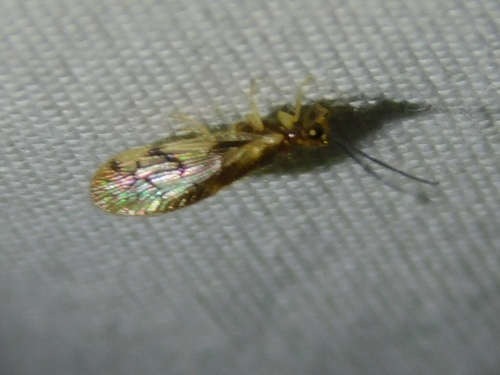
Climacia areolaris
Climacia areolaris · Order: Neuroptera · Family: Sisyridae
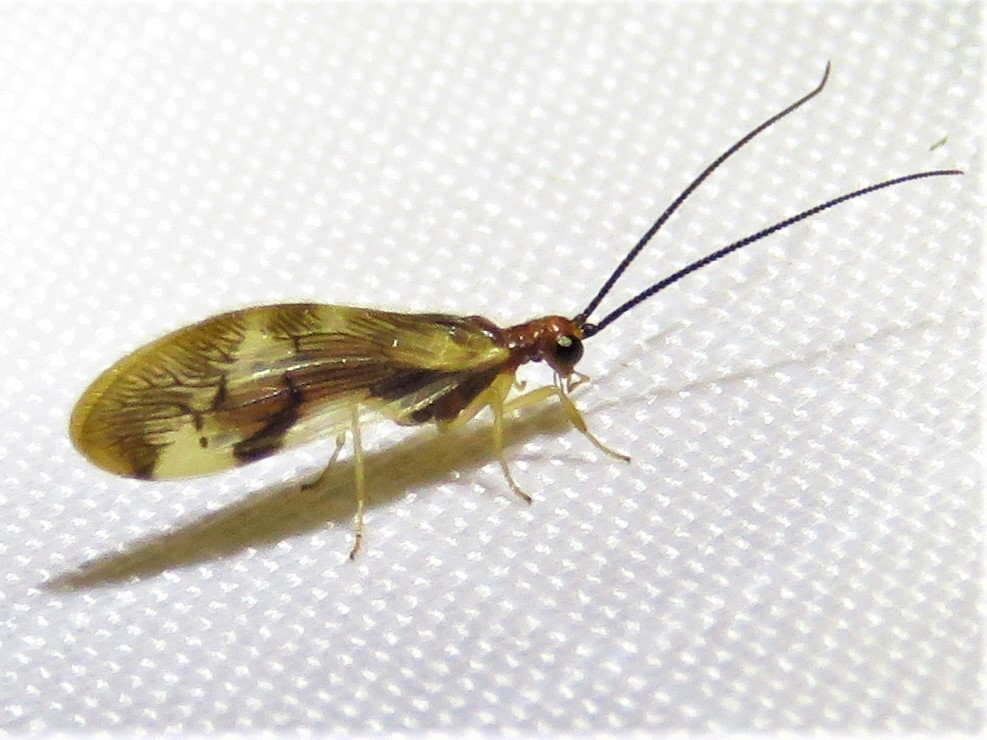
Climacia areolaris larvae live in freshwater streams, ponds, and lakes where their sponge hosts are present. Adults are land-dwelling flyers that feed on pollen and are drawn to lights. The species ranges from eastern Canada and the United States down to Florida, New Mexico, and parts of northern Mexico.
Source: Wikipedia
Where it lives
Adult insects live on land and are capable of flight.
Source: Wikipedia
What it eats
Larvae feed on freshwater sponges. Adults consume pollen and are attracted to artificial lights.
Source: Wikipedia
Life cycle
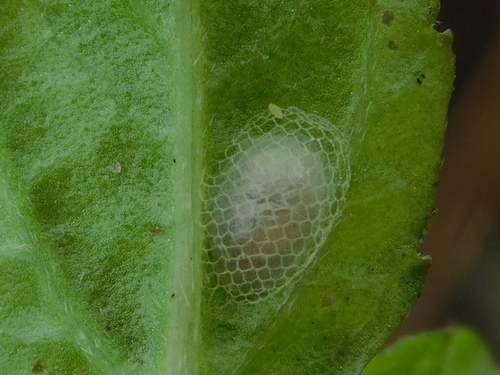
Eggs are deposited on objects near or overhanging water. Third-instar larvae leave the water, spin intricate nets around themselves, and later form cocoons up to 50 feet from shore before pupating.
Source: Wikipedia
When you see it
Adults are active from March through December.
Source: Wikipedia
Where it is found in the US
Recorded in 34 of 51 states and DC. Most records: New York, Connecticut, Texas, Louisiana, Florida, Maryland, Virginia, Massachusetts.
Darker = more records. Counts are museum and citizen-science records, not population size.
Source: GBIF
Status: native in North America; native in Canada. Source: iNaturalist
Months it is reported in the US
Source: GBIF
More photos
Questions people ask
Where do Climacia areolaris larvae live?
They live in freshwater streams, ponds, and lakes that have suitable sponge hosts.
Source: Wikipedia
When are Climacia areolaris active during the year?
They are active from March to December.
Source: Wikipedia
What is the geographic range of Climacia areolaris?
It ranges from eastern Canada and the United States down to Florida, New Mexico, and parts of northern Mexico.
Source: Wikipedia
Sources
- Wikipedia: https://en.wikipedia.org/wiki/Climacia_areolaris
Look it up elsewhere: GBIF · iNaturalist · BugGuide · ITIS · Wikipedia
Text written 2026-10-23 from the sources above and checked sentence by sentence against them. Data fetched 2026-10-23.