 Bug FAQ
Clay Monkey
Phyllalia patens · Order: Lepidoptera · Family: Eupterotidae
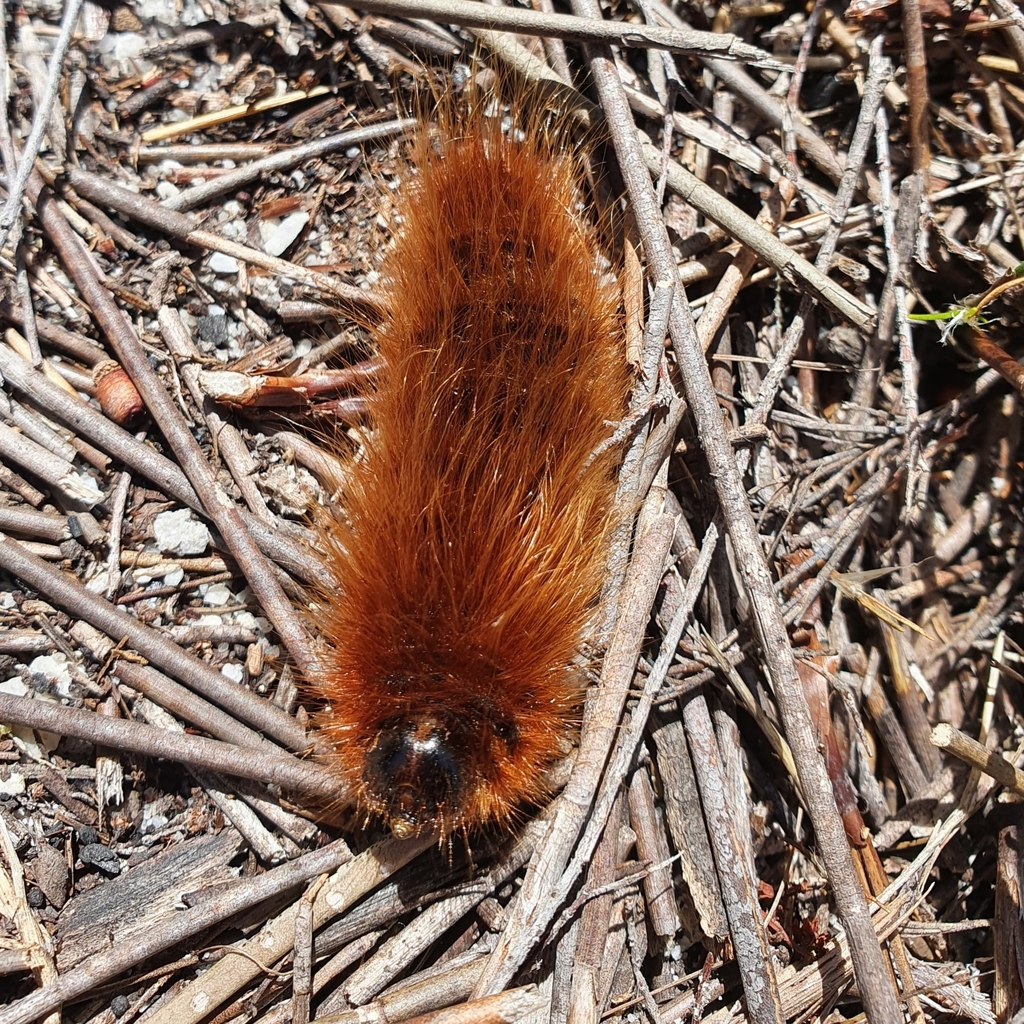
Adults are fawn-coloured with slightly lighter hindwings and abdomen, and their wings are broad and short. The larvae are velvety black on top, pale fulvous underneath, with a bright-red head.
Source: Wikipedia
Where it lives
They build a shallow grotto under host-plant leaves, staying hidden in the heat and emerging to feed in the cooler evenings.
Source: Wikipedia
What it eats
The larvae feed on the grasses Cynodon dactylon and Ehrharta calycina.
Source: Wikipedia
Life cycle
Larvae have a velvety black dorsal surface, a pale fulvous underside, and a bright red head.
Source: Wikipedia
Where it comes from
It occurs in Lesotho and the South African provinces of KwaZulu-Natal and Mpumalanga.
Source: Wikipedia
Questions people ask
What do the larvae look like?
They are black on top, pale fulvous underneath, with a bright red head.
Source: Wikipedia
What plants do the larvae eat?
They feed on the grasses Cynodon dactylon and Ehrharta calycina.
Source: Wikipedia
Where is this bug found?
It is known from Lesotho and the South African provinces of KwaZulu-Natal and Mpumalanga.
Source: Wikipedia
When are the adults active?
Adults emerge in the evening to feed after staying concealed during the hot part of the day.
Source: Wikipedia
Sources
- Wikipedia: https://en.wikipedia.org/wiki/Phyllalia_patens
Look it up elsewhere: GBIF · iNaturalist · BugGuide · Wikipedia
Text written 2026-10-23 from the sources above and checked sentence by sentence against them. Data fetched 2026-10-23.