 Bug FAQ
Citrus Mealybug
Planococcus citri · Order: Hemiptera · Family: Pseudococcidae
Also called: common mealybug
Source: Wikipedia

The citrus mealybug is a small, wax-covered insect that feeds on plant sap, causing wilting, yellowing and stunted growth. It thrives on many fruit, vegetable and ornamental plants, especially in warm spring and summer conditions.
Source: Wikipedia
How to recognize it
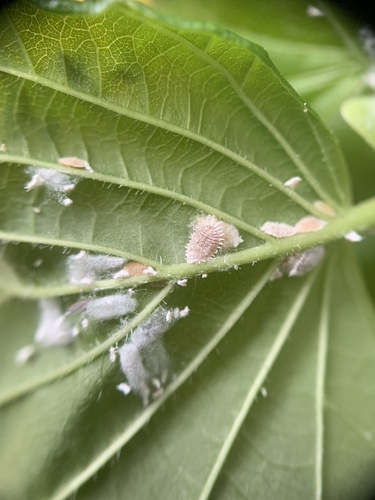
Its body edges have waxy threads, a light gray line runs down its back, and its legs and antennae are brown.
Source: Wikipedia
Size
Adult females are about 3 mm long and covered in white or pink wax. The first-instar nymph, called a crawler, is yellowish with red eyes and a wax coating.
Source: Wikipedia
Is it a pest in the house?
Feeding causes wilting, leaf yellowing, drop and sometimes plant death in indoor and greenhouse plants.
Source: Wikipedia
How to get rid of it
Management includes cultural, biological and chemical methods, with several parasitoid wasps used as biocontrol agents.
Source: Wikipedia
Where it lives
It lives on a wide range of food crops such as citrus, mango, banana, avocado and many others. It also infests indoor and greenhouse ornamental plants.
Source: Wikipedia
What it eats
Both adults and nymphs pierce plant tissues to suck sap. They are found on many ornamental hosts like begonias, roses and cacti.
Source: Wikipedia
Life cycle
Females lay egg masses wrapped in fluffy wax, and several generations can occur each year.
Source: Wikipedia
When you see it
Populations peak in spring and early summer, especially in warm regions like Florida.
Source: Wikipedia
Where it comes from
The species originates from Asia but has spread worldwide as an agricultural pest.
Source: Wikipedia
Lookalikes
It looks much like the vine mealybug and is distinguished mainly by tiny body pore patterns.
Source: Wikipedia
Where it is found in the US
Recorded in 14 of 51 states and DC. Most records: California, Mississippi, Florida, Kansas, Minnesota, Indiana, Nevada, Oklahoma.
Darker = more records. Counts are museum and citizen-science records, not population size.
Source: GBIF
Months it is reported in the US
Source: GBIF
More photos

Questions people ask
How can I get rid of them on my houseplants?
Use cultural practices, consider biological control with parasitoid wasps, or apply appropriate insecticides.
Source: Wikipedia
What damage do they cause?
Their sap feeding leads to wilting, yellowing, leaf drop and can kill the plant.
Source: Wikipedia
When are they most active?
They are most common in spring and early summer, with peaks in warm areas.
Source: Wikipedia
Sources
- Wikipedia: https://en.wikipedia.org/wiki/Planococcus_citri
Look it up elsewhere: GBIF · iNaturalist · BugGuide · ITIS · Wikipedia
Text written 2026-10-22 from the sources above and checked sentence by sentence against them. Data fetched 2026-10-22.